Why Do Some Dogs Eat Poop, and What Actually Helps Break the Habit?
Dogs may eat feces for several possible reasons, but the available evidence here cannot identify a single cause or promise a universal cure. A humane plan starts with a veterinary check when appropriate, careful prevention, close supervision, and rewarding the choice to move away.
On this page
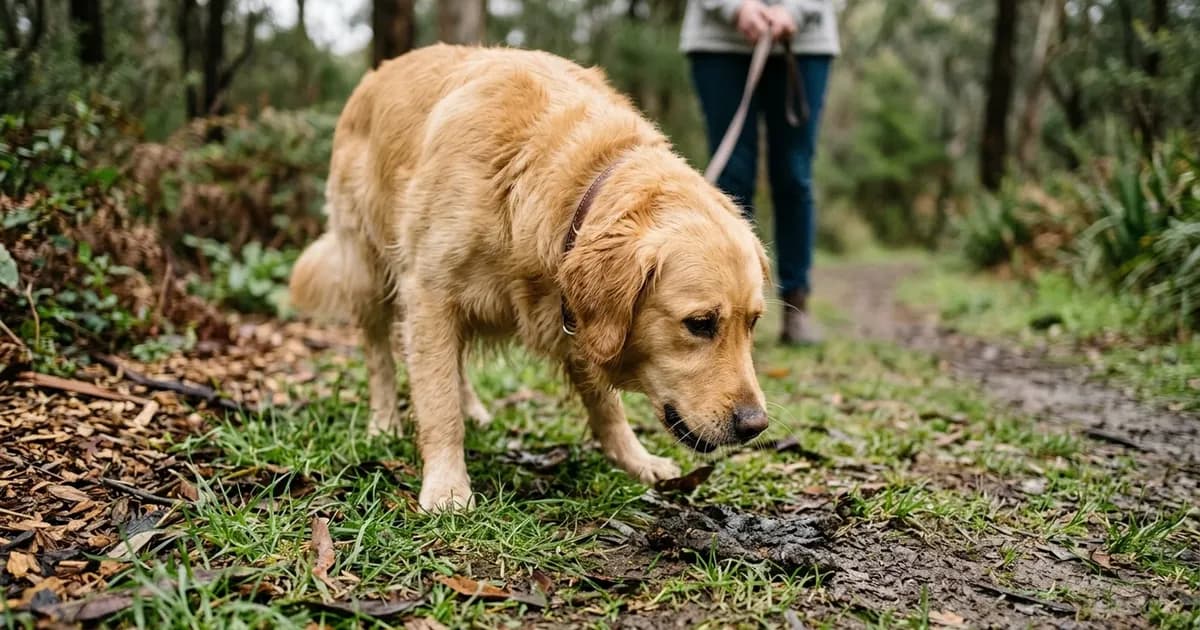
A dog eating poop can be upsetting, but it doesn't automatically reveal why the behavior is happening. Hunger, boredom, stress, palatability, and medical contributors have all been suggested in owner discussions, yet the supplied material does not provide authoritative veterinary evidence strong enough to identify any of them as the cause in an individual dog.
That uncertainty changes the sensible response. Rather than searching for one magic additive or assuming your dog is being defiant, treat coprophagia as a behavior worth assessing and managing: reduce access, supervise closely, reward the choice to move away, and involve a veterinarian when the pattern is new, intense, or accompanied by other concerns.
What coprophagia does—and doesn't—tell you
Coprophagia is the term for eating feces. In dogs, it may be an isolated habit, but the behavior itself cannot tell you whether the underlying issue is behavioral, environmental, dietary, or medical.
Some online discussions connect it with hunger, boredom, stress, or the appealing smell and taste of feces. Others mention maldigestion or liver dysfunction as less common possibilities. Those comments can suggest questions to raise with a professional, but they are owner or forum opinions—not reliable proof of cause. A dog that eats poop is not automatically hungry, nutritionally deficient, stressed, or ill.
The distinction matters because a human-focused article about coprophagia discusses neurological, psychiatric, and developmental conditions in people. Those observations cannot be transferred directly to dogs. Human and canine behavior require separate evidence, and the supplied research does not establish canine causes, prevalence, diagnosis, or treatment.
When a veterinary check makes sense
A veterinary appointment is especially sensible when the behavior is new, escalating, unusually persistent, or paired with other changes. Bring observations rather than a conclusion: changes in appetite, stool, weight, energy, thirst, digestion, or general behavior may help the veterinarian decide what deserves attention.
A forum comment can mention maldigestion or liver dysfunction as possibilities, but it cannot show that either explains your dog. Avoid trying to diagnose the problem from a list of internet causes. A veterinary assessment can help separate a health concern from a habit that mainly needs environmental management.
The same caution applies to diet changes, supplements, taste deterrents, or other products. The supplied sources do not establish that these approaches are effective—or that they are appropriate for a particular dog. Ask your veterinarian before making a significant dietary change or adding a supplement.
Start by making the behavior harder to rehearse
Every successful trip to the stool can make the next opportunity difficult to manage. For that reason, prevention is not a minor detail; it's the part of the plan that gives training a fair chance.
For a period of close observation:
- Go outside with your dog rather than relying on unsupervised yard time.
- Keep your dog near enough to guide them away immediately after toileting.
- Remove feces promptly so there is less opportunity to repeat the behavior.
- Use a leash outdoors if that is the safest way to prevent access.
- Notice which situations create the greatest risk, such as particular locations, times, or types of feces.
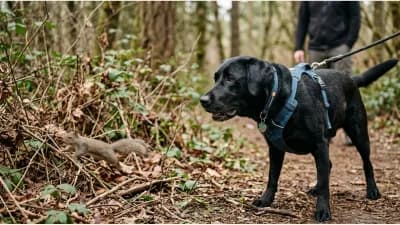
An owner in one discussion reported leashing the dog whenever it was outside and rewarding the dog for moving away from feces. That is useful as an example of a management theme, not as proof that the approach works for most dogs. Another owner described rewarding the dog immediately after toileting, but individual reports do not provide controlled outcome data.
The practical goal is simple: your dog finishes, turns away, and comes toward you before the stool becomes the next activity. Prompt cleanup then removes the temptation rather than asking the dog to resist it repeatedly.
Reward the choice you want
Punishment can turn a difficult moment into a confrontation. A calmer plan gives your dog something clear to do instead: finish toileting, move away, and collect a reward from you.
Begin in situations where you can control the distance and timing. Keep a suitable reward ready before your dog goes outside. As soon as your dog finishes, invite them away in a cheerful, consistent manner and reward the turn toward you. Once the pattern becomes familiar, the reward can follow the cue to move away rather than the stool itself.
The reward should arrive quickly enough for your dog to connect it with the behavior you want. It may help to practise the same response away from feces first—coming when called, following a hand target, or moving with you for a few steps—so the outdoor routine is not the first time your dog hears the cue.
This is not a guaranteed cure. The available material does not verify reward-based training as an established treatment for canine coprophagia. It is a humane, practical management approach reported by owners and consistent with the broader aim of reinforcing an alternative behavior, while your veterinarian or a qualified behavior professional helps individualize the plan.
Why punishment and quick fixes can mislead
The research supplied for this article does not show that punishment, aversive methods, supplements, dietary changes, or taste-deterrent products reliably solve the problem. Claims that one particular product will make feces unappealing should be treated cautiously unless a veterinary professional recommends it for your dog.
Punishment also gives you little information about what your dog should do next. A dog may learn that approaching a person or toileting nearby leads to conflict, while the original attraction remains. Prevention and clear reinforcement keep the situation more predictable and make it easier to observe what is actually happening.
Don't assume the habit proves nutritional deficiency, parasites, malnutrition, or deliberate disobedience. None of those explanations is established by the supplied sources for an individual dog.
Keep a short record before asking for help
A few days of notes can make a veterinary or behavior consultation more useful. Record:
- What your dog eats and when meals are offered.
- When the behavior occurs and whether it happens immediately after toileting or later.
- Whether your dog seeks particular feces or locations.
- What happens just before the attempt.
- How quickly your dog responds when called away.
- Any changes in appetite, stool, weight, energy, or general behavior.
Avoid framing the notes as a diagnosis. Their value is in showing patterns and helping a professional decide what to investigate.
If your dog also eats cat feces, the situation may need a slightly different management plan because access often occurs around litter trays. Our guide to why dogs eat cat poop explores that specific household problem. For broader behavior and care questions, the dog care guide is a useful place to continue.
A dog that is calm around a household cat but suddenly chases a fast-moving animal is showing a different kind of behavioral challenge; the distinction is explored in this guide to dogs, cats, and small fast-moving animals.
Coprophagia is unpleasant to live with, but shame and panic rarely clarify it. Start with access control, close supervision, and a rewarding alternative. At the same time, leave room for uncertainty: a veterinary assessment is the right next step when the behavior is new, severe, or accompanied by other changes, and no single internet explanation should stand in for that assessment.
FAQ
Sources
- Coprophagia Causes? : r/AskVet - Reddit — owner discussion