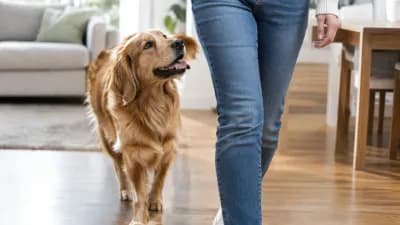
Why Does My Dog Eat Cat Poop, and How Can You Break the Habit Without Constant Scolding?
Dogs eat cat poop for several possible reasons, but the most useful response is not a battle of wills. Prevent access, check for medical contributors, and teach your dog that turning away from the litter box earns something better.
On this page
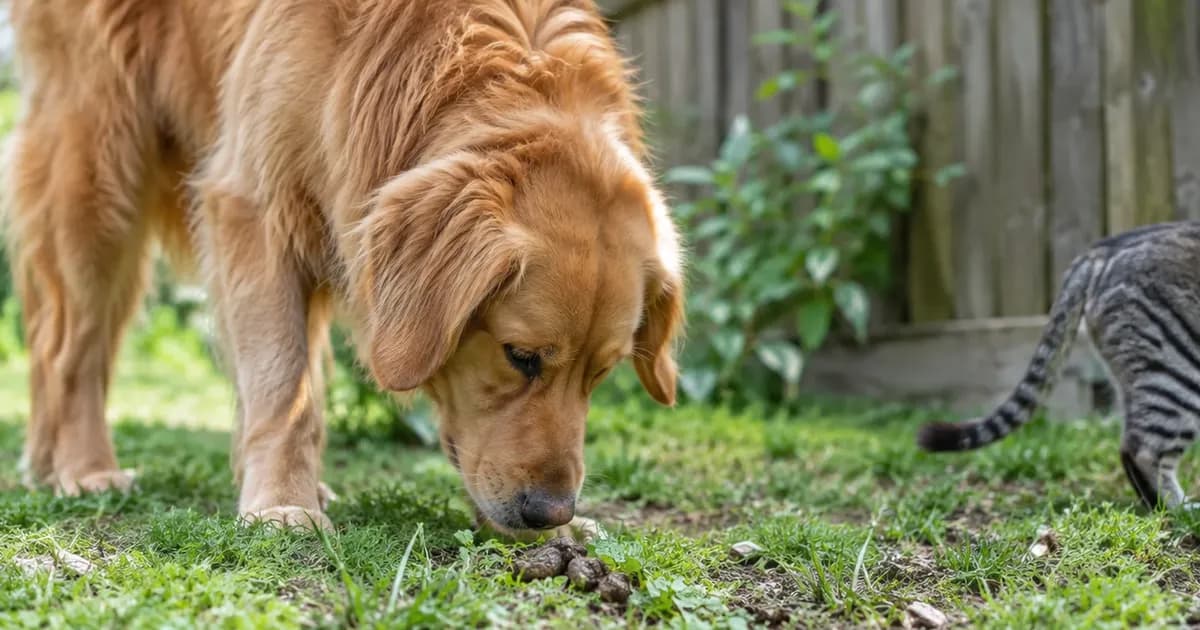
A dog that raids the litter box can make an otherwise peaceful home feel like a small daily negotiation. The behavior is called coprophagia, meaning the consumption of feces—including feces from another animal, such as a cat. It isn't proof that your dog is being spiteful or trying to upset you. More often, the practical problem is simple: the dog has found a rewarding target and can keep reaching it.
The most effective response is usually an access-control problem before it's a discipline problem. Stop the dog from rehearsing the behavior, then teach and reward a reliable alternative such as moving away, coming when called, or responding to “leave it.” A veterinary check also deserves a place in the plan, particularly if the behavior is persistent, sudden, or unexplained.
Why cat poop can become so tempting
Dogs are natural scavengers, and feces consumption may have roots in exploratory or den-cleaning behavior. Puppies may investigate the world with their mouths, and some grow out of coprophagia as they mature. Other possible contributors include boredom, competition around resources, inadequate nutrition, neglect or starvation histories, and medical problems that affect digestion, nutrient absorption, or appetite.
Those possibilities are not interchangeable explanations. A dog eating cat poop does not automatically have a nutritional deficiency, and adding a supplement is not a sensible first assumption. The behavior may be partly behavioral, partly environmental, or connected to a health problem that needs attention.
Cat litter also creates a particularly convenient setup. The box is often indoors, predictable, and accessible when nobody is watching. Each successful raid gives the dog another opportunity to repeat the sequence: approach, eat, and move on. That repetition can make the habit more persistent, even if the original reason was simple curiosity.
For a broader look at the behavior, you can also read why some dogs eat poop and what may actually help break the habit.
Start with access, not scolding
A dog cannot keep practicing a behavior that cannot be reached. For now, treat the litter box and any outdoor feces as restricted resources.
Useful measures include:
- Place the litter box where the cat can reach it but the dog cannot, using a closed-off room, a gate, or another arrangement that suits both animals.
- Remove feces from the litter box promptly rather than waiting for the usual cleaning time.
- Supervise outdoor time closely and clean up stool before the dog has a chance to investigate.
- Use physical control in situations where you cannot reliably supervise, rather than assuming the dog will make the right choice.
- Notice the times and places when the behavior is most likely, so prevention happens before the dog reaches the target.
Access control is not a failure of training. It protects the training process. Every successful theft can reinforce the habit; preventing those repetitions gives your dog more chances to practice the response you actually want.
Teach the replacement behavior in easy stages
“Leave it” works best as a practiced skill, not a word shouted after the dog is already eating. Begin with an object or treat that is less exciting than cat feces, and reward the instant your dog turns away from it.
- Present a low-value item in a closed hand.
- Wait quietly. The moment your dog stops investigating or looks away, reward with a separate, more appealing treat.
- Add the cue “leave it” once your dog is beginning to disengage reliably.
- Practice with gradually more interesting objects, always keeping the exercise easy enough that your dog can succeed.
- Around the litter box or outdoor stool, call your dog away early and reward the retreat generously.
The desired lesson is not “I get punished near poop.” It is “Turning away and coming to my person pays better.” A dog that has already reached the litter box may need a calm interruption and immediate movement away, rather than a prolonged confrontation.
You can also build a routine after outdoor elimination: call the dog to you, ask for a simple behavior such as sitting, reward it, and clean up before allowing unsupervised wandering. VCA recommends this kind of supervision, prompt removal, and training around feces access.
Why constant scolding is an incomplete strategy
Scolding may express understandable frustration, but it does not remove the opportunity or teach the dog what to do instead. The available veterinary guidance emphasizes preventing access, cleaning thoroughly, and supervising rather than relying on punishment alone.
Repeated reprimands can also arrive too late. By the time an owner notices the empty litter box or sees the dog swallowing stool, the dog may not connect the correction with the earlier choice. A calm interruption followed by a well-practiced alternative gives the dog clearer information.
That does not mean the change will be immediate. Some dogs improve over weeks or months, and environmental management may remain part of normal household life even after training is going well. Prompt cleanup is useful prevention, not evidence that the training has failed.
Boredom may contribute for some dogs, so enrichment can be worth adding alongside access control. Puzzle feeders and enrichment toys may give a dog more appropriate ways to investigate, work, and forage. They won't replace litter-box management, but they can make the unwanted target less central to the dog's day.
When a veterinary appointment makes sense
A veterinary examination is appropriate when coprophagia is persistent, sudden, intense, or otherwise unexplained. Medical problems can affect appetite, digestion, nutrient absorption, or stool appeal, and conditions such as parasites or gastrointestinal problems may need to be considered.
Arrange a check especially if the behavior appears alongside changes such as unusual hunger, weight change, diarrhea, vomiting, or other signs that your dog is unwell. A veterinarian can help decide whether testing, diet review, or treatment for an underlying condition is warranted. Do not assume that a food additive or supplement will address the real cause.
Dietary deterrents, pineapple, powders, and similar products are often discussed by owners, but the supplied evidence does not establish them as reliable cures. They should not replace a medical assessment or the basic work of preventing access.
What progress should look like
Improvement is more than a dog ignoring one litter box once. Look for a pattern: fewer attempts, faster responses to “leave it,” easier recalls away from outdoor stool, and less need for physical intervention. Keep the environment arranged so success remains possible.
A useful plan is therefore straightforward:
- Rule out medical contributors when the pattern warrants it.
- Block access to litter and feces.
- Remove stool promptly.
- Practice “leave it” away from the trigger before using it around the real temptation.
- Reward disengagement and coming away.
- Add suitable enrichment if boredom may be part of the picture.
- Continue management while the new habit becomes dependable.
Dogs do not need to be scolded constantly to learn this skill. They need fewer opportunities to rehearse the unwanted behavior, clearer instructions about what to do instead, and enough repetition for walking away to become the familiar choice.