How Can You Stop a Dog From Jumping on Guests Without Making Greetings Awkward?
A calm greeting is easier to teach when guests know exactly what to do. Use a leash or gate, reward four paws on the floor, and give visitors a short script that makes the training feel natural rather than punitive.
On this page
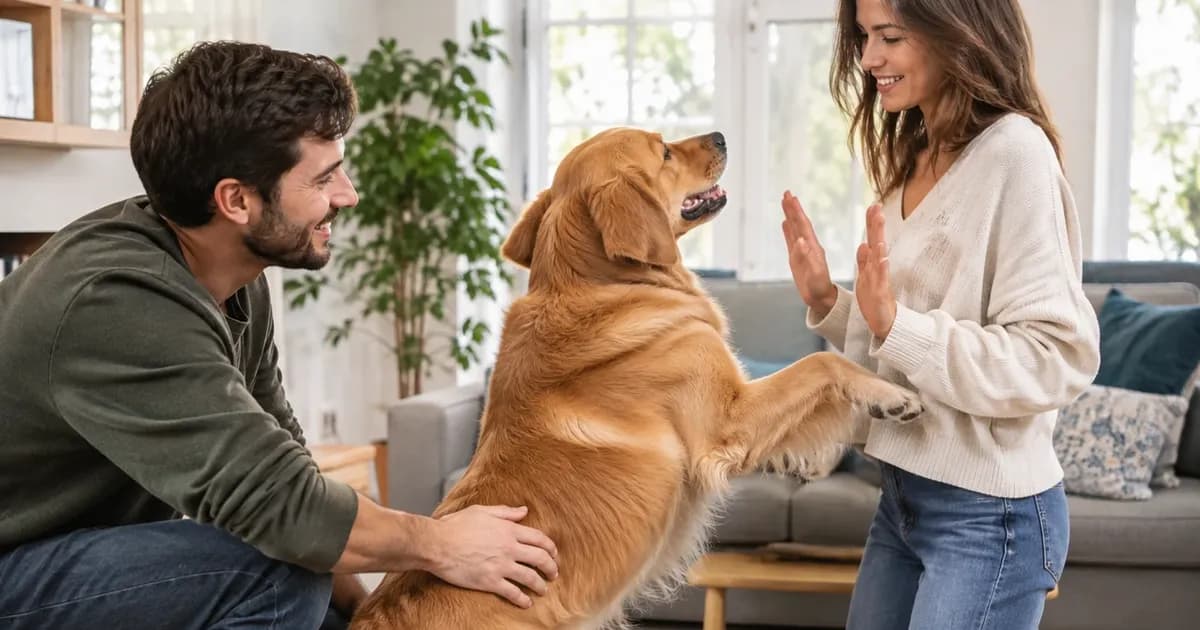
A dog can be thrilled to see a visitor and still make that visitor uncomfortable. The solution isn't to make greetings cold or overly formal. It's to give your dog a clear way to earn the attention they want: keeping four paws on the floor, standing calmly, or sitting.
A guest-friendly plan has three parts: prevent jumping while your dog is learning, remove attention when jumping happens, and reward calm behavior as soon as it appears. That keeps the interaction friendly while making the rules clear to both dog and visitor.
Start with a simple guest script
Most visitors don't need a long explanation. Before they come in, say something like:
> “We're practicing calm greetings. Please ignore her if she jumps—no talking, touching, or eye contact. As soon as all four paws are down, I'll tell you when it's fine to say hello.”
The wording matters because guests often respond automatically. A person may push a dog away, laugh, speak, or reach down without realizing that the attention can keep jumping going. Standing quietly, turning away, and withholding touch gives the dog less payoff for the behavior. Once the dog settles, the guest can offer attention or a treat.
That pause doesn't have to feel rude. The visitor isn't rejecting the dog; they're waiting for a greeting that works for everyone.
Make calm behavior the way to say hello
Choose one behavior you can recognize easily. For many dogs, “four paws on the floor” is a useful starting point. A sit can work too, but it shouldn't be forced in the middle of frantic excitement. Reward the behavior your dog can actually perform at that moment.
Keep treats ready before the guest arrives. The instant your dog stands calmly or sits, reward them with a treat, praise, or the opportunity to approach the visitor. Timing matters: the reward should follow the calm behavior, not the jump that came just before it. If sitting is your goal, don't reward the dog after they pop back up; wait for the sit to return.
Attention itself can be the reward. Some dogs value a friendly greeting more than food, so a guest's quiet “hello” or gentle petting may be appropriate once the dog's paws are down. The dog learns a useful sequence: calm behavior opens the door to interaction, while jumping makes the interaction pause.
Use management to make the right choice easier
Training goes better when the dog doesn't get repeated opportunities to rehearse jumping. Keep a leash on your dog before opening the door, use a gate, or begin the greeting from a separate room. These arrangements aren't punishment. They create enough distance for your dog to think and give your guest a comfortable entrance.
A visible setup also makes the social moment less awkward. Instead of grabbing for your dog after the first leap, you already have a plan: the guest comes in, the dog remains behind the gate or on leash, and calm behavior earns a closer greeting.
As your dog improves, reduce the distance gradually. A dog who can greet one familiar helper calmly in a quiet room may still need a leash when several people arrive, someone carries bags, or the doorbell creates extra excitement. Practice should become more difficult in small steps rather than all at once.
Practice with one willing helper
Ask a friend to play the role of a guest when nobody is in a hurry. Start with the friend outside or a short distance from the dog. Reward calm behavior before the person approaches. If the dog jumps, the helper turns away or steps back; when the dog settles, the greeting resumes.
Repeat short approaches instead of aiming for one perfect arrival. The dog gets many chances to discover that calm behavior brings the person closer, while jumping makes the person pause or create distance.
Once the dog understands the pattern, practice with different situations: someone entering normally, a visitor wearing a coat, a person carrying something, or two people arriving one after another. Keep the sessions manageable. If the dog cannot respond to a familiar cue or settle enough to eat a treat, increase distance and make the exercise easier.
Everyone in the household should follow the same rule. A dog may become confused if one person ignores jumping while another pets the dog through it. Consistency doesn't mean every greeting must look identical; it means jumping never becomes the reliable route to attention.
For more help building calm behavior around everyday triggers, the same reward-and-management approach can support stopping a dog from barking without making it worse.
What to do when the dog jumps again
Expect setbacks. Excitement, a new guest, or a long gap between visits can bring the behavior back temporarily. Avoid scolding or pushing the dog down. Calmly remove access to the guest by turning away, stepping behind a gate, or guiding the dog back to the starting distance.
Wait for a brief moment of calm, then reward it and resume the greeting. If the dog immediately jumps again, the situation may still be too difficult. End the greeting for the moment or provide a quiet break, then try later with more distance.
The goal isn't to make the dog remain perfectly still while people enter. It's to build a repeatable pattern in which the dog can greet people without climbing on them. A brief pause is much more useful than a confrontation.
Common mistakes that keep jumping alive
- Petting, talking to, or making eye contact with the dog while they jump.
- Asking for a sit when the dog is too excited to respond, then repeating the cue louder.
- Allowing jumping sometimes because the guest finds it cute.
- Rewarding a sit, then continuing the greeting after the dog gets up if the dog is meant to remain seated.
- Opening the door before the leash, gate, treats, or helper plan is ready.
- Practicing only with one calm person and assuming the behavior will transfer automatically to every visitor.
A useful household rule is simple: calm behavior makes the greeting continue; jumping makes it pause. That rule gives guests something concrete to do and prevents the dog from receiving mixed messages.
If you’re also working on food-related attention seeking, a consistent reward plan can make mealtimes less stressful when your dog begs. And for dogs whose equipment makes handling difficult during arrivals, this guide to choosing between a harness and collar for training may help you think through the setup.
When a greeting should stop
Some dogs jump because they are overexcited; others may be worried, avoidant, or unable to cope with the visitor's approach. Don't ask a fearful dog to accept petting simply because they have stopped jumping. Give the dog space and let them choose whether to approach.
Pause the greeting if your dog cannot settle, if the guest feels unsafe, or if the behavior includes lunging, snapping, or signs of fear. A qualified veterinarian or reward-based behavior professional can help assess what is happening and create a safer plan. The aim is not merely a polite entrance. It is a greeting in which the dog, guest, and household all know what comes next.