How Should Fall Walks Change When Dogs Start Eating Fallen Leaves?
A few dry leaves may look harmless, but the real risk often lies beneath them. Learn how to adjust autumn walks, spot higher-risk areas, and preserve your dog's seasonal sniffing without allowing uncontrolled scavenging.
On this page
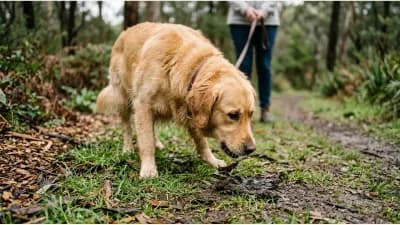
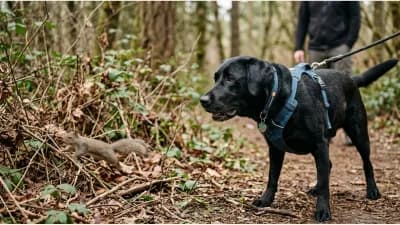
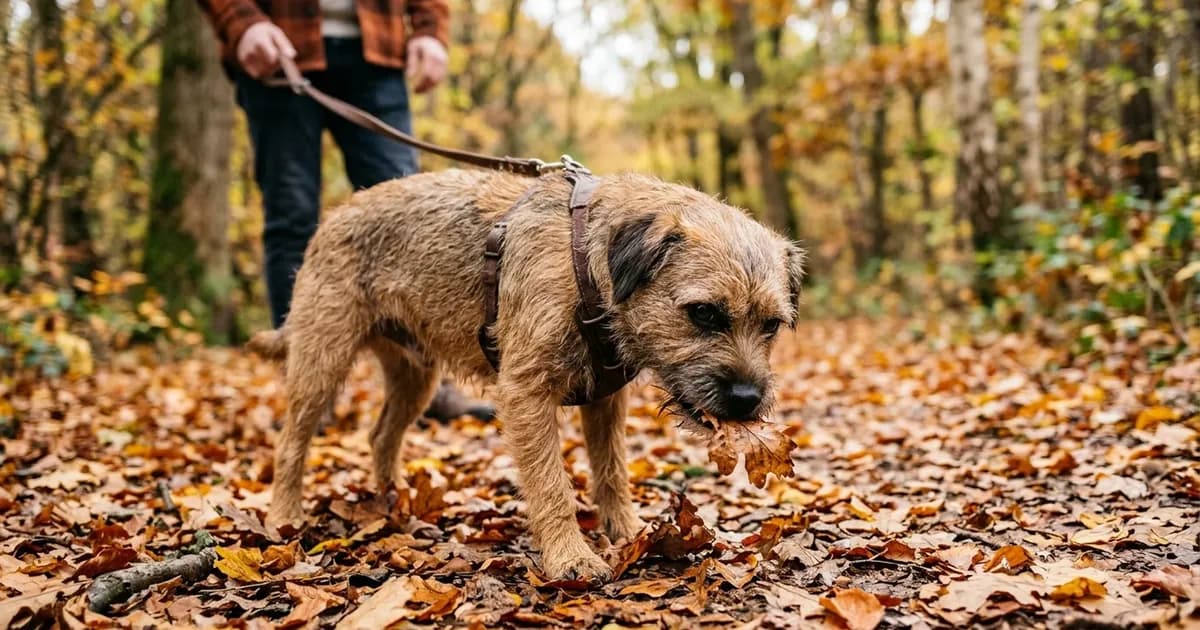
A dog nibbling a dry leaf on a walk doesn't automatically mean an emergency. But once leaf chewing turns into diving through piles and swallowing whatever is underneath, the walk needs to change—not necessarily stop.
The useful distinction is between chewing a visible, clean leaf and scavenging through leaf cover. The first is difficult to judge as universally safe: the available evidence does not establish that ordinary fallen leaves are harmless for every dog, or that there is a safe amount a dog can eat. The second is more clearly risky because leaves can hide acorns, wild mushrooms, mold, ticks, parasites, and sharp debris.
That makes supervision less about banning autumn altogether and more about choosing where your dog can explore, how closely you watch, and when you interrupt.
Read the ground, not just the leaves
A bright, dry layer of leaves on a maintained path is different from a damp, old pile that has been sitting under trees for days. Fresh, dry, regularly managed leaves are described as safer than old or damp piles, but no leaf pile should be treated as risk-free.
Rain deserves particular attention. Wet conditions can bring more wild mushrooms into outdoor areas, and fungi can be difficult to identify safely by appearance alone. Some contain powerful toxins, so a mushroom that looks ordinary is not a reliable invitation to investigate.
Your walk may call for a shorter lead and more active supervision in places such as:
- Under oak trees or on trails covered with acorns
- Damp, decomposing, or old leaf piles
- Areas visited soon after rain
- Woodland edges, unmanaged paths, or places where mushrooms are appearing
- Any route where your dog repeatedly swallows things from the ground
A dog that sniffs around a clean stretch of leaves can still enjoy seasonal exploration. A dog plunging nose-first into an unknown pile is dealing with a different environment altogether.
Mushrooms and acorns deserve immediate attention
Wild mushrooms are the fall hazard to treat most seriously. Some are toxic, and safe identification cannot reliably be made from appearance alone. If your dog moves toward a mushroom, calmly redirect them rather than allowing a quick taste.
Acorns create a separate set of problems. They may irritate the stomach or intestines, and a swallowed acorn can pose choking or blockage risks. Dogs that chew them may also injure their mouths or break teeth. Smaller dogs can face greater concern from choking or blockage, although repeated access can affect any dog.
Oak-heavy routes therefore deserve a more deliberate plan. Scan ahead, shorten the lead before reaching dense acorn cover, and reward your dog for turning away. Picking a different side of the path is often easier than trying to negotiate with a determined scavenger beneath every oak.
Change the walk before you need to wrestle something away
Repeated leaf eating is a reason to make the walk more structured, not to wait until your dog has swallowed an unknown object. Watch for the moment your dog's attention shifts from sniffing and moving through the environment to frantic searching, gulping, or repeatedly returning to one pile.
At that point, try to:
- Move your dog away from the pile with the lead rather than letting the interaction continue.
- Use a familiar cue such as “leave it” if your dog understands it.
- Reward the turn back toward you with something your dog values.
- Continue along a cleaner route or pause for sniffing somewhere the ground is easier to inspect.
A reliable leave-it cue is especially useful before peak autumn scavenging conditions, when acorns, mushrooms, and other debris become harder to avoid. It should mean “turn away and come with me,” not “ignore me while I repeat the cue louder.” Practice first in low-distraction settings, then gradually bring the skill outdoors.
If your dog already scavenges grass, trash, mulch, wood chips, or other objects, leaves may be one part of a broader outdoor habit. The supplied evidence does not establish that leaf eating is caused by boredom, anxiety, nutritional deficiency, or a specific illness, so avoid assuming a cause from the behavior alone. A persistent or escalating pattern is worth discussing with a veterinarian, particularly if your dog swallows what they find.
Keep the autumn enrichment—just move it to safer ground
Dogs do not need to lose the pleasure of fall walks because leaf piles can conceal hazards. Sniffing, pausing, and investigating are valuable parts of a walk; the goal is to make those activities more controlled.
Choose visibly clean areas where the ground is easier to inspect. Let your dog sniff along the edge of a path rather than charging into deep, damp cover. Add short training games—turning toward you, hand-targeting, or walking past a tempting patch—to give the dog something rewarding to do besides forage.
At home, seasonal enrichment can include a toy search, a food puzzle, or a supervised game that uses your dog's nose without giving access to an unmanaged pile. If you rake leaves, keep your dog away from old or damp heaps and from areas where acorns or mushrooms are mixed through the litter.
The same principle applies to other forms of scavenging. If your household is also dealing with coprophagia, our guide to why some dogs eat poop and what actually helps break the habit may help you think about management and redirection without guessing at the cause. For broader everyday guidance, the dog care section offers related behavior and safety articles.
When suspected ingestion needs veterinary guidance
Contact a veterinarian promptly if you know or strongly suspect that your dog swallowed a mushroom, several acorns, or another unknown object. Seek urgent advice for signs such as repeated vomiting, diarrhea, marked tiredness, abdominal discomfort, choking, trouble breathing, shaking, or seizures. The seriousness can depend on what was swallowed, how much, and your dog's size, so do not wait for symptoms if a potentially toxic mushroom may be involved.
A single leaf is not the whole autumn story. The surrounding ground matters more: what the leaves conceal, whether they are wet and decomposing, how intensely your dog scavenges, and whether you can interrupt the behavior. Keep the clean sniffing and seasonal discovery; reserve the strongest boundaries for oak cover, damp piles, mushrooms, and any place where your dog stops exploring and starts swallowing.
FAQ
Sources
- 4 month old puppy playing and chewing with leaves in yard, how ... - Reddit — owner discussion