How Can You Keep Dogs Calm Around Halloween Decorations, Costumes, and Unexpected Visitors?
Halloween can be exciting for people and overwhelming for dogs. A calm evening depends on layered preparation: reduce the noise and traffic, give your dog a secure place to retreat, and treat decorations, costumes, candy, and open doors as safety concerns as well as sources of stress.
On this page
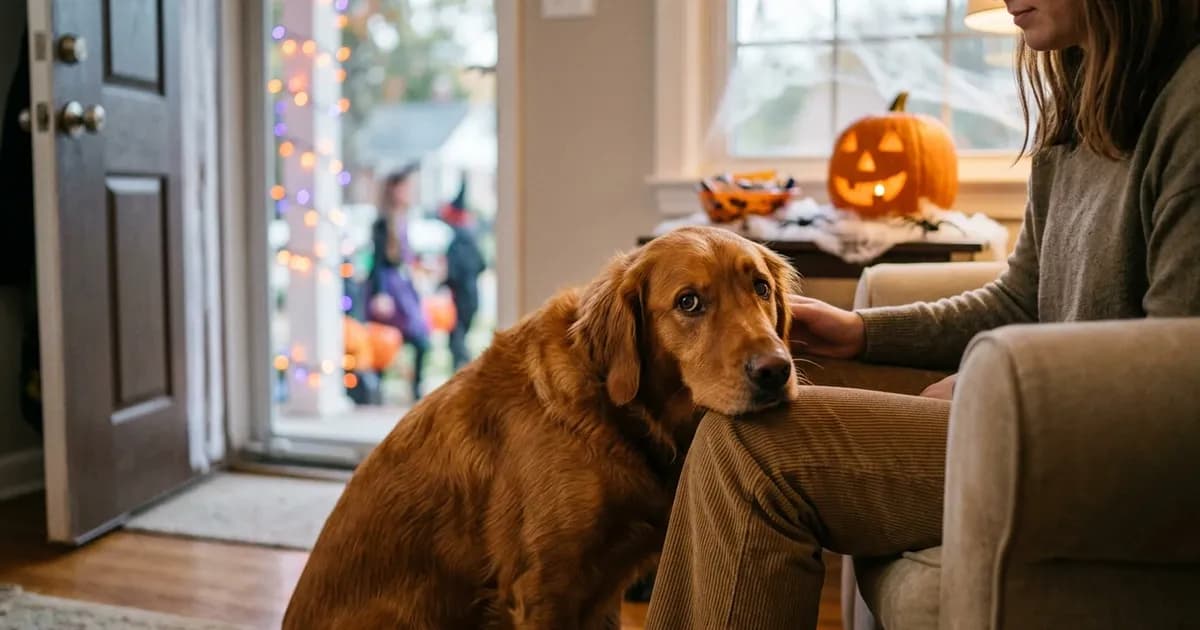
Halloween rarely arrives as one frightening event for a dog. It is a pileup of smaller surprises: the doorbell ringing again and again, strangers in masks, unusual lights, new objects in familiar rooms, and an open door that keeps becoming a tempting escape route.
The safest approach is a layered plan rather than a single calming trick. Exercise your dog before dark, preserve familiar routines, create distance from the front door, reduce sensory input, and let your dog retreat without being followed. At the same time, remove the physical hazards Halloween brings into the house: candy, wrappers, batteries, glow products, cords, candles, and small costume parts.
Start before the first visitor arrives
Take your dog for a walk before dark, when costumed pedestrians and the evening rush are less likely to add another surprise. Exercise may help your dog settle, but it isn't a guaranteed treatment for anxiety. The rest of the evening still needs thoughtful management.
Keep feeding, walking, and play times as familiar as possible. A normal routine gives the day some predictability even while the environment changes around it. If your dog tends to pant, pace, or become unsettled when the household routine shifts, you may also find our guide to what dog panting can signal about routine or stress useful.
Set up your dog's retreat before the visitors begin. A good safe zone is quiet, comfortable, familiar, and away from the front door or main visitor area. It might be a bedroom, a gated part of the house, or another space where your dog already rests. Add familiar bedding and a favorite toy, food-filled toy, or long-lasting chew if those are safe and appropriate for your dog.
The room should function as a choice, not a punishment. Your dog needs somewhere to move away from the activity without being coaxed out to greet people. Closing the door or using a secure gate can also prevent a frightened dog from rushing toward an open entrance.
Reduce the Halloween assault on the senses
Repeated knocks and doorbell rings can keep a dog on alert. Turn off or temporarily disconnect the doorbell if possible, and ask visitors to call or text instead. Television or radio can help mask some outside sounds, although the volume should remain comfortable rather than becoming another source of noise.
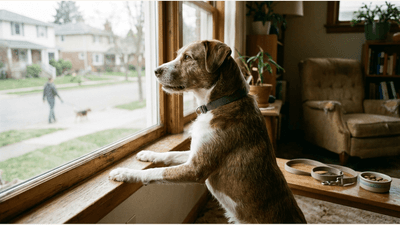
Visual distance matters too. A dog that can see masks, capes, flashing decorations, and unfamiliar people through a window may react each time something moves. Close curtains or move the safe zone away from windows facing the street. Keep flashing lights and animated decorations outside your dog's resting area.
Watch your dog rather than assuming quiet means relaxed. Cowering, withdrawing, freezing, a stiff posture, a tucked or low tail, pacing, shaking, panting, lip licking, yawning, barking, showing the whites of the eyes, attempting to escape, air snapping, baring teeth, or biting can all signal that the situation is too intense. A motionless dog may be frightened rather than calm.
Manage visitors instead of asking your dog to cope
Even a friendly dog may struggle with crowds, unusual movement, masks, and repeated interruptions. Tell visitors in advance that your dog may remain in another room. This is not an insult to guests; it is a sensible way to prevent a frightened interaction at the busiest point of the evening.
Anyone who does meet the dog should avoid standing over them or approaching suddenly. Calm, gentle interaction is safer than reaching toward a dog that is backing away, freezing, or turning their head. Don't force a greeting, and don't allow children to follow a dog into their retreat.
If your dog has a history of snapping, biting, or intense fear around strangers, separation from the front door is especially important. Speak with your veterinarian before Halloween if you expect the usual management steps may not be enough. Do not give a calming product or medication without veterinary guidance; the available guidance does not establish that supplements, pheromone diffusers, anxiety wraps, or other products work for every dog.
Costumes are optional, not a test of good humor
A dog doesn't need to wear a costume to participate in Halloween. Masks, painted faces, and costumes can be confusing because dogs partly rely on facial expressions to interpret people. Clothing can also restrict movement, vision, hearing, breathing, eating, drinking, or vocalization, while loose decorations may become choking hazards.
If you want to try a costume, introduce it gradually before Halloween. Let your dog see and sniff it, then pair brief, comfortable exposure with treats and praise. Stop if your dog shows distress. A costume that looks harmless in a photograph may feel restrictive once the dog walks, lies down, turns their head, or tries to shake it off.
Choose only clothing that fits comfortably and leaves movement, sight, hearing, breathing, mouth movement, and vocalization unobstructed. Avoid dangling or easily chewed-off pieces, and never leave a costumed dog unattended. Remove the outfit at the first sign that your dog is uncomfortable.
Treat decorations as possible hazards
Halloween safety has two separate jobs: lowering stress and preventing injury. A dog may be frightened by a decoration, then chew it while trying to investigate or escape. Keep batteries, glow products, wires, wrappers, small costume accessories, and decorations out of reach. Lit candles and jack-o'-lanterns also need to be inaccessible, since they can cause burns or be knocked over.
Put candy bowls, treat bags, and children's candy somewhere your dog cannot reach. Chocolate, raisins, and xylitol-containing sugar-free products can be dangerous to dogs. Wrappers can create their own problems even when the candy itself is gone. If your dog eats Halloween candy, a battery, a glow product, or another potentially harmful item, contact a veterinarian promptly rather than waiting for symptoms.
Check identification before the evening begins. An open door, a distracted visitor, or a frightened dash can turn a normal celebration into an escape. A collar with current identification, a microchip, and secure handling outdoors improve the chance of getting your dog home if they do get out. After dark, use a secure leash and reflective identification or gear.
A simple plan for the evening
- Walk your dog before dark and return to the usual feeding and play routine.
- Prepare a quiet retreat away from the front door, windows, and main visitor area.
- Stock the space with familiar bedding and a suitable food toy or chew.
- Turn off the doorbell, use text messages for visitors, and close curtains if street activity is triggering.
- Keep your dog separate during peak trick-or-treating if they are nervous, reactive, or simply overwhelmed.
- Tell guests not to approach, stare at, or follow the dog.
- Skip the costume unless your dog clearly tolerates it; remove it if distress appears.
- Secure candy, wrappers, batteries, glow products, decorations, cords, candles, and small costume pieces.
- Check the collar, identification, microchip details, doors, gates, and leash before dark.
- Contact your veterinarian promptly about possible toxic ingestion, injury, breathing difficulty, or a level of distress you cannot safely manage.
A successful Halloween may look uneventful from the outside. Your dog rests in a familiar room, the door stays secure, visitors follow the rules, and nothing needs to be proved. That quiet outcome is the point. For more everyday guidance, browse the dog care guides.