Why Do Dogs Stare at Their People So Intently?
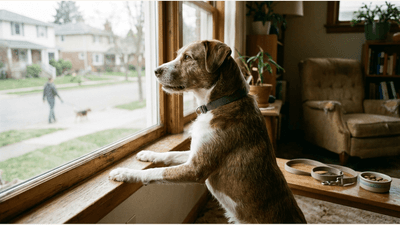
A dog’s stare can mean several different things, from asking for food or a walk to quietly reading your next move. The body around the eyes tells you whether it’s a soft social signal or a hard warning to give space.
On this page
A dog’s stare usually isn’t random. Most of the time, it’s a social signal: your dog may be trying to figure out what happens next, asking for something, or quietly checking in with you. The trick is to read the stare in context, because the same fixed look can mean affection, anticipation, confusion, or discomfort.
Picture a dog parked in front of the leash hook, staring at you without a sound. That’s not the same thing as a dog leaning forward with a hard, unblinking look and a stiff body. One is often a request. The other can be a warning. The eyes matter, but the rest of the body matters more.
What dog staring usually means
Dogs often stare at their people because they’re gathering information. They may be waiting to see whether the next thing is a walk, a meal, playtime, training, or a routine event they’ve learned to anticipate. Staring can also be a way to communicate a need, such as wanting food or a potty break.
That’s why staring so often shows up at very ordinary moments: near the kitchen, by the back door, at the door before a walk, or during training when your dog is trying to read your hands and face. The stare is part observation, part request.
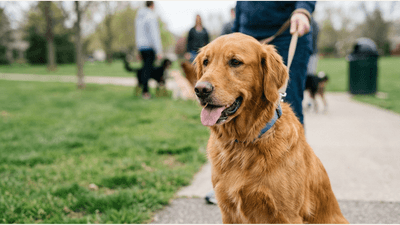
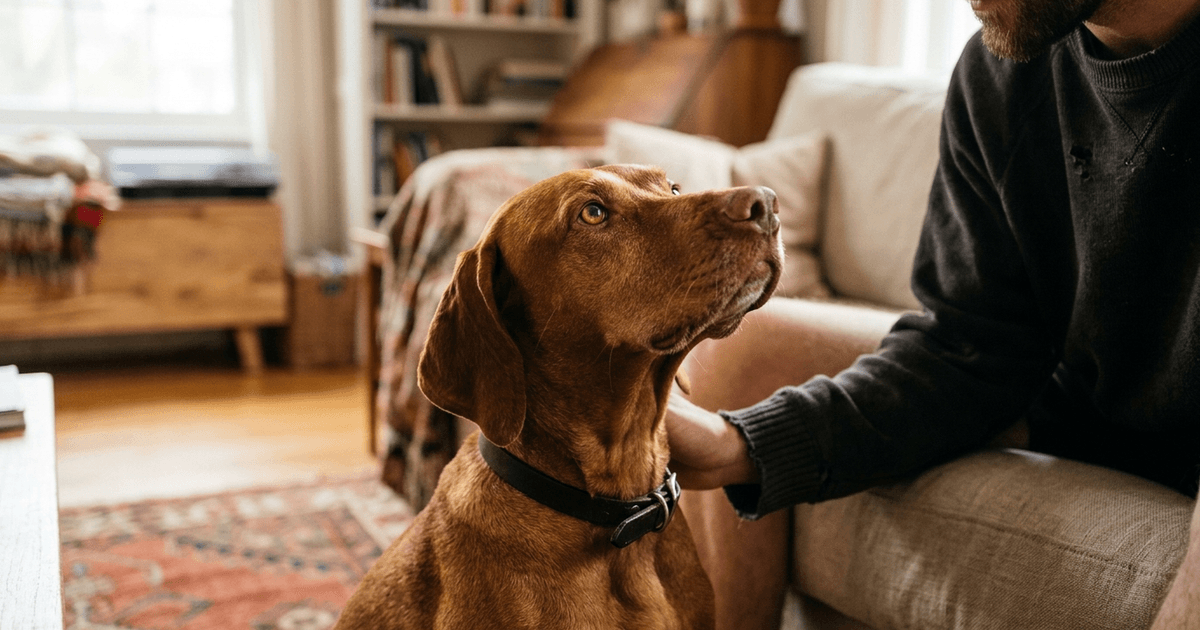
A soft gaze can also be social. Dogs and people often use eye contact as a way of staying connected, especially in familiar, relaxed settings. A dog that looks at you with a loose face, blinking eyes, and a calm body is usually not delivering a threat.
How to tell a soft stare from a hard stare
The same behavior means very different things depending on the rest of the picture.
A soft stare usually comes with:
- relaxed muscles
- a loose or wiggly body
- normal blinking
- a calm face
- a context that makes sense, like waiting for a cue or asking for attention
A hard stare is different. It can come with:
- unblinking eyes
- a stiff body
- a tense face
- a rigid tail or posture
- a dog that looks frozen rather than relaxed
That harder version should be treated as a signal to back away and avoid eye contact. In dog language, a fixed stare paired with stiffness is not the same thing as friendly attention.
Common reasons dogs stare at their people
A dog may stare because they want one of the usual essentials of pet life:
- food
- a walk
- play
- a potty break
- a scratch or attention
- help figuring out what to do next
Dogs are very good at noticing patterns. If staring at you has worked before, it’s likely to happen again. A dog learns fast that direct eye contact may make a person open the treat cabinet, reach for the leash, or finally notice that it’s time to go outside.
Sometimes staring is less about asking and more about reading. A dog may stare at your face, your hands, or the direction you’re moving because they’re trying to understand what’s coming next. That’s especially common in training or in situations where your dog feels uncertain and wants guidance.
What science says about gaze and bonding
Research on dog-human gaze suggests that eye contact can be part of a positive feedback loop between dogs and their people. Mutual gazing has been linked with increased oxytocin in both species, which helps explain why some quiet eye contact can feel so emotionally loaded.
That does not mean every stare is affectionate, or that dogs stare only because they adore us. It means gaze can be one of the ways dogs and people reinforce their bond. Domestication likely mattered here, because the dog-owner gaze effect appears to differ from wolves.
So yes, some long looks are about connection. But connection is only one layer of the story. A dog can stare because they love you, because they need you, because they’re waiting for a routine, or because they’re uneasy and trying to assess the situation.
When staring may be a warning sign
A stare becomes more concerning when it stops looking social and starts looking rigid.
Back off if the stare comes with:
- stiffness
- a hard, fixed expression
- no blinking
- a tucked, rigid, or frozen body
- other signs of tension
In that setting, the safest move is to create space and avoid pressing for more eye contact. A dog that looks locked in and tense may not be inviting interaction at all.
The same caution applies to situations where staring seems tied to fear, discomfort, or reactivity. Some owners notice intense staring in dogs that are bored or overstimulated, while others describe their dogs staring hard at another dog in a way that seems uncomfortable or reactive. The important point is not to guess from the eyes alone.
How to respond to your dog’s stare
A useful rule is simple: answer the context, not just the look.
- Check the surroundings. Is it near mealtime, walk time, training time, or potty time?
- Look at the body. Is your dog loose and blinking, or stiff and frozen?
- Notice the face. Does the expression look soft, or hard and fixed?
- Respond appropriately. Meet a clear need, offer a cue, or give space.
If the stare seems soft and expectant, it may be your dog’s way of asking for something ordinary and important. If the stare seems hard or tense, don’t challenge it. Quietly step back and reassess.
That’s the part many people miss: a stare is not one behavior. It’s a family of signals. Once you start reading the whole dog, the stare becomes much easier to understand.
Related reading
FAQ
Sources
- Why You Shouldn't Stare Down a Dog - American Kennel Club
- pmc.ncbi.nlm.nih.gov — The Role of Oxytocin in the Dog–Owner Relationship
- American Kennel Club — Why Does My Dog Stare At Me? Better Understand Dogs' Staring Behavior
- I was staring at my dog and she started doing this. Does ... - Reddit — owner discussion