How Can You Compare Cat Litter Without Being Misled by Odor-Control Claims?
“Odor control” can mean fragrance, absorption, chemical neutralization, or simply easier waste removal. Here’s how to compare the claim fairly—and judge it alongside clumping, dust, tracking, and real cost.
On this page
A litter box that smells strongly of perfume isn't necessarily a litter box with less waste odor. To compare cat litter fairly, separate fragrance from odor reduction, identify the product's stated mechanism, and look for details about testing rather than treating phrases such as “advanced odor control” or “odor lock” as measurements.
Odor also needs to be judged beside the jobs you'll actually ask the litter to do: form removable clumps, stay reasonably low in dust, avoid excessive tracking, suit your cat's preferred texture, and justify its recorded price.
Start with the claim itself
Product language often compresses several different ideas into one reassuring phrase. “Scented” or “fragranced” describes what your nose detects. It does not, by itself, show that urine or fecal odor has been neutralized. A strong added smell may cover an unpleasant odor without removing it—and may be more noticeable than the original problem for people or cats sensitive to fragrance.
Treat these as separate questions:
- Does the litter add a scent?
- Does it claim to absorb or trap odor?
- Does it name a neutralizing ingredient or other mechanism?
- Does it explain what odor was measured and against what comparison?
- Does it state how long the effect lasted?
The distinction matters because a product can be pleasant-smelling without demonstrating better waste-odor performance. The available comparison material does not establish that scented litter controls odor better than unscented litter in every home or condition.
Decode the stated mechanism
A useful comparison records how each product says it works. Different litters may use fragrance, baking soda, activated carbon, or another product-specific approach. The available sources identify these as different approaches, but they do not establish one mechanism as universally superior.
Write the mechanism beside the claim rather than placing every product in a single “best odor control” column. Your notes might look like this:
- Unscented litter — no added fragrance stated; odor mechanism not clearly disclosed.
- Fragranced litter — added scent; separate evidence of waste-odor reduction not disclosed.
- Baking-soda litter — baking soda listed as an odor-control component.
- Activated-carbon litter — activated carbon listed as an odor-control component.
That record prevents a familiar smell from being mistaken for proof. It also makes comparisons more honest when one manufacturer explains its approach and another relies almost entirely on promotional wording.
Look for testing details, not just promises
The words “24-hour odor control,” “advanced odor control,” and “odor lock” sound precise, but the supplied research does not provide a standardized, independently validated definition for them. Without a test method, duration, comparison standard, or disclosed conditions, the phrase is difficult to interpret.
A stronger claim would tell you what was tested, how long the test ran, what product or baseline it was compared with, and whether the result concerned urine odor, fecal odor, ammonia, or a general human smell assessment. A claim that omits those details may still be meaningful, but it should carry less weight than a clearly described comparison.
The same caution applies to owner discussions. A person saying that a particular litter smells better in a home is useful as an individual experience, not as controlled evidence. Household conditions can differ too much for one report to settle the question.
Keep clumping and odor in separate columns
Clumping quality is not the same criterion as odor control. Comparison systems report clumping and odor separately, and there is a practical reason for that distinction: a litter may claim odor control but still make waste difficult to remove.
Ask whether urine forms a firm, liftable clump or breaks apart during scooping. Check whether the clump sticks heavily to the box, crumbles into the remaining litter, or leaves wet material behind. Those details affect how completely waste can be removed during routine cleaning, so they can shape the everyday smell even though “clumping” is not itself an odor-control mechanism.
For a broader comparison of the trade-offs, see this guide to comparing cat litters when price, odor, dust, and tracking all matter.
Judge fragrance separately from the odor result
Fragrance deserves its own line in your notes, not a bonus point automatically attached to odor control. Record whether the litter is unscented, lightly scented, or strongly fragranced, then record your assessment of waste odor separately.
That separation helps answer two different owner questions:
- Is the litter's added smell acceptable to the people and cats sharing the home?
- Does the box smell less like waste after normal use and cleaning?
A fragrance that seems mild when the bag is opened may become more noticeable in a small, enclosed area. Conversely, an unscented litter may give you a clearer sense of whether waste is being contained rather than covered. The available evidence does not show that either preference guarantees better odor performance in every household.
Include dust, tracking, litter type, and price
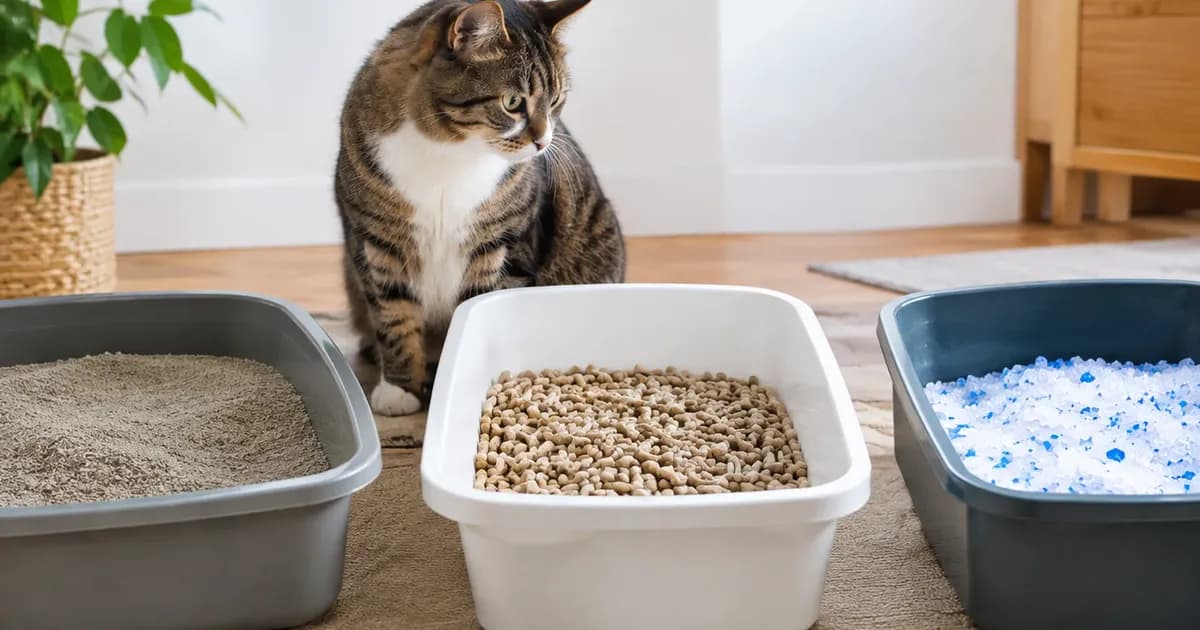
Odor is only one part of a fair litter comparison. Relevant criteria also include dust, tracking, scent, litter type, clumping, and price. Comparison systems may report separate results for odor control, tracking, dust, clumping, and recorded bag prices.
Tracking deserves particular care. Particle size can influence how much litter leaves the box, but box design, mat design, and static can influence the result too. A low-tracking claim should therefore be treated as a product characteristic to test in context, not as a guarantee that the floor around every box will stay clear.
Price should be recorded rather than guessed from the bag's headline number. Note the bag price, size, and how much litter is discarded during ordinary cleaning. A litter that costs less per bag may not feel economical if it is difficult to scoop or requires more frequent replacement. Those are practical comparison observations, not proof that one litter type is best for everyone.
Material matters because each type brings a different collection of trade-offs. The available research does not establish that any specific litter material is safest or best for every cat. A comparison of cat litter types without wasting money can help organize those broader choices without turning one material into a universal answer.
Make an at-home comparison without pretending it's a lab test
A simple household trial can make your notes more useful, provided you treat the result as local experience rather than independent testing.
- Compare products under as similar conditions as possible, including the same type of box and a similar fill depth.
- Record whether each product is scented and write down the stated odor-control mechanism.
- Note the odor before scooping, after scooping, and near the end of the trial period.
- Record whether clumps lift cleanly or crumble, and whether wet material remains in the box.
- Note visible dust during pouring and scooping, plus tracking around the box.
- Record the amount purchased, the price paid, and how often the litter needs topping up or replacing.
- Stop or reconsider the trial if your cat avoids the box or shows a clear change in litter-box behavior.
Keep the conditions as consistent as you reasonably can, but don't describe the result as a universal ranking. The practical odor experience can depend on the complete litter-box setup and maintenance routine, so a home trial answers “How did this work here?” rather than “Which litter is objectively best?”
What the claim cannot prove
An odor-control label cannot tell you, by itself, whether the product masks smell with fragrance, absorbs it, neutralizes it, or performs well only under particular test conditions. It also cannot establish that the litter will outperform every alternative in your home.
The fairest comparison is therefore less dramatic and more useful: name the mechanism, separate scent from waste odor, look for testing details, and score odor beside clumping, dust, tracking, litter type, and recorded price. That approach turns a vague promise into a set of questions you can actually answer.
For readers comparing litter-box habits as well as products, this guide to why a cat may use the litter box for one thing but not the other covers the behavior side of the problem.
FAQ
Sources
- Best Cat Litter : r/CatAdvice - Reddit — owner discussion