How Do You Compare Cat Litters When Price, Odor Control, Dust, and Tracking All Matter?
The best-value cat litter isn’t always the cheapest bag. A useful comparison weighs cost per usable day against odor control, dust, tracking, cleanup, and—most importantly—whether your cat will keep using it.
On this page
A $10 bag of litter can be a bargain—or a false economy. If weak clumps break apart, odor forces frequent full-box changes, or your cat refuses the texture, the apparently cheaper choice may cost more in time, waste, and replacement litter.
The most useful comparison is household-specific: what does this litter cost per usable day, and what problems does it solve or create? A one-cat home with a dust-sensitive owner may value a different product from a multi-cat home where odor is the urgent concern. There is no universal winner; cat acceptance, box setup, household conditions, and individual preferences all change the answer.
Start with the cost of keeping the box usable
Bag price is only the starting point. Estimate the litter’s real running cost by recording:
- The purchase price and approximate amount used
- How often you scoop and how much clean litter leaves with each clump
- How long the box remains acceptably clean
- How often you perform a full reset
- How much litter ends up outside the box
- Whether cleanup takes a few minutes or becomes a daily chore
A simple measure is:
cost per usable day = total litter cost during the test period ÷ days the box remained acceptable to both cat and household
That last phrase matters. A box that technically lasts three weeks but smells unpleasant after ten days has not really delivered three weeks of useful value. Clump strength, odor saturation, cat count, and full-box reset frequency can change monthly spending substantially. One published comparison estimates roughly $9 to $30 per month for one-cat households and about $18 to $59 for two-cat households across its tested lineup. Its examples range from about $0.35 per day for Arm & Hammer Super Scoop to $0.97 for Tuft + Paw, though those figures are comparison estimates rather than a promise of what every home will spend.
For a fair trial, compare two litters over similar conditions rather than judging by the size of the bag. A large bag may look cheaper per pound but become expensive if it tracks heavily, clumps poorly, or requires early replacement.
Decide which nuisance deserves the most weight
Most litter comparisons become confusing because they treat every feature as equally important. They aren't. Start by naming the problem that is making the current litter fail.
Odor: Is the issue urine smell, fecal odor, fragrance that becomes overpowering, or the smell of wet litter itself? Strong odor control may justify a higher daily cost in a multi-cat home, but perfume is not the same thing as odor removal. Some cats and people also dislike scented formulas.
Dust: Dust matters during pouring, scooping, and vigorous digging. A low-dust label does not mean that handling will produce no visible dust under every condition. Pouring technique, bag movement, and the product itself all matter.
Tracking: Small particles can travel farther on paws, but material alone does not determine the mess. Particle size, box design, mat design, and static all contribute. A low-tracking product can still scatter in a shallow tray or on a slippery floor.
Clumping and cleanup: Firm clumps help you remove soiled litter without taking large amounts of clean litter with it. Some products need extra time before clumps harden; others may stick or become paste-like around large urine deposits. Cleanup quality can matter more than a small difference in bag price because it affects both waste and daily effort.
Cat acceptance: A litter that performs beautifully by human standards has no value if the cat avoids the box, refuses to dig, or stops covering. Normal, repeated use comes before odor scores or attractive packaging.
For a broader look at the odor question, see this guide to comparing cat litter types without the hype.
What different litter materials tend to trade away
Material gives you a starting point, not a verdict.
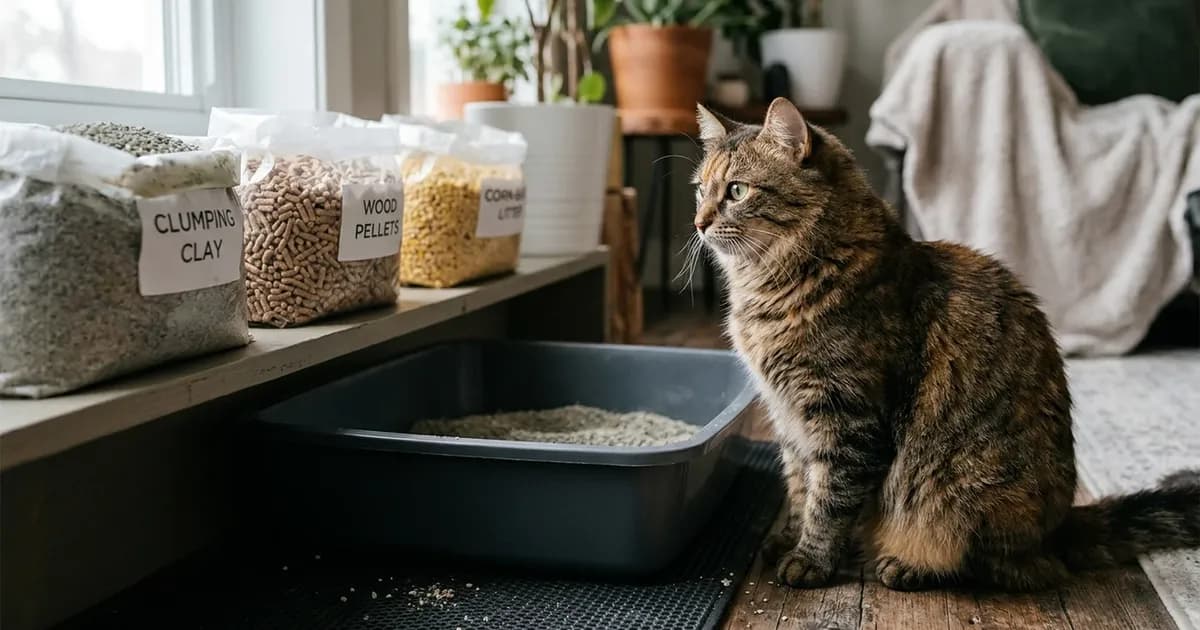
Clay often offers familiar texture, strong clumping, and broad availability. Dr. Elsey's Ultra is described as having tight clumps, odor control without heavy perfume, and an economical price per pound. The same comparison notes pouring dust and possible paste-like sticking with large urine deposits. A budget clay may still be the sensible choice when purchase price and easy replenishment matter most.
Plant-based options can reduce weight or offer a different texture, but they bring their own compromises. Catalyst Cat Litter Multi-Cat Formula is described as lightweight, absorbent, clumping, and made from upcycled softwood, with zeolite for odor absorption. Its clumps may need time to harden, and initial dust or tracking can occur. Corn litter with larger granules is intended to reduce dust and tracking, but individual cats may respond differently to the texture, and wet corn litter can develop an odor some households dislike.
Paper pellets are a different kind of compromise. Fresh News Unscented Non-Clumping Paper is described as low-dust and made from recycled paper, but pellets can become soggy and non-clumping litter may require more frequent full changes. That may suit a household prioritizing low dust, while frustrating someone who wants to remove only soiled areas.
Crystal litter changes the routine again. A silica crystal product such as PrettyLitter Health Monitoring is non-clumping and designed around moisture control and color prompts. The different texture and cleanup method may be useful for some homes, but the color change is a prompt to contact a veterinarian—not a diagnosis.
Don't let the box setup take the blame for the litter
Tracking and odor are partly household-system problems. A mat can catch some particles, but its design and placement affect how well it works. Box shape influences how much litter a cat kicks over the edge. Static can carry particles beyond the immediate area. Scooping frequency changes how long odor remains in the box, regardless of the material.
That means a litter trial should change as little else as possible. Keep the same box and mat, use a similar fill depth, and observe the same cleaning routine. Otherwise, you may credit the new litter for an improvement caused by a larger box or more frequent scooping.
A practical scorecard for two litters
Give each litter a simple household score from one to five for the categories that matter to you. Weight the urgent problems more heavily instead of pretending every feature has equal value.
- Record cost per usable day.
- Score odor after the normal interval between scoops.
- Score dust during pouring and scooping.
- Score tracking around the box and in nearby rooms.
- Score clump strength and how much clean litter is lost.
- Score the time and effort required for cleanup.
- Record whether the cat enters, digs, eliminates, covers, and returns normally.
- Note any fragrance, texture, weight, or disposal issue that could rule the product out.
For example, a low-priced clay litter might win on cost and availability but lose on dust. A more expensive unscented clay might earn its higher price if tighter clumps and lower dust reduce waste and make daily cleanup easier. A plant-based litter may be attractive for weight or tracking, yet poor value if your cat dislikes its texture or wet material smells unpleasant.
Editorial comparisons and home-use trials can help identify these patterns, but they should be treated as observations rather than universal test results. A product that works well in one box setup may behave differently in another.
When premium litter is—and isn't—worth it
Premium litter is worth considering when it solves a costly problem: repeated full resets, persistent odor, clouds of dust, heavy tracking, or difficult cleanup. The improvement does not need to be perfect. Saving a little clean litter at every scoop or keeping the box acceptable for several additional days can change the monthly calculation.
It may not be worth the extra cost when the cheaper product is already accepted by your cat, controls odor adequately, and fits your cleaning routine. A higher price can also buy a feature you don't need, such as an unusual texture, a health-monitoring prompt, or a design aimed at minimizing tracking in a household where tracking is already manageable.
The best value is therefore not the litter with the highest score in one category. It is the one that clears your cat's acceptance threshold, solves your household's biggest nuisance, and remains affordable over the days you actually use it. For more focused comparisons, browse cat litter product comparisons or explore this guide to cat litter and odor control.
FAQ
Sources
- Curious to see what kind of cat litter everyone uses - Reddit — owner discussion