How Do You Choose a Cat Litter Box Setup That Reduces Accidents and Odor?
A dependable litter box setup is less about buying the fanciest box and more about making the bathroom easy, quiet, comfortable, and consistently clean. The right number of boxes, thoughtful placement, suitable litter, and prompt attention to accidents can prevent many everyday problems.
On this page
A good cat litter box setup does two jobs at once: it gives your cat an easy, comfortable place to go, and it stops waste from sitting around long enough to dominate the room. That makes the setup a small household system rather than a single product choice.
Start with access and acceptance. Then add odor control through enough boxes, suitable litter, daily scooping, and regular washing. A covered box or deodorizer may help in some homes, but neither can compensate for a box that is cramped, inconvenient, frightening, or dirty.
Begin with the number and location of the boxes
The commonly used guideline is one litter box per cat, plus one extra. A one-cat home would therefore start with two boxes; a two-cat home with three. The purpose isn't to make cats choose between luxury bathrooms. Extra boxes reduce competition and give a cat another option if one box is dirty, occupied, or located somewhere uncomfortable.
Distribution matters as much as the count. Spread boxes through different areas of the home rather than lining them up together. In a multistory house, placing boxes on every floor makes access easier. Two boxes side by side may function more like one shared station than two genuinely separate choices, so leave space between them when they must occupy the same room.
Choose quiet, reachable places away from food and water. A laundry room beside a constantly running appliance, a narrow hallway, or a busy doorway may be convenient for people but unpleasant for a cat. Heating and cooling vents can also create an uncomfortable location. The cat should be able to enter and leave from more than one direction when possible, rather than feeling trapped in a corner.
Privacy still matters, but privacy should not mean isolation. A calm bathroom corner, spare room, or low-traffic area can work well. Keep the route clear, especially for kittens, older cats, and cats that have difficulty moving around.
Choose a box that lets the cat behave normally
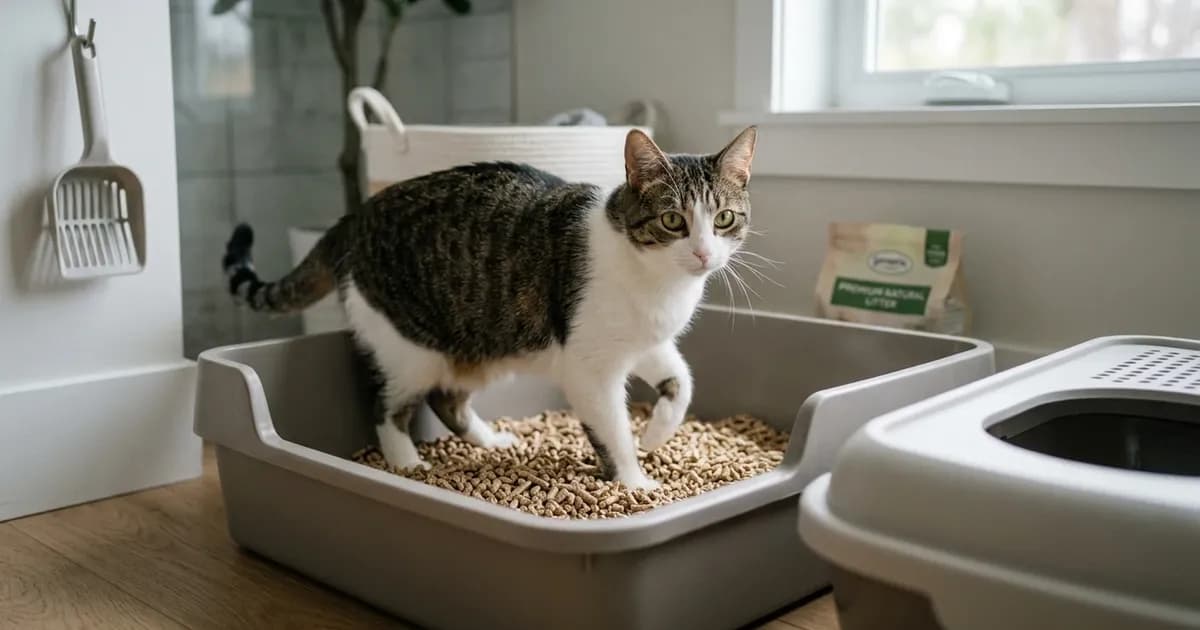
Cats generally need enough room to turn around, dig, and cover waste without pressing against the sides. A frequently cited sizing guideline is a box at least 1.5 times the cat's length, measured from the nose to the base of the tail. Many commercial boxes are surprisingly small, particularly for large-bodied cats.
Entry height needs the same attention as floor space. A kitten needs low sides that are easy to climb over. A senior cat or a cat with mobility problems may also struggle with a tall entrance, even if the box itself is spacious. A low-entry box can be a practical choice for those cats.
For a healthy, agile adult cat, the decision between open and covered is largely a preference test. Open boxes offer ventilation, visibility, and easy entry. Covered boxes can contain some litter scatter and may help keep waste out of sight, but the enclosed space can also hold odors and feel restrictive to a cat that prefers a clear view of the room.
There is no need to guess forever. In a home with enough space, offer different designs in separate locations and notice which one your cat uses readily. Do not remove the familiar option immediately after introducing a new box. A gradual change is less likely to turn a design experiment into an accident problem.
Top-entry boxes may reduce tracking and make it harder for dogs to reach the litter, but they are not a universal solution. Kittens, senior cats, and cats with mobility limitations may not be able to use them comfortably. Self-cleaning boxes can be convenient, yet they may be costly or startle some cats; they should not automatically replace all regular boxes or routine observation.
Treat litter as part of the design
A box can be perfectly placed and still rejected because the litter feels wrong under the paws or smells too strong. Unscented, low-dust litter is often a sensible starting point. Strong fragrance may disguise odor for people while making the toilet area less acceptable to the cat.
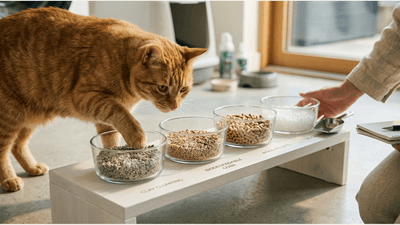
Clumping clay litter forms solid clumps when wet, which can make daily removal straightforward, although some products are heavy or dusty. Silica, paper, pine, corn, walnut, wheat, and other plant-based litters differ in texture, absorption, dust, and clumping behavior. Those differences matter more to the cat's feet and habits than to the appearance of the packaging.
If you're comparing materials rather than simply replacing an old bag, this guide to comparing cat litter types without wasting money can help organize the decision. Change litter gradually when possible, and avoid changing the box, location, litter type, and litter depth all at once. If the cat rejects the new arrangement, you'll otherwise have no clear clue what caused the problem.
Build odor control into the routine
Odor prevention starts with enough boxes and at least one daily scooping session. Multi-cat homes may need more frequent scooping because waste accumulates faster. Removing urine clumps and feces promptly keeps the box more inviting and prevents odor from becoming embedded in old litter.
Periodic emptying and washing are also necessary. The exact schedule depends on the litter and box, but the box should be fully emptied and scrubbed regularly with soap and water or a pet-safe cleaner. Rinse thoroughly, dry the box, and refill it with the cat's familiar litter when possible. Harsh smells can create a new avoidance problem while you are trying to solve an odor problem.
Ventilation helps, but it should not come at the expense of comfort. A well-ventilated room is preferable to a sealed cupboard, provided the box remains easy to reach and away from loud equipment. Deodorizers and scented products should be treated as optional additions, not substitutes for scooping, washing, appropriate litter, and enough boxes. For a closer look at odor-focused litter choices, see how to compare cat litter for odor without the hype.
Tracking is a separate nuisance from smell. A mat outside the box can catch some loose litter, while a larger box with adequate space may reduce the amount kicked over the rim. Top-entry designs can reduce tracking for suitable adult cats, but the trade-off is harder access. Comfort and reliable use come before a perfectly tidy floor.
Read accidents as information
An accident is not automatically a training failure or a sign of spite. First inspect the setup: Is the box dirty? Is access blocked? Has another animal started guarding the route? Is the box too small, too high, too enclosed, or newly moved? Has the litter's texture or scent changed?
Make changes methodically. Restore a previously accepted litter or location, add another box in a quiet accessible area, and keep the route clear. Clean soiled areas thoroughly so the smell does not continue to draw the cat back to the same spot.
A sudden or unexplained change in elimination habits deserves veterinary attention. Medical problems can be associated with new accidents, straining, frequent attempts, or other changes in urination or defecation. A household adjustment may still be part of the solution, but it should not delay professional advice when the change is abrupt or persistent.
A setup that works in real homes
A practical starting arrangement looks like this:
- Provide one box per cat, plus one extra.
- Place boxes in separate, quiet areas; use every floor in a multistory home.
- Keep them away from food, water, loud appliances, vents, and busy routes.
- Choose a box large enough for turning and digging, with an entry suited to the cat's age and mobility.
- Start with unscented, low-dust litter unless your cat clearly prefers another type.
- Scoop at least daily, more often in a busy multi-cat household.
- Wash boxes regularly with mild, pet-safe products and replace litter as needed.
- Offer open and covered designs only as a preference test, not as an assumption about every cat.
- Treat a sudden elimination change as a possible health issue, not merely a behavior problem.
The most reliable setup is usually the one your cat can reach easily, use without feeling cornered, and find clean every time. Once those basics are right, odor control becomes a manageable cleaning task rather than a constant battle.
FAQ
Sources
- Litter box Setup : r/cats - Reddit — owner discussion