Why Do Cats Sleep So Much, and What Counts as Normal vs. Too Much?
Cats sleep a lot because their bodies are built for short bursts of activity, not one long stretch awake. The real question isn’t just how many hours your cat sleeps, but whether their sleep pattern has changed.
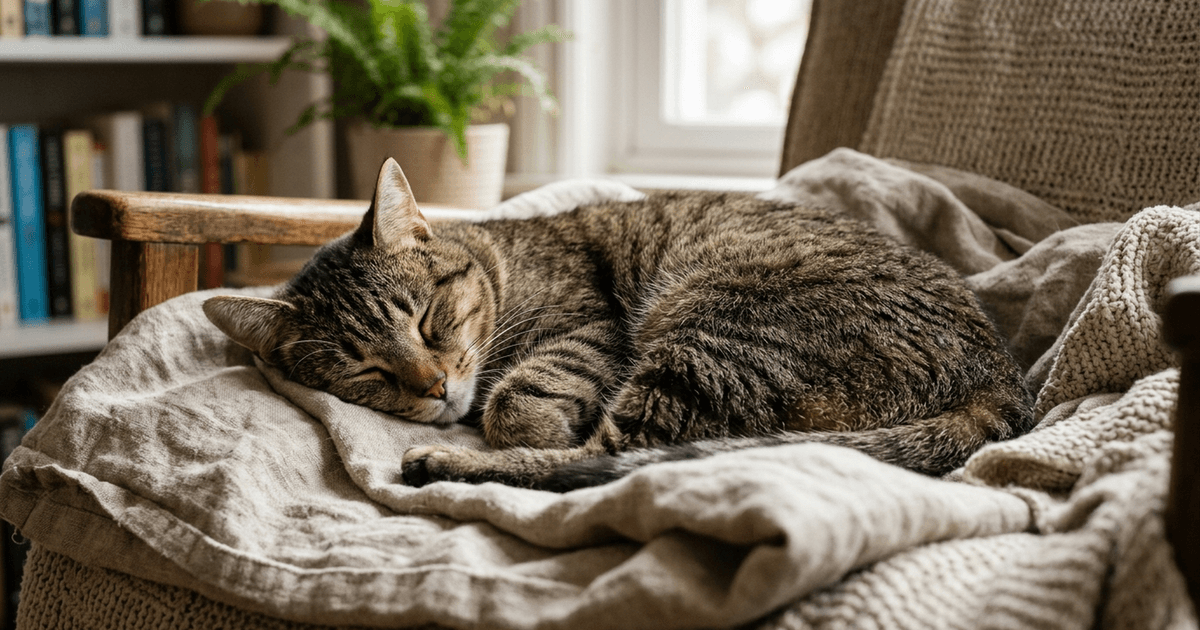
Cats sleep a lot because they’re built for a life of short, efficient bursts, not for staying awake the way people do. A healthy adult cat commonly sleeps about 12 to 16 hours a day, and some cats may sleep even longer without that being unusual. Kittens can sleep up to 20 hours a day, and senior cats often sleep 16 to 20 hours a day as well. The number matters, but not as much as the pattern: a change from your cat’s usual sleep habits is the bigger warning sign.
What makes cats look especially sleepy is that they don’t usually sleep in one long block. They tend to nap in multiple short cycles across the day and night. Much of that sleep is light sleep, with a smaller portion in deep sleep and REM, which is the stage where cats almost certainly dream. So a cat that seems to doze, wake, shift, and doze again isn’t necessarily doing anything strange. That rhythm is part of how cats are designed to rest.
Cats are also crepuscular, which means they’re most active at dawn and dusk. That explains a lot of the behavior owners see at home: a cat may seem deeply asleep through the afternoon, then suddenly want to play when the house gets quiet in the evening or when the light changes in the morning. They’re not truly nocturnal. They’re twilight-active, and that distinction matters because it helps set expectations. A cat waking up at odd hours isn’t automatically behaving badly or showing illness; often, it’s just being a cat.
Age changes the picture too. Kittens need more sleep because they’re growing fast, and senior cats often sleep more because they move more slowly and rest more often. That’s why the same nap-heavy schedule can be completely normal in one cat and worth paying attention to in another. A young adult cat that has always had bursts of play followed by long naps is one thing. A middle-aged cat that suddenly seems withdrawn, sluggish, or uninterested in normal routines is something else.
That’s the real distinction owners should look for: normal sleep is about your cat’s usual pattern; too much sleep is often about a change in that pattern. If a cat is sleeping more than usual but still eating, grooming, using the litter box, and getting up to interact in familiar ways, the change may still fall within normal variation. If the extra sleep comes with less appetite, poor grooming, reduced movement, hiding, or other behavior changes, it deserves more attention.
A cat that suddenly sleeps far more and seems dull when awake may be telling you something is off. The same is true if the cat becomes restless at night, paces, vocalizes more than usual, seems harder to wake, or stops acting like itself in ways that go beyond ordinary night play. Sleep changes paired with vomiting, weight loss, changes in thirst, or bathroom changes are especially worth a veterinary call. Those details matter because cats often hide discomfort well; sleep can be one of the few outward clues that something has shifted.
Owners often notice the nighttime side of this first. Many cats wake their people, ask for play after bedtime, or get the zoomies right when the household is settling down. In practical terms, that usually points to a cat whose natural activity window doesn’t match the human schedule. Some owners find that a structured evening routine, more daytime play, or moving a meal closer to bedtime helps the cat settle later. Small environmental changes can also matter, including making the room darker and quieter at night. Those adjustments don’t “fix” a medical problem, but they can help when the issue is mainly timing and habit.
A useful way to think about cat sleep is this: don’t count only the hours — watch the change. A cat who always naps heavily, wakes for a short burst of activity, and returns to sleep is probably just following a normal feline rhythm. A cat who suddenly sleeps much more, seems difficult to rouse, or loses interest in food, grooming, play, or social contact needs a closer look.
If your cat’s sleep pattern has changed and you’re not sure whether it’s normal, a vet visit is the safest next step. Cats are experts at making quiet problems look ordinary, and sleep is often where those problems show up first.
Related reading
FAQ
Sources
- How do you sleep while living with a cat??? - Reddit — owner discussion