Why Does My Cat Use the Litter Box for One Thing but Not the Other?
A cat that urinates in the litter box but defecates elsewhere—or does the reverse—may be responding to a medical problem, stress, or a setup that doesn't suit every part of litter-box use. Here's how to investigate the mismatch without assuming your cat is being difficult.
On this page
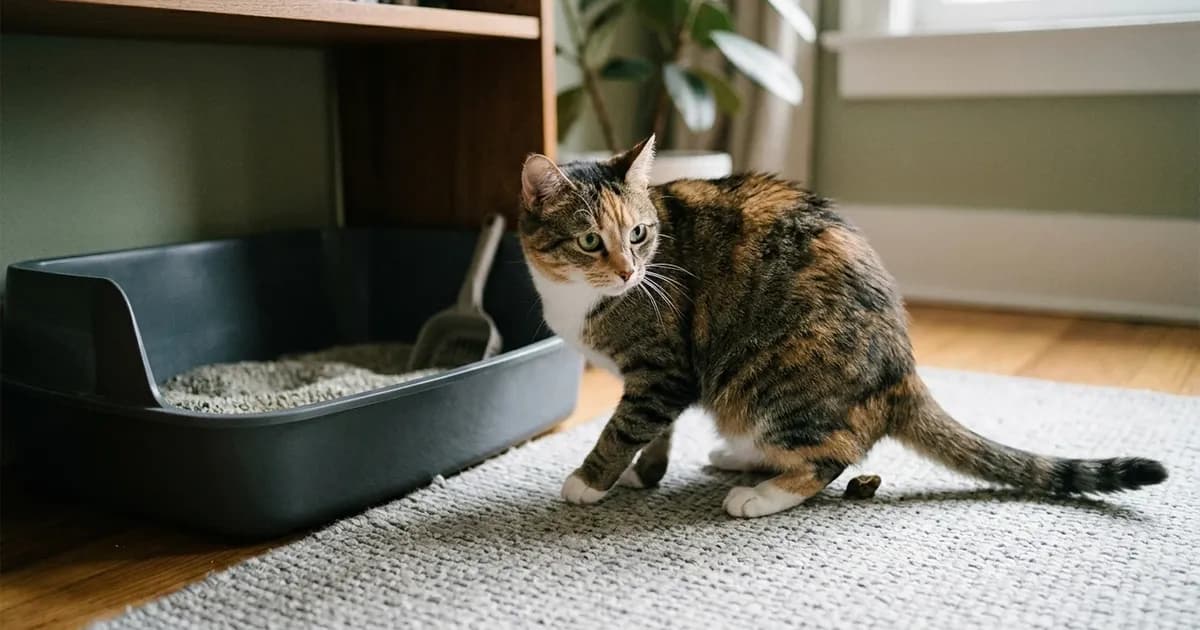
A cat that uses the litter box for urine but leaves stool elsewhere can be baffling. The same is true in reverse: a cat may defecate in the box yet urinate on the floor, bedding, or another familiar spot. Selective use doesn't prove that your cat is being spiteful, fussy, or deliberately difficult. It tells you only that urination and defecation may not be affected in exactly the same way.
The evidence available for this problem is stronger for urination outside the box than for selective defecation. So the safest approach is a two-track investigation: first look for signs of illness—especially urinary illness—then examine the box, the surroundings, and the pattern of what happens outside it.
Start with the urinary question
Urination changes deserve particular attention because several medical conditions can cause a cat to urinate outside the box. Reported possibilities include urinary tract infections, bladder stones, cystitis, and chronic kidney disease. A veterinary assessment may include a physical examination and urine testing rather than relying on observation alone. Petful The Spruce Pets
Seek same-day veterinary attention if your cat strains to urinate, produces little or no urine, visits the box repeatedly without success, has blood in the urine, appears painful, hides, or refuses food. Straining with little or no urine can signal a potentially life-threatening urinary blockage, with male cats at particular risk. Petful
A cat that still urinates in the box can have a medical problem. Box use for one bodily function does not rule out illness affecting the other. A sudden change is especially worth taking seriously, even if the rest of the routine seems normal.
What the mismatch can tell you—and what it can't
Compare the two behaviors rather than labeling everything as a single litter-box problem. Note whether your cat:
- Urinates in the box but defecates outside it
- Defecates in the box but urinates elsewhere
- Uses the box sometimes for both, with occasional accidents
- Avoids one particular box while using another
- Leaves urine or stool immediately beside the box, or travels to a different room
The location and texture of an accident may help describe the pattern to your veterinarian, but they don't establish a diagnosis. A sudden urinary accident can reflect illness, stress, marking, or an environmental problem. Sources identify household conflict, moving, a new pet, marking, and cognitive decline as possible behavioral contributors to urinating outside the box. Petful Cats.com
The supplied evidence does not establish a specific physiological reason cats sometimes separate urination and defecation between locations. Explanations such as a preference for one surface, a box that feels too small for defecation, or discomfort associated with bowel movements may be reasonable possibilities to discuss with a veterinarian, but they should not be presented as proven causes here.
If your cat urinates in the box but defecates elsewhere
Begin by checking the medical side, particularly if the change is new, frequent, or accompanied by altered appetite, discomfort, hiding, or a change in urine. The available sources don't provide enough direct evidence to identify why a cat selectively avoids the box for stool, so persistent or sudden defecation outside the box deserves veterinary guidance rather than a confident behavioral label.
At home, observe without interrupting. Does your cat enter the box and urinate comfortably, then leave before defecating? Does the accident happen beside the box, on a particular texture, or in one repeat location? Is the box easy to reach, clean, and positioned away from household commotion? These observations won't diagnose the cause, but they can reveal a practical pattern and give your veterinarian something concrete to work with.
Review the box as a whole rather than assuming that successful urination proves the setup is acceptable for defecation. A cat may still be signaling that something about the box, litter, access, or surroundings isn't working reliably. For a fuller setup review, see this guide to choosing a cat litter box arrangement that reduces accidents and odor.
If your cat defecates in the box but urinates elsewhere
Treat this pattern first as a possible urinary problem. Urinary tract infections, bladder stones, cystitis, and chronic kidney disease are among the conditions associated with urinating outside the box, and a veterinary examination with urine testing may be needed to sort them out. The Spruce Pets Petful
Stress and environmental trouble can also contribute. A noisy location, a dirty box, disliked litter, too few boxes, or conflict with another cat may make urination elsewhere more likely. That doesn't make the behavior voluntary in the human sense; it means the cat may be responding to pain, pressure, or an arrangement that no longer feels workable.
Urine accidents should be cleaned with an enzymatic cleaner. Ordinary cleaning may leave behind odor cues that encourage repeated use of the same area, while punishment can increase stress and worsen the problem. Never rub your cat's nose in an accident or punish them after the fact.
Check the litter-box arrangement
Environmental contributors repeatedly identified in the available sources include the box's cleanliness and location, the type of litter, and the number of boxes. Boxes should be kept clean and placed where the cat can reach them without being trapped in a busy or threatening area. In multi-cat homes, consider whether one cat can block another's route or make a box feel unsafe. The Spruce Pets Cats.com
Make changes methodically rather than changing everything at once. You might add a box in a separate, quiet location, improve cleaning, or test a different litter while keeping notes about the result. A sudden wholesale change can make it difficult to know what helped—and a cat may dislike the new arrangement as much as the old one.
If you're unsure whether the litter itself is part of the problem, this comparison of cat litter types can help you think through a change without buying a succession of products at random.
What to record before calling the veterinarian
A short log can make the appointment more useful. Record:
- Which function happens inside the box and which happens outside
- When the change began and whether it appeared suddenly
- The number of accidents and their locations
- Straining, repeated visits, vocalizing, blood, hiding, reduced appetite, or visible pain
- Changes in household routine, furniture, pets, visitors, or cat-to-cat interactions
- Which boxes your cat uses, how clean they are, and what litter they contain
Don't delay care while collecting a perfect record if urinary warning signs are present. The log is useful supporting information, not a substitute for examination.
What remains uncertain
Selective litter-box use is real as an owner-described pattern, but the supplied research does not verify one clear reason that a cat would choose the box for urine and another location for stool—or the reverse. The mismatch may involve different medical issues, stress, access, litter preferences, or an association with discomfort, but those possibilities need to be evaluated rather than treated as settled fact.
The most helpful response is therefore neither punishment nor guesswork. Take urinary changes seriously, arrange veterinary assessment for sudden or persistent problems, and inspect the litter-box setup with the two bodily functions kept separate in your observations. That approach respects the cat's behavior as information—and gives you a better chance of finding the reason.
FAQ
Sources
- Cat Peeing Outside Litter Box - Tried EVERYTHING - Reddit — owner discussion