Why Do Some Dogs Handle Rich Holiday Foods Poorly Even When They Seem Fine at First?
A dog can look perfectly normal after eating holiday leftovers and still develop vomiting, diarrhea, abdominal pain, or lethargy later. The timing alone doesn't tell you whether it's ordinary digestive upset or pancreatitis, but delayed symptoms deserve attention.
On this page
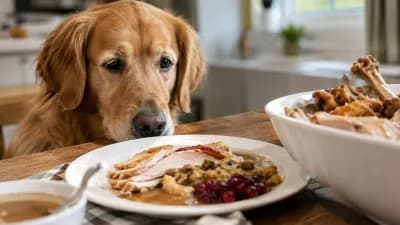
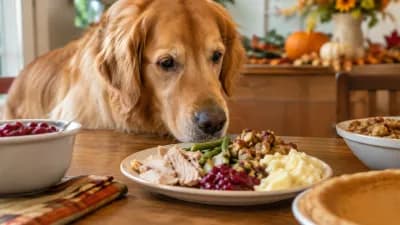
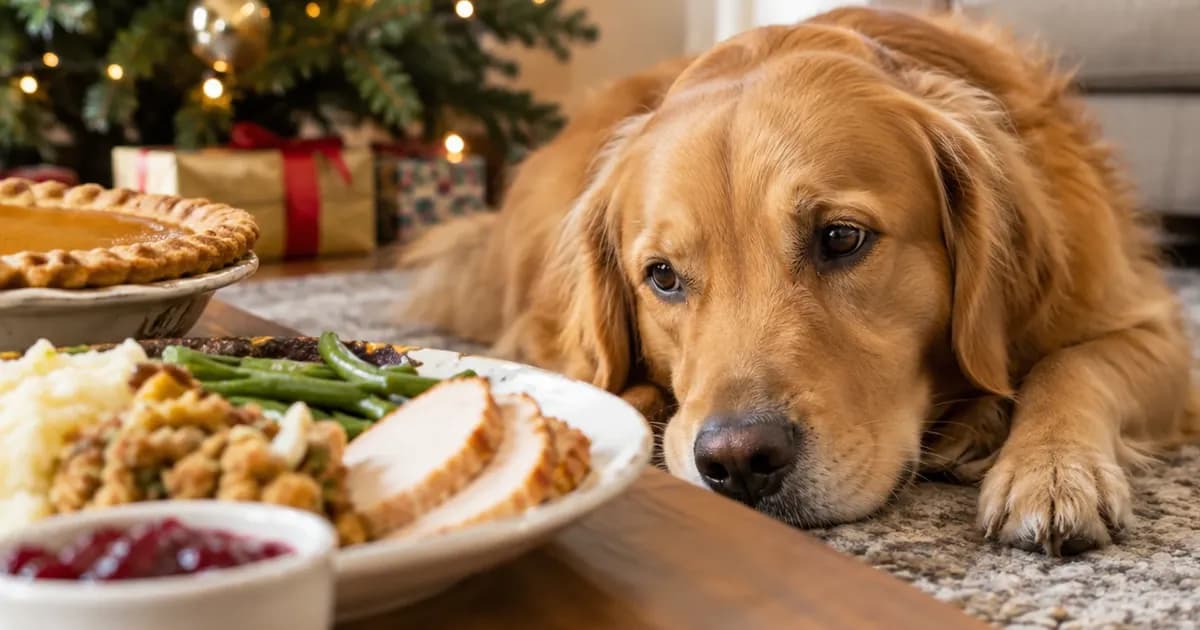
A dog that begs for turkey skin, gravy, buttered vegetables, or scraps from the carving board may appear completely normal afterward. Hours pass, and nothing seems wrong. Then, later that evening or the next day, vomiting, diarrhea, abdominal discomfort, or unusual tiredness begins.
That symptom-free interval can be misleading. A dog acting normally immediately after eating rich food does not prove that the meal will cause no trouble later. Holiday food may be unusually fatty, unfamiliar, and eaten in a larger quantity than the dog normally receives. Those factors can be enough to upset digestion, while sudden fatty food can also trigger pancreatitis in some dogs.
The timing isn't a diagnostic test, though. Some dogs develop simple gastrointestinal upset; others may develop pancreatitis; and not every dog that eats fatty food becomes ill. The sources do not establish one universal delay, safe portion, or fat threshold that applies to every dog.
Why a dog can look fine at first
Digestion isn't an instant event. A dog may finish a plate of scraps, wag its tail, and settle down before any signs appear. The meal still has to move through the digestive system, and the body may not show an obvious reaction immediately.
Holiday meals also tend to arrive as a combination of changes rather than one neatly measured ingredient. A dog might eat its usual dinner, then receive turkey skin, fatty trimmings, gravy, butter, or fried food from several people. It may also get into a bin or a counter while the household is distracted. PetMD identifies rich, high-fat holiday foods as a cause of gastrointestinal upset and a potential contributor to pancreatitis.
Some dogs may develop trouble the day after a large holiday meal rather than right away. That observation does not prove a precise biological timetable, and it doesn't mean every delayed episode is pancreatitis. It simply means that a calm first few hours should not be treated as an all-clear.
Ordinary stomach upset or possible pancreatitis?
A dietary indiscretion can produce vomiting or diarrhea without becoming pancreatitis. A sudden change in food, an unfamiliar ingredient, or simply too much food may disturb a dog's digestion. The same outward signs can also occur with pancreatitis, an inflammation of the pancreas that can be painful and potentially serious.
That overlap is why timing and appearance at home cannot reliably settle the question. A dog that vomits once and then returns to normal is not automatically suffering from pancreatitis, but repeated vomiting, worsening discomfort, or marked lethargy should not be dismissed as a passing reaction.
Pancreatitis is associated with high-fat meals in dogs, and veterinary sources list signs such as abdominal pain, vomiting, diarrhea, reduced appetite, dehydration, and lethargy. A previous episode may also be associated with a higher ongoing risk, so a dog with a history of pancreatitis should not be treated as though it has the same margin for experimentation as every other dog.
If your dog has a sensitive stomach, a steady everyday diet is usually easier to manage than holiday improvisation. The guide to choosing food for a dog with a sensitive stomach can help with the broader diet question, but it cannot make a fatty binge safe or prevent every digestive problem.
Signs that deserve prompt veterinary attention
Contact a veterinarian promptly after a rich meal if your dog develops:
- Repeated vomiting or an inability to keep water down
- Obvious abdominal pain, a hunched posture, or reluctance to move
- A swollen or distended belly
- Refusal to eat
- Marked lethargy, weakness, or collapse
- Diarrhea accompanied by worsening discomfort or other concerning signs
- Dramatic deterioration after initially seeming well
PetMD describes abdominal pain, persistent vomiting, severe lethargy, diarrhea, and dehydration among signs associated with more serious pancreatitis. A dog that is hunched, has a swollen belly, or refuses food after a rich meal should be assessed rather than simply watched at home.
Don't try to diagnose pancreatitis from the delay alone. A veterinarian may need to distinguish dietary upset from pancreatitis or another problem, particularly when vomiting is repeated, pain is apparent, or the dog cannot drink normally.
Which holiday foods create trouble?
The obvious risks are often the foods people regard as small extras. Examples include:
- Bacon grease and cooking fat
- Turkey or other poultry skin
- Fatty meat trimmings
- Butter
- Fried foods
- Rich gravy and heavily dressed side dishes
Holiday scraps can also contain ingredients that pose separate hazards, such as bones or toxic seasonings. PetMD specifically warns that excess fat, skin, juices, heavy creams, butter, and oils can contribute to gastrointestinal problems and more serious complications.
The exposure route matters as much as the recipe. A dog may receive scraps directly from guests, lick a plate, pull food from a low counter, or raid the trash after dinner. What looks like one harmless bite to one person can become several portions over the course of an afternoon.
Preventing the delayed problem
The safest holiday plan is not complicated, but it requires consistency from everyone in the household:
- Keep your dog on its normal diet rather than sharing fatty leftovers.
- Tell guests not to feed scraps, especially skin, grease, trimmings, butter, and fried foods.
- Secure counters, serving plates, and trash cans before leaving food unattended.
- Be especially cautious with a dog that has had pancreatitis or previous diet-related digestive trouble.
- If an accidental meal occurs, note what the dog ate and roughly when; that information can help a veterinarian judge the situation.
There is no source-supported universal amount of holiday fat that is safe for every dog. Individual tolerance varies, and a portion that causes no visible reaction in one dog may be followed by illness in another. Supplements should not be presented as protection against a fatty binge, either.
For broader feeding questions, the dog food and nutrition guide offers a useful place to continue, especially if holiday indulgence has exposed a recurring sensitivity.
A dog that looks fine after eating rich food may remain fine. It may also become sick hours later or the next day. That uncertainty is the practical point: don't use the symptom-free interval to assume the risk has passed, and don't use the timing alone to label the illness. Watch for pain, repeated vomiting, refusal to eat, lethargy, or worsening signs, and contact a veterinarian when those symptoms appear.