Which Thanksgiving Foods Can Cats and Dogs Share, and Which Belong Nowhere Near the Bowl?
Plain turkey, pumpkin, potatoes, sweet potatoes, and green beans may be shareable with cats and dogs—but Thanksgiving recipes often add the very ingredients that make them unsafe. Here’s how to separate a simple bite from a holiday hazard.
On this page
A small taste of Thanksgiving can be fine for a cat or dog—but only when the food is plain, cooked, and free from the ingredients that make holiday dishes rich, salty, sweet, or heavily seasoned. Plain turkey is not the same as turkey skin covered in drippings; plain pumpkin is not pumpkin pie; and green beans are not green bean casserole.
That difference—the preparation, not just the food’s name—is the safest way to judge what belongs in the bowl.
Start with the plain-food rule
For either species, offer only a small amount of food that you can identify clearly. Avoid butter, cream, salt, sugar, rich sauces, gravy, onions, garlic, and heavy seasoning. A familiar pet meal should remain the main meal; holiday food is an occasional taste, not a replacement for balanced nutrition.
Dogs can generally share plain turkey meat, potatoes, sweet potatoes, green beans, pumpkin, and small amounts of plain baked bread. The supplied research also lists plain turkey breast, green beans, and pumpkin as potentially safe for cats. Cats are obligate carnivores, so a cat’s most sensible holiday sample is usually a little plain turkey rather than a plate assembled from several side dishes.
The same principle applies to food safety beyond Thanksgiving. Clear ingredient information matters in everyday feeding too, which is one reason it helps to know how to read dog food labels rather than relying only on attractive packaging.
Turkey: meat only, with the holiday extras removed
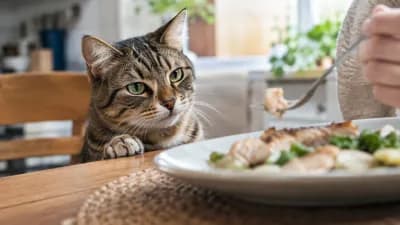
Plain, cooked turkey breast can be shared with dogs and cats in a small amount. Remove the skin, visible fat, seasoning, and every bone before offering it. Turkey skin and meat coated with butter, oil, drippings, brine, garlic, or onion are not equivalent to plain turkey.
Cooked poultry bones belong nowhere near either bowl. They can splinter and cause serious gastrointestinal injury, so a turkey carcass should go straight into securely closed waste—not to a pet as a chew or leftover treat.
Pick through the meat carefully, especially if it was roasted with aromatics. A tiny piece that looks plain may still carry seasoning or bits of onion and garlic from the pan.
Potatoes, sweet potatoes, pumpkin, and vegetables
Plain boiled or baked potatoes may be shared with dogs. Mashed potatoes made with butter, cream, onions, garlic, or rich seasoning should be skipped. Plain mashed sweet potato is also a possible dog treat, but brown sugar, marshmallows, maple syrup, and similar toppings turn it into a very different food.
Plain cooked green beans and plain cooked pumpkin are listed as potentially safe for both dogs and cats. Green bean casserole and pumpkin pie are not the same thing. Casserole sauce, fried toppings, sugar, spices, dairy, and other recipe ingredients matter.
Pumpkin pie also raises a broader problem: owners may not know every ingredient in a dessert. Some sugar-free products contain xylitol, an ingredient that can be dangerous to pets. Never assume that “sugar-free” means pet-safe, including with cranberry sauce, pie filling, or marshmallows.
If you want to offer a vegetable or fruit-based treat, identify the ingredients first. Rinsing or boiling a prepared dish is not established by the supplied evidence as a reliable way to remove every hazard.
Stuffing, gravy, casseroles, and desserts are recipe traps
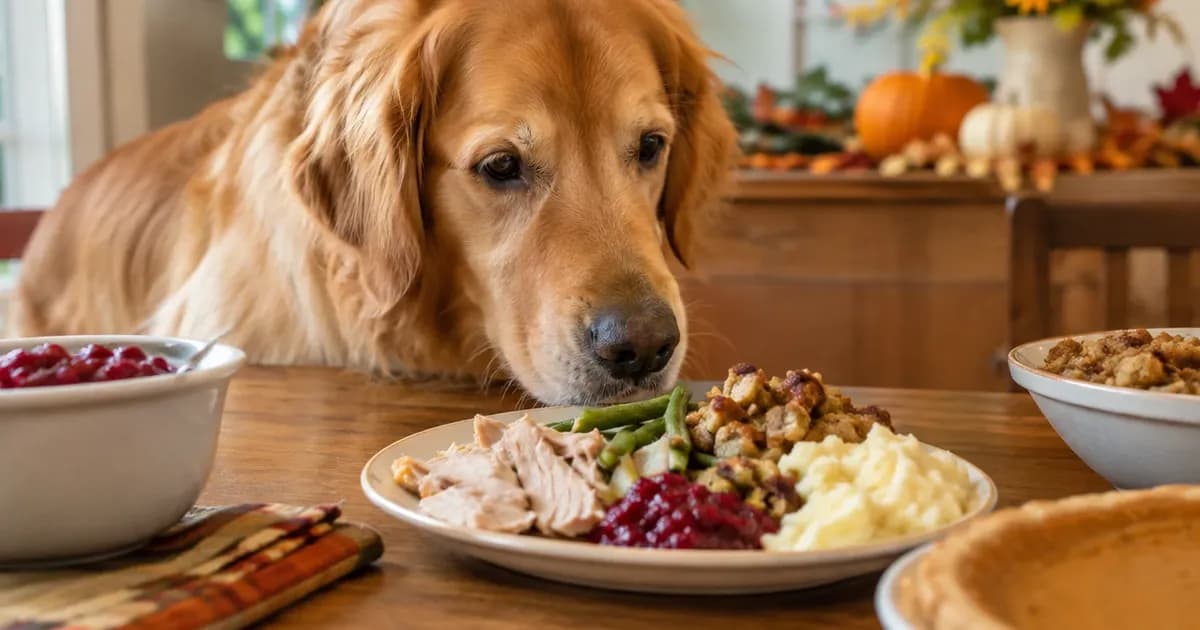
Stuffing commonly contains onion or garlic, so it should be kept away from cats and dogs. Gravy, buttery mashed potatoes, turkey skin, and rich casseroles are high-fat holiday foods associated in the supplied research with digestive trouble and pancreatitis risk, particularly in dogs.
Chocolate and alcohol are toxic hazards for both species. Grapes and raisins are especially serious concerns for dogs; the supplied research states that any amount can cause kidney failure. Keep fruitcake, raisin-containing dishes, chocolate desserts, and alcoholic drinks out of reach rather than relying on a pet’s self-control.
Raw yeast dough is also unsafe. It can expand in the stomach and produce ethanol. A bowl of rising dough, scraps on a counter, and discarded dessert wrappers can all become tempting targets during a busy meal preparation.
The supplied research does not establish that every cranberry, pecan, or pumpkin product carries the same risk. The recipe and ingredients must be checked rather than judged by the food’s headline name.
A quick comparison for the two species
Food or preparation | Dogs | Cats |
|---|---|---|
Plain, cooked turkey breast | Potentially shareable in a small amount, with skin, seasoning, and bones removed | Potentially shareable in a small amount, with skin, seasoning, and bones removed |
Turkey skin, gravy, or rich drippings | Skip; high-fat foods can cause digestive problems and are associated with pancreatitis risk | Skip; it is not a suitable plain-meat alternative |
Plain potato or sweet potato | Potentially shareable when plain | Do not treat a starchy side dish as a substitute for the cat’s normal food |
Plain cooked green beans or pumpkin | Listed as potentially safe | Listed as potentially safe |
Stuffing with onion or garlic | Keep away | Keep away |
Cooked poultry bones | Never give | Never give |
Chocolate, alcohol, grapes, raisins, raw yeast dough | Keep away; grapes and raisins are especially serious for dogs | Keep away from chocolate, alcohol, and raw dough; do not offer holiday scraps |
The table is a guide to ingredients, not a universal portion chart. The supplied evidence does not establish one safe serving size for every cat or dog. A pet’s size, health, normal diet, and history of digestive problems can change how an unfamiliar food affects them.
Prevent the accidental bite
Holiday accidents often happen away from the dinner plate: a guest shares a “harmless” scrap, a dog reaches the trash, or a cat investigates a prep bowl while everyone is distracted. A few simple boundaries reduce those opportunities:
- Tell guests before the meal that pets are not to be fed from the table.
- Put approved pet treats in a labeled container so visitors have a safe way to include an animal.
- Keep pets out of the kitchen while food is being prepared.
- Give a worried, excitable, or persistent pet a quiet, pet-safe room with familiar essentials.
- Place shared food in the pet’s bowl after the meal rather than handing it over at the table.
- Remove bones, stuffing, wrappers, dough, and leftovers from accessible surfaces.
- Secure the garbage after clearing plates.
A calm room can be especially useful for cats, which may hide or become stressed by unfamiliar visitors. Dogs that beg can also have trouble distinguishing an approved treat from a dangerous scrap. Keeping their routine and regular food steady helps make the celebration easier to manage. For broader nutrition questions, the pet food and nutrition guides offer a useful place to continue.
If a pet eats something questionable
Do not wait for certainty before taking a potentially serious ingestion seriously. Note what the pet ate, how much may be missing, and when it happened. Save the package or recipe if an ingredient is unclear, and contact a veterinarian or an appropriate animal poison-control service for advice.
Urgent professional guidance is especially appropriate after access to chocolate, alcohol, grapes, raisins, xylitol, raw yeast dough, onion or garlic, cooked bones, or a large amount of fatty food. Do not assume that vomiting, diarrhea, unusual thirst, weakness, or other changes are simply part of overeating, and do not attempt home treatment unless a veterinary professional directs it.
Owner forums can be useful for spotting the questions people commonly face—whether rinsing leftovers is enough, or whether turkey necks and giblets are suitable—but those discussions are personal experiences, not veterinary proof. Ingredient identification, careful bone removal, and prompt professional advice are safer than experimenting with leftovers.
Thanksgiving does not require a separate menu for pets. A few carefully chosen bites of plain food can let them share the occasion. The safest plate, however, is usually the least festive one: unseasoned meat, no bones, no rich toppings, and no mystery ingredients.