How Should You Store Cat Food So It Stays Fresh Without Losing Its Flavor?
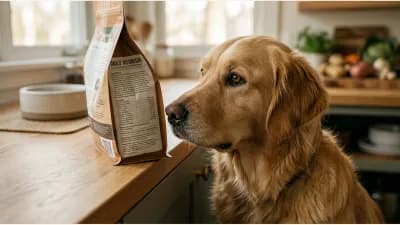
The most dependable everyday approach for dry cat food is to keep it in its original bag, close that bag securely, and place it inside a clean, airtight container.
On this page
Dry cat food usually stays in better shape when you limit its exposure to air, moisture, insects, and handling. For most homes, the simplest setup is also the most sensible: leave the kibble in its original bag, close the bag well, and put the whole bag inside a clean, airtight container. That gives you an extra barrier without throwing away the product name, batch information, and feeding instructions printed on the packaging.
An airtight container is useful, but it isn't a magic freshness guarantee. The available sources support airtight storage as a practical way to reduce exposure and make feeding easier; they do not establish that a particular plastic, metal, glass, or vacuum-sealed design protects flavor better than every other option. Owner discussions are helpful for seeing how people use these systems, but they remain personal experience rather than controlled food-storage evidence.
Why dry food can become less appealing
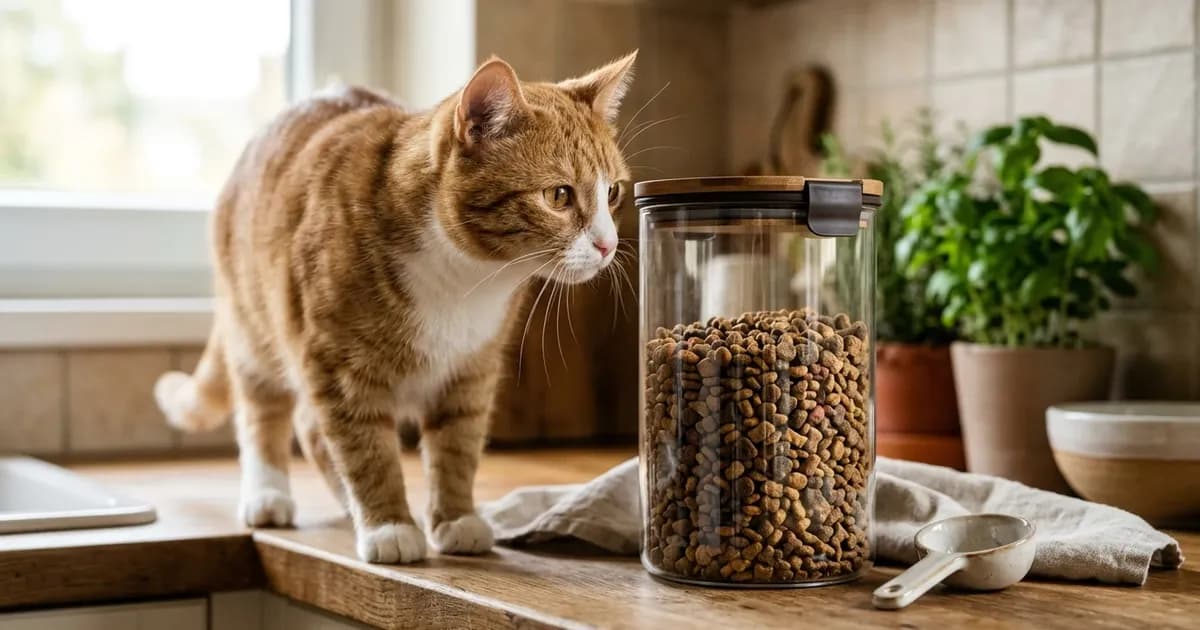
Kibble is repeatedly exposed whenever a bag is opened. Air, humidity, heat, and crumbs left around the opening can all make storage less controlled. A container with a tight-fitting lid helps limit that exposure and can also keep insects and other contaminants away from the food. Catster's review of storage containers also points to practical advantages such as easier access and measuring features.
Flavor is harder to judge than freshness. A cat may refuse food because its smell or texture has changed, but the supplied evidence does not show which storage material prevents that change most effectively. Claims that one container keeps kibble flavorful for a specific period should therefore be treated cautiously unless they come with reliable testing.
If you're still deciding which food suits your cat, storage is only one part of the larger picture. Our guide to choosing food for an indoor cat can help separate everyday nutritional questions from packaging and convenience decisions.
Three practical ways to store dry cat food
1. Original bag inside an airtight container
This is the strongest all-purpose choice for many households. Keep the kibble in its original packaging, press out excess air if practical, close the opening securely, and place the bag in a clean airtight bin.
The arrangement offers two kinds of protection. The bag remains the food's immediate packaging, while the outer container adds a barrier against exposure and makes it harder for pets or pests to reach. Keeping the original bag also preserves identifying information in case you need to check the product or respond to a recall. Some owners specifically prefer this method because they believe it reduces contact between the food's oils and the container surface; that preference is documented as owner experience, not proof of better flavor preservation.
2. Pouring kibble directly into an airtight container
Direct transfer can be convenient, especially when a wide opening makes scooping easy. Containers may include calibrated cups, scoops, stackable shapes, or locking lids, and those features can matter as much as capacity when the food is used several times a day.
The trade-off is that the original bag is no longer protecting the food directly, and the label information may be less accessible. A direct-fill container also needs sensible cleaning between bags. Do not simply keep topping up old kibble with new food; leftover crumbs and oil can remain in the container. The supplied sources support choosing a clean, airtight food container, but they do not establish a universal cleaning schedule or a guaranteed storage duration.
3. Vacuum-sealed portions
Vacuum sealing appeals to owners who buy larger bags or want to divide food into smaller portions. Community discussions include people who vacuum-seal dry food and keep the original packaging or product information separately.
Still, vacuum sealing does not automatically establish a safe storage period. The available material does not verify how long vacuum-sealed cat food remains fresh, nor does it prove that vacuum sealing preserves flavor better than an airtight container. Treat it as a specialized storage method, not as permission to keep food indefinitely.
Choose capacity by volume, not only by pounds
A container's label may say it holds a certain number of pounds, but that figure will not translate perfectly across every kibble. Different foods occupy different volumes, so a bin that fits one brand's bag may be awkwardly small for another. Owners regularly mention this mismatch when comparing containers.
Before buying, check the dimensions and compare them with the actual bag you use. A container that is too full is difficult to scoop from and may not close properly. One that is much larger than necessary can be inconvenient on a counter and may encourage you to store more food than you can comfortably use.
Useful features include:
- A genuinely tight-fitting lid
- An opening wide enough for a scoop and your hand
- A shape that fits your pantry or feeding area
- A removable or washable interior
- A measuring scoop, if consistent portions are helpful
- Enough room for the bag if you plan to use original-bag storage
Some owners report long-term satisfaction with Vittles Vault-style containers, but those reports are anecdotal. Product listings show that many storage designs are available; they do not independently verify how well each one preserves freshness or flavor.
Does the original bag really matter?
Keeping the bag has practical advantages even when you use a container. It retains the food's identity, instructions, batch details, and other information that can disappear after pouring the kibble into an unmarked bin. It also avoids making a stronger claim than the evidence supports: the supplied sources do not prove that transferring food into a particular container improves or harms flavor.
A good routine is to place each new bag inside a clean outer container rather than mixing new food with the previous batch. Close the bag as securely as possible, keep the lid shut between meals, and store the container away from heat and damp areas. These steps are sensible exposure control; they are not a verified promise of a particular shelf life.
For broader guidance on selecting food rather than storing it, see our overview of how to choose cat food without getting lost in marketing claims.
What about wet cat food?
Wet food needs more cautious handling, and the research supplied for this article does not provide authoritative storage times or detailed safety rules for opened cans, trays, or pouches. Because of that gap, specific timelines should not be presented as settled fact here.
Follow the product label and reliable veterinary or food-safety guidance for the particular food. Keep unused portions covered and handled hygienically, and ask a veterinarian when your cat has special health needs or you are uncertain about whether food should still be offered. An airtight dry-food bin is not a substitute for appropriate wet-food handling.
A straightforward routine for everyday feeding
- Buy a container with enough real volume for the bag you use, not just the advertised pound rating.
- Wash and dry the container before introducing a fresh batch.
- Leave the kibble in its original bag whenever the bag fits inside the container.
- Close the bag securely and keep the outer lid shut between feedings.
- Use a scoop or measuring cup if consistent portions matter.
- Avoid treating owner anecdotes about vacuum sealing or long-term storage as verified safety evidence.
- For wet food, follow the label and authoritative guidance rather than applying dry-food storage habits.
The best storage choice is therefore less about finding a container that promises superior flavor and more about controlling exposure without making daily feeding awkward. For most cat owners, original-bag storage inside a clean airtight container offers the clearest balance of protection, traceability, and convenience.
FAQ
Sources
- Cat food storage containers? : r/CatAdvice - Reddit — owner discussion