How Do You Choose Food for an Indoor Cat Without Overcomplicating It?
Choosing food for an indoor cat gets a lot simpler once you stop chasing labels and focus on the basics: a complete and balanced diet, then the right balance of calories, protein, moisture, and fiber. That small checklist covers most of what indoor cats actually need.
On this page
Choosing food for an indoor cat doesn’t need to turn into a label-reading marathon. Start with one non-negotiable: the food should be complete and balanced for your cat’s life stage. After that, the decision gets much simpler. You’re mostly choosing the version that fits a lower-activity cat best — one with the right calorie level, enough animal-based protein, some moisture if your cat drinks poorly, and fiber only if it actually helps with hairballs or digestion.
Indoor cats are usually less active than outdoor cats, and that matters because fewer calories burned can mean easier weight gain. Some indoor-cat foods are marketed to support weight management, hairball control, digestion, skin and coat health, or hydration, but the label on the front is less useful than the numbers and ingredients underneath it.
The simplest way to choose
Think of indoor cat food as a practical match, not a special category with magical properties. Several cat-food guides frame the choice the same way: check the nutrition panel and ingredients, then decide whether the formula fits your cat’s activity level, body condition, and any hairball or weight concerns. That approach is calmer and more useful than chasing whatever sounds most premium.
A good rule of thumb is this: complete and balanced first, then calories, protein, moisture, and fiber. Those four filters cover the real differences that matter most in everyday feeding.
What matters most: calories, protein, moisture, fiber
Calories matter because indoor cats tend to burn fewer of them. A food aimed at indoor cats is often designed with a more moderate calorie level so it’s easier to maintain a healthy body weight. That doesn’t mean “low calorie” is automatically best; it means the food should fit the cat in front of you. A laid-back cat who spends the day on the couch usually needs a different feeding approach than a lean, busy cat who races through the house like it’s a sport.
Protein should come from animal sources and be a clear feature of the food, not an afterthought. Cats.com recommends choosing cat food that relies on animal-sourced protein and fat with limited carbohydrates. That aligns with the basic fact that cats are obligate carnivores, but you don’t need to turn that into a whole philosophy. Just look for a food where protein is central, not buried under marketing language.
Moisture matters because many indoor cats aren’t great drinkers. High-moisture diets are often a strong choice for hydration, especially if your cat mostly eats dry food. Wet food naturally brings more water to the bowl, while dry food is more convenient and often more affordable. Neither is perfect in every household; the better choice is the one that fits your cat’s habits and your routine.
Fiber can help with hairballs, which come up often in indoor cats because they groom a lot and tend to spend more time inside. But more fiber is not always better. Cats.com warns that too much fiber can cause problems, so the goal is useful fiber, not just a bigger number on the bag. If your cat has regular hairballs, fiber may be worth prioritizing. If not, there’s no reason to chase it just because the package promises “digestive support.”
Dry vs. wet food isn’t a moral choice
A lot of indoor-cat food debates accidentally become dry-versus-wet debates. They don’t need to.
Dry food is convenient, easy to store, and often budget-friendly. Wet food usually brings more moisture and may be helpful for cats that don’t drink much. Some owners also mix the two, which comes up in owner discussions as a practical compromise. That’s an anecdotal household strategy, not proof that one format is superior.
What matters is whether the food is complete and balanced, whether the calorie level fits your cat, and whether your cat actually eats it. A beautifully formulated food does you no good if it sits untouched in the bowl.
How to read a label without overthinking it
You don’t need to decode every line of the package. You only need a few useful checks:
- Look for a statement that the food is complete and balanced for adult maintenance or your cat’s life stage.
- Check the protein source and make sure animal-based ingredients are prominent.
- Compare calories, especially if your cat has gained weight or seems to be packing on pounds easily.
- Notice whether the food is aiming for hairball control, hydration, or weight management, and decide whether that matches your cat’s real needs.
- Don’t assume a longer ingredient list or a fancier name means better nutrition.
One source used a very simple framework: nutritional information, ingredients, hairball support, and whether the food is dry or wet. That’s a sensible way to shop because it keeps the decision tied to the cat, not the marketing.
When budget, picky eating, or a sensitive stomach change the answer
Real life usually complicates the neatest feeding advice.
Budget matters, and it should. A food that fits your budget is the food you can actually keep feeding. Owner discussions often circle back to affordability, local availability, and whether the cat will accept the food in the first place. Those are not trivial concerns. A pricey food that gets refused at breakfast is not a win.
Picky eating matters too. Reddit owner discussions repeatedly come back to a blunt truth: the best food is the one the cat will eat. That’s not a nutrition philosophy, but it is a useful reminder that food selection has to work in the bowl, not just on the shelf.
Sensitive stomachs can also change the equation. In those situations, a slower transition and a simpler formula may be more useful than a dramatic switch to the trendiest indoor-cat recipe. If your cat has ongoing vomiting, diarrhea, weight loss, or refuses multiple foods, a veterinarian should help sort out whether the issue is the food itself or something else.
A practical one-minute shopping checklist
Before you buy, run through this short list:
- Is it complete and balanced for the right life stage?
- Does the calorie level fit a less active indoor cat?
- Is protein clearly animal-based and central to the formula?
- Does moisture matter for this cat’s drinking habits?
- Is fiber actually useful here, or just marketing?
- Will your cat realistically eat it?
- Can you afford to keep feeding it consistently?
That’s the whole job, really. Indoor cat food doesn’t need to become a puzzle box. Pick a nutritionally complete food, match it to your cat’s activity level and real-world needs, and ignore the parts of the label that sound impressive but don’t change what happens at mealtime.
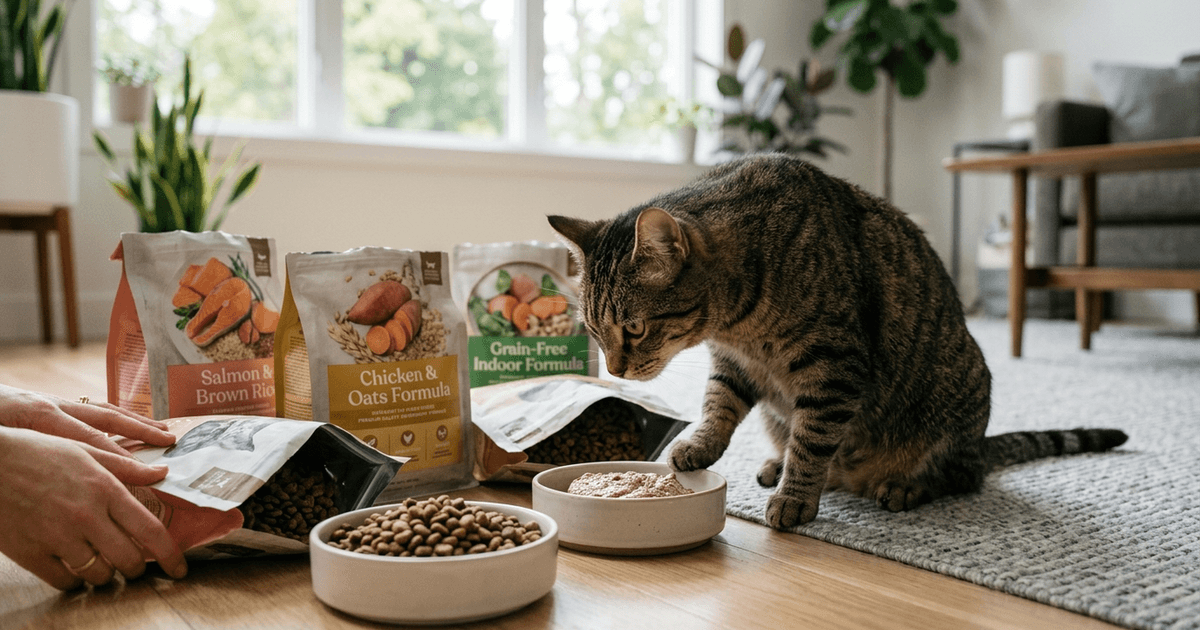
If you want to go one level deeper, cat food comparisons can be useful for building a habit of reading labels calmly, even if your cat is the one doing the judging.
FAQ
Sources
- Best Food for Indoor Cats : r/CatAdvice - Reddit — owner discussion