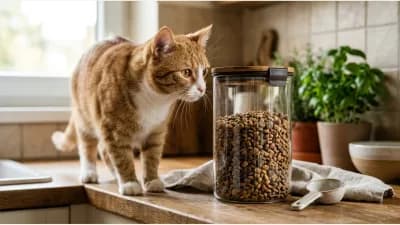
What Is the Best Way to Store Pet Food for Freshness and Pest Control?
The best pet food storage setup combines the original package with a clean, lidded container, cool and dry storage, and a simple cleaning and inspection routine.
On this page
The most reliable pet food storage system isn't simply an airtight bin. It's a clean, lidded container used alongside the original bag or package, plus cool, dry storage and regular cleaning. That combination helps protect flavor and quality, limits access by insects and pets, and keeps the product's identifying information close at hand.
The original packaging matters more than many owners realize. It carries the product name, manufacturer, UPC code, lot number, and best-by date—details that may be needed if the food is recalled or you suspect a problem. The FDA recommends keeping pet food in its original bag or container for that reason.
The most useful setup for dry food
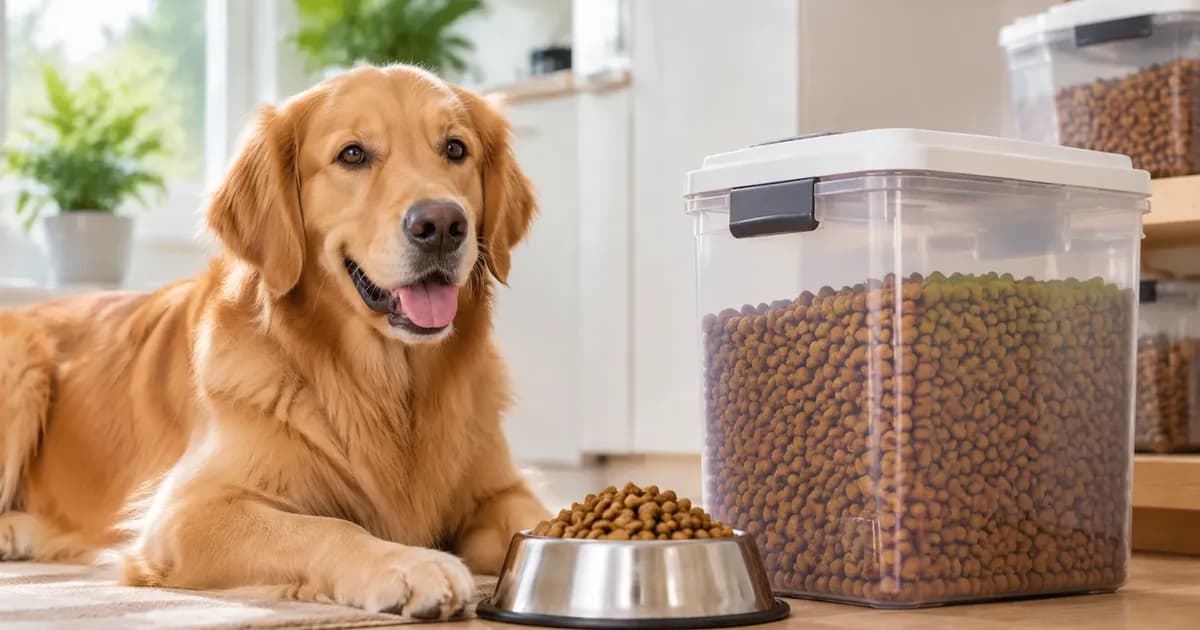
For kibble, leave the food in its original bag and place the entire bag inside a plastic or metal bin with a snug lid. The bin provides a second layer of protection without separating the food from its label and traceability information. The Pet Food Institute also recommends this arrangement when possible.
A secondary container is particularly helpful in a busy kitchen or a home with determined pets. A closed bin can reduce access to the food and help limit exposure to insects, while indoor storage keeps the bag away from damp outdoor or garage conditions. It should still sit in a cool, dry location; FDA guidance specifies below 80°F for dry food.
If you pour kibble directly into a separate container, use one that is clean, completely dry, and fitted with a lid that closes snugly. The word clean matters here: old crumbs and the thin film of fat left behind by kibble can remain on the container's surfaces even when it looks tidy. Wash and dry the bin between bags rather than continually topping up the old food with new food.
A wide opening, smooth interior, and lid parts that can be reached easily make that routine less frustrating. The best container is one you can actually empty, inspect, wash, and dry thoroughly—not one that is merely labeled airtight.
What to look for in a container
No single material has been established as universally best for every household. Plastic, metal, or another suitable food-storage design can work when the container is in good condition, easy to clean, dry before use, and equipped with a secure lid. The practical features matter more than a marketing label.
Look for:
- A lid that closes securely and is easy to operate.
- An opening wide enough to reach every corner during washing.
- A smooth interior without difficult seams or inaccessible grooves.
- A size that lets you store the food without repeatedly cramming or spilling it.
- A container you can inspect for damage, crumbs, or insect activity.
Check the bin before adding a new bag. Cracks, damaged seals, or signs of insects deserve attention before the food goes inside. Pest control works best as a routine: close the container, store it indoors in a cool, dry place, and inspect it regularly. An “airtight” claim by itself does not replace those steps.
For a broader look at food choices and labels, this guide to comparing dog food ingredients can help separate meaningful information from vague marketing language.
Where dry and unopened wet food belong
Dry food and unopened canned food should be kept in a cool, dry place, away from excess heat and moisture. The FDA advises storing dry food below 80°F. A kitchen cupboard may work well if it stays dry and isn't beside a dishwasher, radiator, oven, or leaking cleaning products.
The Pet Food Institute advises keeping food in a cool, dry indoor place and avoiding garages or outdoor areas where insects may be present. It also recommends keeping pet food away from household chemicals that could leak.
A secure location matters for another reason: a pet that can reach a large supply may eat far more than intended. Storage should be inaccessible to curious dogs, cats, and children while remaining convenient enough that the household will close the bag or lid properly every time.
Opened canned, pouched, and fresh food
Opened wet food needs a different routine from kibble. Cover unused or leftover canned and pouched food tightly and promptly refrigerate it, or discard it. FDA guidance specifies a refrigerator temperature of 40°F or below.
Don't leave an opened portion sitting at room temperature simply because the bowl still looks clean. Put the remainder away soon after feeding, using a cover that fits securely. Follow the product label for any additional storage instructions.
Fresh or raw diets may have separate handling requirements. Keep them apart from other foods and clean surfaces and utensils carefully after contact; the FDA gives specific food-safety guidance for raw pet food.
For cats, storage questions often include how to protect a partially used can while keeping the next meal appealing. This cat food storage guide covers that situation in more detail.
The between-bag cleaning routine
The easiest time to clean a container is when the bag is empty. A simple sequence keeps the system manageable:
- Empty the container completely; don't pour new kibble over the remnants.
- Inspect the inside, lid, seams, and corners for crumbs, oily residue, damage, or insects.
- Wash the container with soap and water.
- Rinse away any soap residue.
- Dry every surface completely before adding another bag.
- Place the new original bag inside, or add food only after the container is clean and dry.
Washing between bags removes residual fat and crumbs that can remain on the container's surfaces. If the bin is still damp, wait before refilling it. Moisture has no place in a dry-food container.
Scoops, bowls, and hands are part of storage
A clean bin cannot compensate for a dirty scoop. Use a scoop or measuring utensil reserved for pet food, and wash and dry it after each use. Pet bowls should also be washed and dried after each use. The FDA recommends washing hands before and after handling pet food and treats.
These habits are small, but they connect the storage area to the feeding area. Crumbs around the bin, an unwashed scoop, and a bowl left with old food can all undermine an otherwise careful routine.
Signs that food or storage needs attention
Pause before feeding and inspect the setup if you notice:
- Insects or insect activity in or around the container.
- A damaged bag, cracked bin, or lid that no longer closes properly.
- Dampness, clumping, or residue inside a dry-food container.
- Food left over from an older bag beneath a newly added supply.
- Packaging details that have been discarded or separated from the food.
If you suspect a food defect or adverse reaction, keep the remaining food in its original packaging when possible. The product information may help identify the food and guide further reporting or advice.
A storage container is a useful tool, not a guarantee. Freshness and pest control depend on the whole arrangement: original-package traceability, a clean and dry bin, a secure lid, cool indoor storage, prompt refrigeration of opened wet food, and regular inspection.
For more practical feeding and nutrition guidance, browse the dogacat.com pet food and nutrition guides.