Why Does My Cat Keep Meowing at Me, Even After Food and Attention?
A cat may keep meowing after eating because food and affection weren't the thing they were asking for. Learn how to read the timing, location, body language, and recent changes that can reveal what persistent vocalization means—and when a new pattern deserves veterinary attention.
On this page
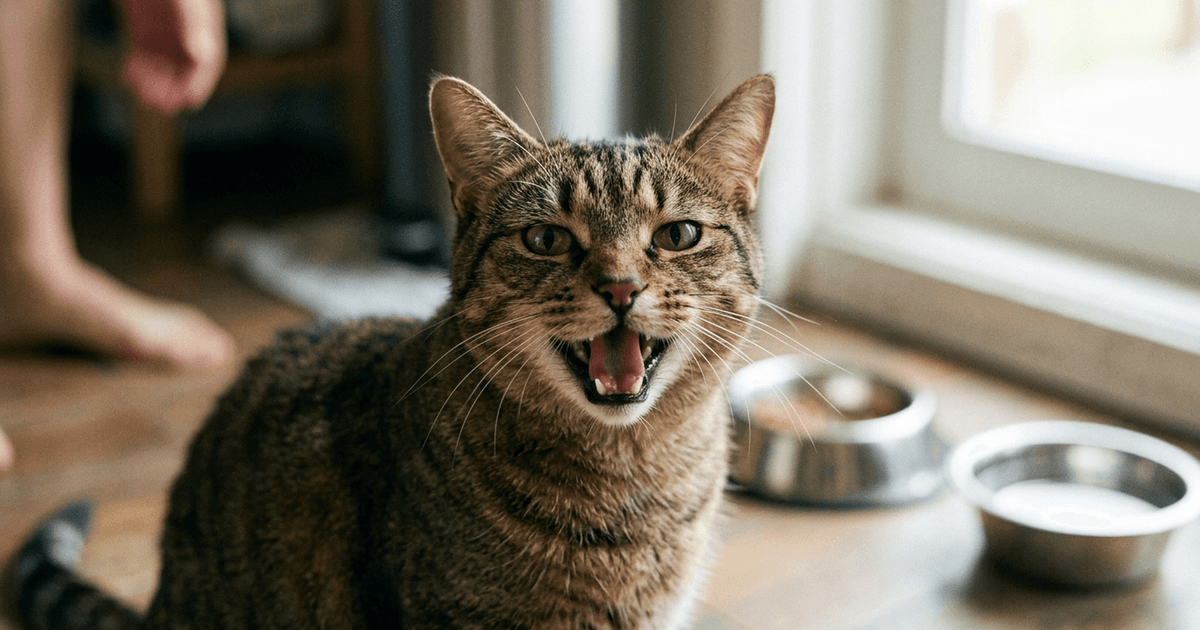
A full food bowl and a few minutes of attention don't always answer the question your cat is asking. Cats meow to communicate many kinds of needs, wants, and emotions—not only hunger—so continued vocalizing may point toward play, access to a particular place, stimulation, stress, or discomfort.
The most useful response isn't to silence every meow. It's to work out what happens just before it, where it happens, and what your cat does immediately afterward. A meow at the kitchen counter before dinner tells a different story from a new, persistent cry beside the litter box or a cat calling at night after a household change.
Food and affection may not be the request
Imagine giving your cat dinner, stroking them, and then watching them walk straight to the hallway and meow at a closed door. Food and attention were available, but neither addressed the likely target of the behavior: access, movement, or something beyond the door.
A cat may continue vocalizing because they're asking for:
- Play or more mental stimulation
- Access to a room, window, balcony, or outdoor area
- Social contact or a particular kind of affection
- Fresh water or a cleaner litter box
- Help with an unsettled or stressful environment
- Relief from pain or another health problem
Some cats also learn that meowing produces a response. A person may refill the bowl, open a door, pick up a toy, or speak to the cat after vocalizing. From the cat's perspective, the exact reward can vary, but the lesson is simple: meowing gets something to happen. That doesn't make the cat manipulative, and it doesn't prove that every persistent meow is a habit. It does mean the response itself can become part of the pattern.
Individual temperament matters, too. Some cats are naturally much more vocal than others, and certain breeds are known for frequent or persistent meowing. A talkative cat whose pattern has always been consistent is different from a normally quiet cat that suddenly begins calling throughout the house.
Read the pattern, not just the sound
A meow rarely comes with a universal translation. The same cat may use different sounds—or the same sound in different situations—for different purposes. Context gives you more information than volume alone.
For several days, notice four details:
- Timing: Does the meowing happen before meals, overnight, when you leave, or during a particular household activity?
- Location: Is your cat beside the food bowl, a window, a closed door, the litter box, or your desk?
- Body language: Do they seem relaxed and engaged, restless, fearful, withdrawn, or uncomfortable?
- What happens next: Do they lead you somewhere, paw at an object, play, eat, use the litter box, hide, or settle after a change?
A change in when or where a cat meows can offer clues about the trigger. The pattern may reveal that the cat wants a play session rather than another meal, is reacting to outdoor activity at a window, or is unsettled by a new person, pet, schedule, or piece of furniture.
Location matters because cats often vocalize near the thing they cannot reach or the place associated with a routine. A cat calling at a door may be seeking access. A cat meowing around kitchen activity may have connected cooking, packaging, or treats with reward. A cat that stays near you but repeatedly changes position may be asking for interaction that a brief stroke didn't satisfy.
Boredom, frustration, and household change
Indoor cats still need opportunities to move, explore, scratch, climb, and investigate. A predictable day with little activity can leave some cats looking for stimulation, and persistent meowing may be one way they try to start something.
Rotating toys, adding scratching posts, and offering climbing structures can make the environment more engaging. Short, regular play sessions may be more useful than leaving every toy on the floor all day; novelty gives an already familiar object a reason to become interesting again. Follow play with a calm period rather than assuming that every meow calls for food.
Environmental frustration can be just as specific. Your cat may see birds through a window, hear animals outside, or want to enter a room that has suddenly become off-limits. A new pet, a changed schedule, visitors, moving furniture, or altered access to favorite spaces can also coincide with more vocalization. The goal isn't to guess the cat's intention from one sound, but to compare the meowing with what changed around it.
Fresh water, a clean litter box, a comfortable resting place, play, and suitable affection are sensible basics to check before interpreting the behavior more deeply. If those needs are met and the vocalizing continues, observation becomes more useful than repeatedly offering the same solution.
A new pattern deserves more attention
Persistent meowing can accompany pain, discomfort, or illness. That possibility matters particularly when the vocalization is new, unusually intense, or paired with changes in eating, drinking, activity, litter-box behavior, movement, sleep, or social behavior.
Older cats may vocalize more as hearing declines or cognitive problems develop. A senior cat calling at night or seeming unsettled in familiar surroundings should not automatically be labeled demanding or attention-seeking. Age can change how a cat experiences and navigates the home, and a veterinarian can help assess a changed pattern.
The supplied evidence does not establish a universal list of emergency warning signs, a safe waiting period, or a diagnosis that can be made from meowing alone. Veterinary advice is appropriate when vocalization persists despite reasonable environmental adjustments, changes suddenly, or appears alongside signs of illness or distress. A veterinarian can examine the cat rather than treating the sound as a behavior problem by default.
What to do next
- Check the basics. Confirm that water is available, the litter box is clean, and your cat has a comfortable place to rest.
- Record the pattern. Note the time, location, sound, body language, and what your cat does after you respond. A short video can help show a veterinarian what happens at home.
- Match the response to the clue. Try play when the cat appears alert and restless, investigate a closed door or window when the meowing centers there, and reduce obvious household stress where possible.
- Increase stimulation thoughtfully. Rotate toys and provide scratching or climbing options rather than offering food for every vocalization.
- Avoid assuming that ignoring is always safe. Ignoring an attention habit may be part of a behavior plan in some situations, but it should not replace checking for discomfort, stress, or an unmet need. Individual owner reports about ignoring or rewarding quiet behavior don't establish that one method works for every cat.
- Call your veterinarian about a changed or persistent pattern. This is especially sensible for an older cat or one showing other changes in health or behavior.
The aim isn't a silent house. Some cats are simply conversational. The useful distinction is between a stable, familiar vocal style and a pattern that has become more frequent, more urgent, or more closely tied to a change in your cat's body or environment. Once you identify what the meow is doing—requesting access, inviting activity, expressing stress, or signaling possible discomfort—you can respond to the need instead of repeatedly offering food and hoping the sound disappears.