Why Do Some Low-Shedding Cats Still Need More Grooming Than Expected?
A cat that leaves little fur on the sofa may still need regular brushing, bathing, or skin care. Low shedding describes what you notice around the home—not the whole grooming workload.
On this page
A low-shedding cat can make a noticeable difference to the fur on your clothes and furniture. It does not necessarily make grooming disappear. Shedding and grooming are related, but they are not the same thing.
The amount of loose hair you see is only one part of the picture. Coat length, coat structure, matting risk, and the condition of the skin can all change how much care a cat needs. A hairless Sphynx, for example, leaves little conventional fur behind but may need regular bathing because oils can build up on the skin. A long-haired cat may shed less visibly than expected while still needing help to keep its coat from tangling.
Low-shedding does not mean no shedding
With the exception of hairless breeds, all cats shed to some degree. “Low-shedding” usually means that a cat loses less visible hair than many other cats—not that it produces no loose hair at all.
The difference can be easy to miss at first. A cat with curly or very fine hair may release less fur into the room, while some of the loose hair remains caught in the coat until brushing removes it. That may mean a cleaner-looking sofa, but it still gives the owner a reason to inspect and maintain the coat.
A short coat is not automatically a maintenance-free coat, either. The Oriental Shorthair is described as having a fine single coat, with weekly brushing used as part of its grooming routine. The brushing may not be about managing dramatic tangles; it can simply be a way to remove loose hair and keep an eye on the coat and skin.
If you're comparing breeds, it helps to separate “how much hair ends up in the home” from “how much hands-on care the cat needs.” Our guide to telling a low-shedding breed from an individual light shedder explores that distinction in more detail.
Coat structure changes the workload
Cat coats are not all built the same way. Guard hairs, undercoat, and coat length influence how hair moves through the coat and how easily it can tangle. Some low-shedding cats have a relatively fine or unusual coat structure; others may have longer hair that stays in place rather than falling freely around the house.
That creates a tradeoff. Less visible shedding can mean less sweeping, but it does not guarantee less coat maintenance. Hair that remains in a coat may still need to be removed with brushing. Longer or denser areas may also be more likely to form knots, especially around places where the coat rubs or where a cat cannot groom as easily.
The Balinese is one example described in the research as a long-haired, low-shedding cat with a silky coat and no undercoat. Its coat is said to mat less than a Persian’s, but “less” is not the same as “never.” A long coat still deserves regular attention, even when it does not fill the house with loose fur.
The Siberian illustrates a different tradeoff. It has a dense coat and is described as shedding heavily twice a year. A breed may therefore seem fairly manageable during one part of the year and much more demanding during seasonal shedding. Breed labels offer useful clues, but they cannot provide an exact grooming schedule for every individual cat.
For a broader comparison of visible shedding and everyday ownership, see which cat breeds shed the least and what apartment owners should know.
Hairless cats: less fur, more skin care
Hairless is the clearest reminder that low visible shedding does not equal low maintenance. A Sphynx may have little or no conventional coat, but it can still leave oily smears on surfaces. Without a normal layer of fur to absorb or distribute those oils, the skin itself becomes the focus of grooming.
Sphynx cats do not need brushing in the usual sense, yet bathing may be needed to remove excess oil and prevent greasy buildup. The appropriate routine varies by individual cat, so owners should avoid assuming that one fixed schedule suits every Sphynx. Gentle handling and products intended for cats matter, particularly because over-cleaning can also irritate skin.
The same principle applies beyond bathing. Hairless cats still have skin that needs observation, and skin changes should not automatically be treated as a grooming problem. Persistent irritation, sores, unusual scaling, or other concerns deserve veterinary advice rather than repeated home treatments.
The result is a different kind of workload: less fur to brush, but more attention directed toward skin maintenance.
Rex and fine-coated cats still benefit from coat care
Rex cats are known for coats with a wave or curl, and some have very fine hair. These textures can reduce the amount of loose fur that appears around the home, but they do not eliminate the need to monitor the coat.
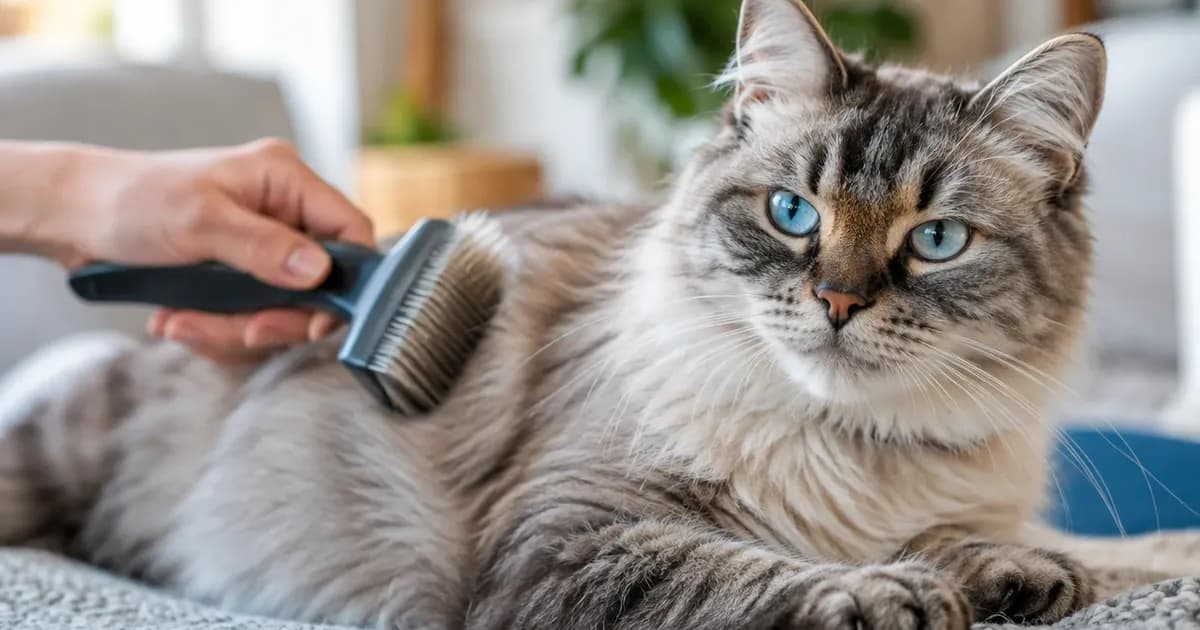
Loose hairs may remain caught among curls or fine hairs instead of falling immediately onto furniture. Gentle grooming can help remove them while giving the owner a chance to notice changes in the skin or coat. The aim is not to brush aggressively or chase every stray hair. It is to keep the routine comfortable and suited to the cat’s particular texture.
The right tool and frequency depend on the individual cat. A brush that works well for a dense coat may be unpleasant or unnecessary for a fine one. Start gently, keep sessions short, and stop if the cat becomes distressed. Grooming should become a predictable part of care, not a daily struggle.
Low-shedding is not the same as hypoallergenic
A low-shedding cat may spread less hair through the home, but that does not make the cat automatically hypoallergenic. The main cat allergen discussed in the research, Fel d 1, is associated with saliva and skin glands; hair can carry and spread it, but hair is not the sole source.
Hairless cats can still produce dander because they have skin. A cat with a very tidy-looking coat can also trigger allergies. Anyone choosing a cat partly because of allergies should spend time around the individual animal before making a decision, rather than relying on a breed label alone.
Regular grooming may help remove loose hair and dander from the coat, but it cannot guarantee an allergy-free home. That distinction protects both the household and the cat from an expectation the breed may not be able to meet.
Questions worth asking before choosing a breed
A useful breed comparison goes beyond “How much does it shed?” Ask instead:
- Does the coat have an undercoat, guard hairs, curls, or unusual fine texture?
- Is the coat short but dense, or long and more likely to tangle?
- Does the breed’s low-fur reputation come from reduced shedding, hair that stays caught in the coat, or hairlessness?
- Will the cat need brushing, bathing, or skin care?
- Is the expected routine based on the breed generally, or on a particular cat’s coat and skin?
- Could allergies still be a concern despite the cat’s low-shedding reputation?
Those questions produce a more realistic picture of daily life. A person who mainly dislikes fur on dark clothing may prefer one kind of coat, while someone hoping to avoid all grooming may be surprised by a hairless cat’s bathing needs.
Low-shedding cats can be wonderful companions for homes that want less visible fur. They are not all low-maintenance cats, though. Think of low shedding as one benefit in a tradeoff—not as a promise of effortless grooming. For more practical guidance, browse the cat-care guides on dogacat.com.
FAQ
Sources
- Cat Grooming Techniques - (never-ending shedding) : r/cats — owner discussion