
Which Cat Breeds Shed the Least, and What Should Apartment Owners Know?
Low-shedding cats can make apartment cleanup easier, but they’re not maintenance-free and they’re not truly hypoallergenic. The best choice depends on more than fur: grooming, warmth, skin care, and allergy reality all matter.
In this guide
If you live in an apartment and want less fur on the couch, the shortlist usually starts with low-shedding cat breeds like the Cornish Rex, Devon Rex, LaPerm, Russian Blue, Bengal, Siamese, Burmese, Balinese, Oriental Shorthair, and Sphynx. But the real answer is a little less tidy: all cats shed in some form unless they’re hairless, and lower visible shedding doesn’t mean no grooming, no dander, or no allergens.
What tends to matter most is the tradeoff. A cat that leaves less loose hair around the home may make cleanup easier, but some of the same breeds need extra skin care, bathing, warmth, or careful coat maintenance. That’s especially worth thinking about in an apartment, where space, noise, and climate control can change how comfortable a cat feels.
What low-shedding really means
“Low-shedding” usually means less visible hair around your home, not a magic solution for allergies or housekeeping. Cats.com notes that, with the exception of hairless breeds, all cats shed in some form, and The Vet Desk adds that shedding can also change with season, stress, allergies, poor diet, and disease.
That matters because two cats of the same breed can still shed differently. Breed gives you a starting point, but diet, stress, indoor climate, and general health all influence what ends up on your floor and clothes.
For apartment owners, the practical benefit is simpler cleanup. Brushing, grooming, frequent vacuuming, and lint rollers can help keep fur under control, especially if your cat spends a lot of time on soft furniture or bedding.
Cat breeds that shed the least
Several breed lists repeat the same names again and again, which gives you a useful starting group if you’re trying to cut down on visible fur.
- Cornish Rex
- Devon Rex
- LaPerm
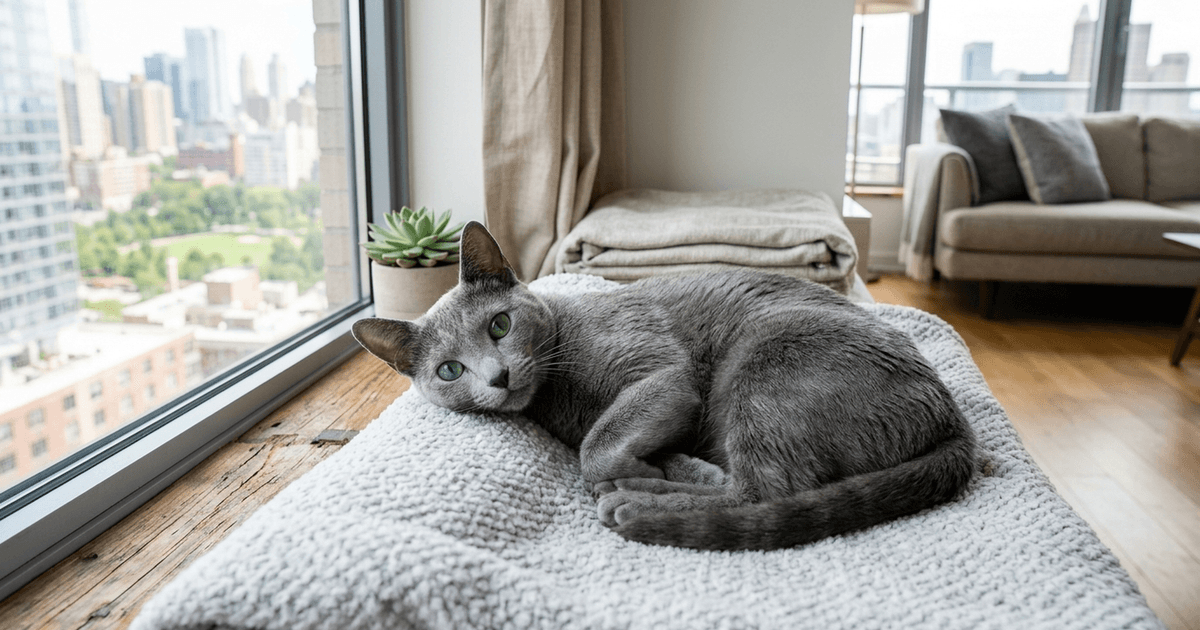
- Russian Blue
- Bengal
- Siamese
- Burmese
- Balinese
- Oriental Shorthair
- Sphynx
Among these, the Cornish Rex gets singled out often because it has a single coat of short, dense down fur and lacks guard hairs and a middle coat. Catster also notes that the LaPerm’s curly coat can be especially low-shedding in short-haired versions.
That said, “least shedding” isn’t the same as “lowest effort.” Some of the same cats that leave less fur behind need more attention in other ways.
Best low-shedding breeds for apartment living
For apartment life, the most practical low-shedding picks are often the cats that balance manageable fur with predictable day-to-day care.
Cornish Rex can be appealing if visible shedding is your main concern, but its limited single coat means it does poorly in low temperatures, and Catster notes its coat can become patchy or bald if there are dermatological problems or poor nutrition. That makes it a better fit for a warm indoor home than for someone who wants a hands-off cat.
LaPerm is another interesting choice because its curly coat can shed less, especially in short-haired versions. It may suit apartment owners who want a softer-looking coat without the heavy fur load of many traditional breeds.
Russian Blue, Siamese, Burmese, Balinese, and Oriental Shorthair often show up on low-shedding lists too. These can be attractive for apartment living because they’re not hairless, so they avoid some of the skin-care concerns that come with Sphynx-type cats, while still offering a lighter cleanup load than many other breeds.
If you want broader guidance on matching pets to small-space living, breed-focused guides can be a helpful way to think about temperament and care tradeoffs, even if the species is different.
What apartment owners should know before choosing one
The biggest mistake is picking a low-shedding breed and assuming the rest will take care of itself. Some breeds need more grooming than their coat suggests, and apartment owners feel that quickly because there’s less room to ignore a routine.
Here’s the real-world checklist:
- Warmth matters. The Cornish Rex does poorly in low temperatures because of its coat structure.
- Skin care matters. Hairless cats still produce dander and still need care.
- Bathroom habits matter. Some low-shedding cats may need bathing or coat maintenance more often than people expect.
- Time matters. Brushing, cleaning, and checking skin or coat condition are part of the package.
- Environment matters. Stress, climate, and diet can all affect shedding.
If you’re hoping to keep cleanup simple, think beyond fur and ask how much routine care you’re realistically willing to do every week.
Low-shedding vs. hypoallergenic: the allergy reality
This is where a lot of people get tripped up. No cat is truly hypoallergenic, and low-shedding doesn’t mean allergy-free.
Allergies are mostly about dander and saliva proteins, not just loose hair. That means a cat with a lighter coat can still trigger allergies, and a hairless cat can still cause problems because it still produces dander.
That doesn’t mean a low-shedding cat is a bad choice for someone with mild sensitivities. It just means the decision should be framed as “possibly easier to manage” rather than “safe for allergies.” If allergies are part of your decision, a long visit, careful exposure, and a conversation with a vet or allergy professional are the sensible next steps.
Grooming, bathing, and climate tradeoffs by breed
Different low-shedding breeds come with different care patterns, and that’s where apartment owners can make smarter choices.
Cornish Rex: less grooming may be needed than with many other coats, but the breed can be vulnerable to cold and may need more attention if the skin or coat changes.
LaPerm: potentially low shedding, especially in short-haired versions, but the curly coat still benefits from routine care so it doesn’t become a tangle or lose condition.
Sphynx: no visible coat sounds like the easiest path until you remember that hairless cats still produce dander and still need care.
Short-haired breeds like Russian Blue, Siamese, Burmese, and Oriental Shorthair often appeal to owners who want a simpler cleanup routine without going all the way to a hairless cat. That said, short hair alone is only a rough rule of thumb, not a guarantee.
If you’re comparing care styles across pets, it can help to think in practical terms: less fur on the floor may save time, but extra bathing, skin care, or warmth can add it back elsewhere. For dog owners comparing grooming burdens, deshedding tools show the same basic truth in another form: coat management is a routine, not a one-time fix.
Common misconceptions about shedding
A few myths keep showing up in cat conversations, and they’re worth clearing up before you commit to a breed.
- Myth: low-shedding means hypoallergenic. It doesn’t.
- Myth: hairless means no maintenance. Hairless cats still need care and still produce dander.
- Myth: breed alone decides shedding. Diet, stress, climate, and health all matter.
- Myth: short hair always means minimal shedding. Sometimes it helps, but it isn’t a guarantee.
Before you decide
If you want the least visible fur in an apartment, start with Cornish Rex, LaPerm, Russian Blue, Siamese, Burmese, Balinese, Oriental Shorthair, or Sphynx, then narrow the list by how much care you’re willing to give. The best low-shedding cat for apartment life is usually the one whose grooming, warmth, and skin-care needs fit your routine, not just your vacuum cleaner.
Frequently Asked Questions
Sources & Further Reading
- Any cats that don't shed a ton? : r/Pets - Reddit — owner discussion