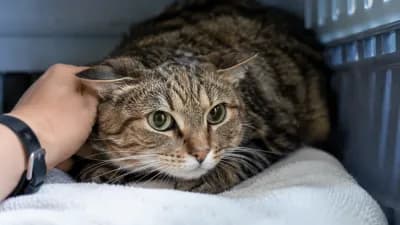
Why Do Some Cats Ignore Automatic Feeders Even When They Are Hungry?
A hungry cat may still avoid an automatic feeder if the machine, food, bowl, location, or social setup feels wrong. Here’s how to troubleshoot the problem—and how to tell when the feeder may be hiding a health concern.
On this page
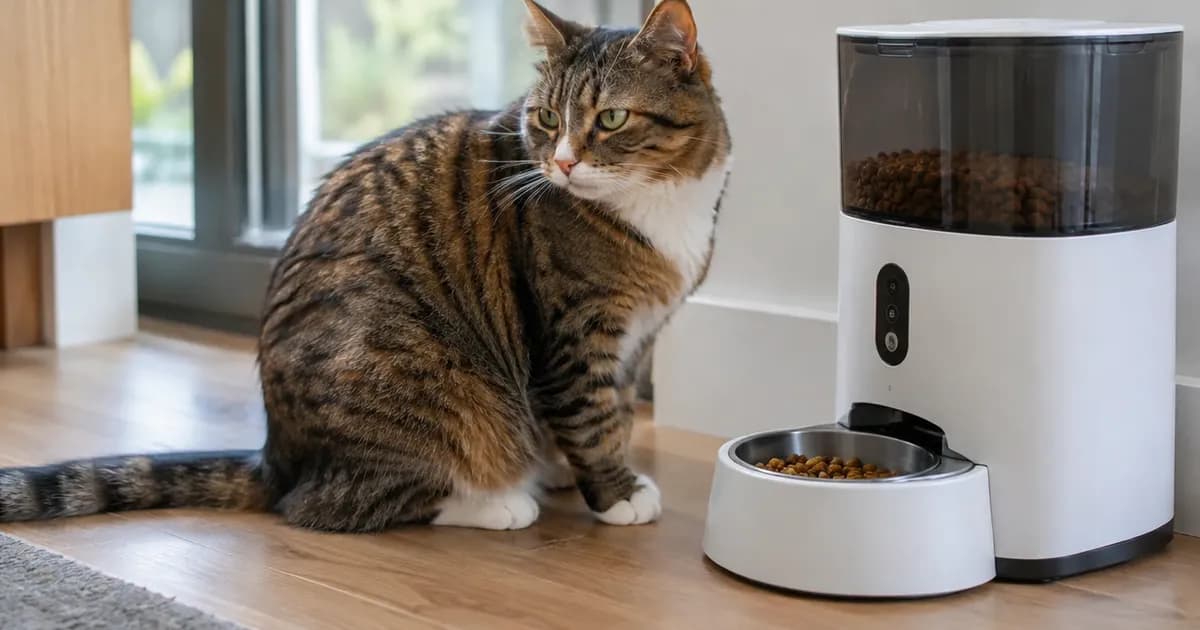
A cat can be hungry and still refuse to eat from an automatic feeder. Hunger doesn't necessarily make an unfamiliar machine acceptable, especially if the feeder makes a sudden noise, sits in an uncomfortable place, serves food differently from the usual bowl, or allows another cat to control access.
That doesn't mean every refusal is a behavioral quirk. The useful approach is to treat it as a troubleshooting problem. First confirm that food was actually dispensed and that your cat ate it. Then work through the feeder, the food, the bowl, the location, and the household routine before deciding that your cat simply dislikes the device.
Start by checking what really happened
A scheduled portion appearing in the bowl is not proof that your cat consumed it. The food may have jammed inside the chute, landed outside the bowl, dispensed an incorrect amount, or been eaten by another cat. A phone alert or feeding log can confirm that the machine operated, but it cannot confirm which cat ate the meal.
Watch several meals directly while you troubleshoot. Check the hopper, chute, bowl, settings, battery or power connection, and the amount left after feeding. If food remains, note whether your cat avoided it completely or ate only part of the portion. Those are different clues.
In a multi-cat home, food competition deserves particular attention. A confident cat may reach the feeder first, guard it, or eat the other cat's portion. A nervous cat may wait nearby but never feel safe enough to approach. Separate feeding stations—and, where necessary, separate rooms or out-of-sight locations—can make the difference.
Automatic feeders can be useful for measured portions, weight management, and predictable routines in many healthy adult cats. They still require daily supervision. Food and water intake should be checked, not assumed, because a feeder can quietly hide a declining appetite.
The machine may be the problem—not the meal
Some cats investigate a new feeder cautiously. Others paw at it, attack its moving parts, or try to tip it over. Curiosity and tampering are not the same as acceptance. A cat may be interested in the machine while still refusing to put its head near the bowl.
Noise is a common detail to examine. Motors, lids, rotating trays, and the sudden rattle of kibble can make the feeding event feel unpredictable. A cat that has always eaten from a quiet dish may not immediately connect the machine's sound with dinner.
Try leaving the feeder unplugged in its usual place for a few days. Let your cat see and smell it without the surprise of movement. Hand-feed from the feeder's bowl, then activate a small scheduled meal while you are present. The aim is to make the machine's operation predictable rather than startling.
Avoid treating tampering as proof that your cat is “addicted” to the feeder. Pawing, pressing buttons, or trying to open the hopper may simply reflect exploratory or foraging behavior—and it can also cause spills, overeating, or changes to the programmed settings.
Location can decide whether a cat eats
A feeder placed beside a noisy appliance, in a busy passageway, near a litter box, or where another cat can stare at the bowl may be technically accessible but practically unusable. Cats often need enough quiet and space to eat without being interrupted or watched.
Move the feeder to a calm, low-traffic area. Keep it away from litter boxes and loud household equipment. In a home with more than one cat, consider separate feeding places with no direct line of sight between them. A cat that refuses the feeder in the kitchen may accept the same food in a quiet corner.
Observe the approach, not just the eating. Does your cat walk toward the feeder and retreat when it activates? Does another cat appear at the same time? Does your cat eat if you stand nearby, but not when left alone? These details help distinguish fear of the machine from pressure at the feeding station.
Food freshness and bowl design matter too
The feeder may be working perfectly while the food has become less appealing. Check whether kibble has been stored properly and whether food dust, oil, moisture, or residue has built up inside the hopper, chute, or bowl. Regular cleaning and appropriate food storage help reduce hygiene and contamination risks.
The bowl itself may also be a poor fit. A narrow opening, an awkward feeding height, or food collecting in an unfamiliar place can change how the meal feels. Start by using the feeder with the bowl your cat already accepts, if the design allows it. If wet food is involved, follow the feeder's storage and cleaning instructions particularly carefully rather than leaving food sitting out indefinitely.
Your cat may also be rejecting a change in food rather than the feeder. Offer the familiar diet during the transition, and avoid changing the food, location, schedule, and bowl all at once. One change at a time makes the result much easier to interpret. If your cat often ignores its own food while begging for yours, this guide to why cats sometimes prefer human food may help separate feeder trouble from a broader feeding preference.
A low-stress way to introduce the feeder
- Put the unplugged feeder beside the current bowl and continue normal meals.
- Place familiar food in the feeder's bowl while keeping the usual feeding location.
- Once your cat eats comfortably, move the feeder gradually toward its intended position if needed.
- Activate a small portion while you are nearby so the sound and movement predict food.
- Keep at least one observed, hand-served or directly supervised meal during the transition.
- In a multi-cat home, watch which cat eats each portion and separate stations if one cat crowds the other.
- Clean the bowl and food-contact parts regularly, and confirm that the feeder dispenses correctly before relying on it.
A gradual transition gives you useful information. If your cat eats from the bowl when the machine is off but avoids it when the motor runs, the sound or movement is a likely obstacle. If your cat avoids the location even with the machine removed, the wider feeding environment deserves attention.
When to stop blaming the feeder
A sudden change in appetite or behavior should not automatically be explained by dislike of the machine. If your cat is eating less, refusing other food, losing weight, acting unwell, or showing a marked change in normal behavior, contact a veterinarian. The available feeder guidance does not establish that refusal specifically proves dental disease, nausea, stress, or any other single medical condition—but it does support taking reduced intake seriously rather than waiting for the feeder to solve it.
For a cat with a health condition or a prescribed diet, ask the veterinarian how intake should be monitored before relying on an automatic feeder. A feeder may deliver a measured meal, but it cannot assess whether the right cat ate it or whether enough was consumed.
The same careful observation that solves a feeder problem can reveal a broader feeding issue. For more everyday cat-care guidance, browse the cat care guides. And if grooming or other routine changes are on your mind, why some low-shedding cats still need regular grooming is a useful companion read.
An automatic feeder is a tool, not a witness. Use it to create a reliable routine, but keep watching the cat who is supposed to be eating. That simple distinction prevents a quiet machine malfunction—or a quiet health problem—from going unnoticed.
FAQ
Sources
- Automatic feeder behavior : r/CatAdvice - Reddit — owner discussion