Why Does My Cat Purr in Situations That Do Not Look Relaxing?
A purring cat is not necessarily a relaxed cat. Purring can accompany anxiety, discomfort, or illness, so the sound needs to be read alongside your cat’s posture, eyes, ears, tail, and behavior.
On this page
A purring cat is not always a happy cat. Cats may purr when they feel nervous, frightened, uncomfortable, or unwell, including during a veterinary examination or another situation they would rather escape. The sound is meaningful, but it is not a complete emotional report.
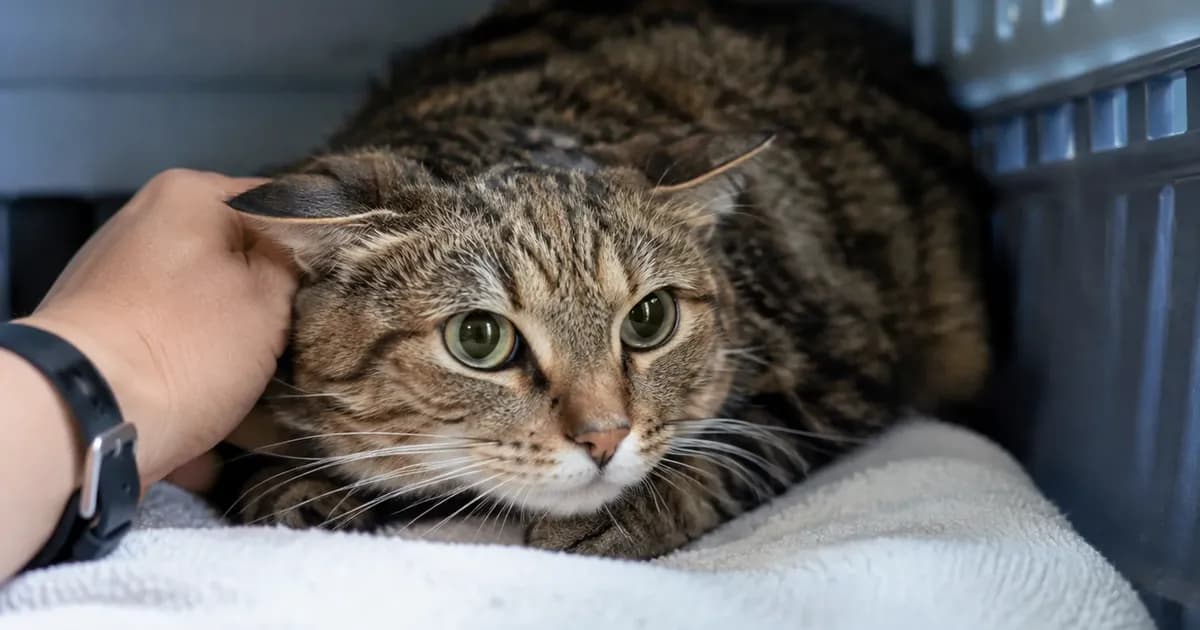
That can feel confusing. Your cat may be purring in the carrier, during a car ride, beside a loud appliance, or while being handled at the clinic, yet still look tense and eager to get away. In those moments, the rest of the cat’s behavior matters more than the purr by itself.
Purring has more than one possible meaning
Purring is a continuous-sounding vibration produced as a cat breathes in and out. It commonly appears during contentment, such as quiet contact with a trusted person, but it can also occur with stress, attention-seeking, illness, or pain. No single explanation fits every purr.
Some cats purr while anxious or during a veterinary visit. PetMD also notes that cats can purr when sick or in pain, so the sound should not be treated as proof that everything feels good. A cat may be asking for comfort or care rather than inviting more handling.
The idea that every stress-related purr is a deliberate self-calming technique is less certain. Purring may coincide with a cat trying to cope with an uncomfortable situation, but the sound alone cannot tell you what the cat intends or feels.
What relaxed purring tends to look like
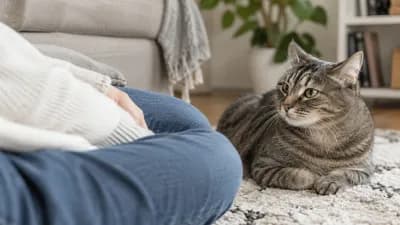
A purr is more reassuring when it appears with an overall relaxed picture. Your cat may have loose muscles, soft-looking eyes, calm ears, and a comfortable posture. They may choose to remain near you rather than crouching, hiding, or trying to leave.
Picture a cat stretched beside you, blinking slowly, with an easy body and a tail resting quietly. The purr fits the rest of the scene. It is still wise to consider what is normal for that individual cat, but the surrounding behavior supports an interpretation of comfort.
By contrast, a cat that purrs while pressed low to the ground, rigid, wide-eyed, or tucked into the back of a carrier is giving you a mixed message. The purr should not cancel out those visible signs of unease.
Signs that stress may be part of the picture
Stress can be subtle, especially because cats often hide discomfort. Look for several clues together rather than relying on one feature:
- A tense or hunched body
- Hiding or trying to retreat
- Wide or dilated pupils
- Ears flattened, rotated sideways, or held back
- A tail that twitches, thumps, or stays tightly close to the body
- A sudden change from your cat’s usual behavior
A cat does not need to hiss, scratch, or vocalize loudly to be distressed. Quiet stillness can also accompany fear or discomfort. If your cat is purring while showing these signs, give the body language serious weight and avoid assuming that the cat wants the situation to continue.
PetMD recommends stopping an activity that appears to be causing stress when possible. At a veterinary clinic, of course, handling may be necessary, but telling the veterinary team what you are seeing can help them respond appropriately.
Why stressful purring may happen during ordinary events
Veterinary visits combine unfamiliar smells, unfamiliar people, restraint, and physical examination. Travel can add confinement, movement, and a changing environment. Loud noises may make a cat feel unable to predict or control what happens next. Illness introduces another possibility: the purr may accompany physical discomfort rather than emotional contentment.
The setting does not determine the meaning on its own. A cat may purr in a carrier because the carrier contains a familiar blanket, because the cat is seeking contact, because the cat is anxious, or because discomfort is present. Observing the cat’s posture and behavior before, during, and after the event gives you a more useful answer than listening to the sound alone.
After the stressful event, notice whether your cat gradually relaxes, eats, grooms, explores, and returns to normal behavior. Continued hiding, unusual quietness, changes in appetite, reduced energy, or a new pattern of vocalization deserves more attention than the purr itself. Cats can mask illness, so a change from their normal behavior is worth taking seriously.
A simple way to read the whole message
Start with the circumstances: what is happening around the cat, and can the cat leave? Then watch the body. Are the muscles loose or tight? Are the ears neutral or flattened? Are the eyes soft or wide? Is the tail still or twitching?
Finally, consider choice. A cat who voluntarily stays close with a relaxed body is giving a different message from a cat who remains nearby only because a carrier, restraint, or unfamiliar room prevents escape. Purring can occur in both situations.
This broader approach is useful in everyday cat care. Alongside behavior, changes in eating, drinking, grooming, and energy can reveal that a cat needs help. The practical guides in our cat care section cover related questions about daily health and behavior.
When purring should prompt a call to the veterinarian
Contact a veterinarian about new, unusual, or persistent purring when it occurs with signs of illness, pain, or a marked behavior change. Particular concern is warranted if your cat is hiding more than usual, seems unusually tired, has a tense or hunched posture, eats less, or appears distressed.
Purring does not diagnose a problem, and it does not rule one out. A veterinarian can assess the full pattern, especially when the purring began suddenly or appears during handling, movement, or rest.
The most useful question is not simply, “Is my cat purring?” Ask instead: “What does the rest of my cat’s body and behavior say?” A relaxed purr usually belongs to a relaxed-looking cat. A tense, hiding, wide-eyed, or unwell cat may be purring for a very different reason.