Cat Litter Beyond Price: Which Features Actually Affect Odor, Tracking, Dust, and Cleanup?
The cheapest bag of cat litter isn't always the cheapest litter to live with. Here's how material, particle size, clumping, dust, box setup, and cleaning habits shape everyday performance—and how to compare them fairly.
On this page
A bag of litter can look like a bargain until weak clumps fall apart, dust settles around the box, or half the granules end up in the hallway. Price matters, but it doesn't tell you how well a litter performs in your home.
A fair comparison starts by separating two things: the litter itself and the conditions around it. Material, particle size, moisture content, clumping, and odor-control method belong to the product. The box, mat, static, litter depth, and cleaning routine belong to the setup. Both affect what you notice each day.
The research available for litter comparisons is useful for identifying these variables, but it isn't a single standardized system that ranks every type reliably. Treat performance scores and labels as evidence to examine—not as universal verdicts.
Odor control is more than fragrance
Fragrance can make a box smell different without removing the source of the odor. A more useful comparison asks how the litter handles urine and feces, and how easily waste can be removed completely.
Clumping is central for many products. A firm, fast-forming clump can allow you to lift out urine without breaking it apart and scattering contaminated granules through the box. That matters because weak clumps leave dirty litter behind, making odor control harder and potentially shortening the usable life of the remaining litter. Daily scooping is part of the system, not a minor detail.
Different materials may rely on different combinations of absorption, clumping, and adsorption. Bentonite clay is described in the supplied material as fast-absorbing, firmly clumping, and sand-like in texture. Tofu litter is described as producing less dust than bentonite in one supplied comparison. Those descriptions point to trade-offs, not a universal winner.
An unscented litter with effective waste removal may suit one household better than a strongly scented product. Fragrance can also affect acceptance: some cats may be less willing to use a box with a powerful scent. Odor control should therefore be judged by the method—clumping, adsorption, fragrance, and maintenance—not by the word “fresh” on the package.
Tracking starts with particle size, but doesn't end there
Small, fine particles can feel soft under a cat's paws and may absorb moisture quickly. The same fine texture can also be easier to carry out of the box, and the supplied sources associate fine particles with greater dust and tracking.
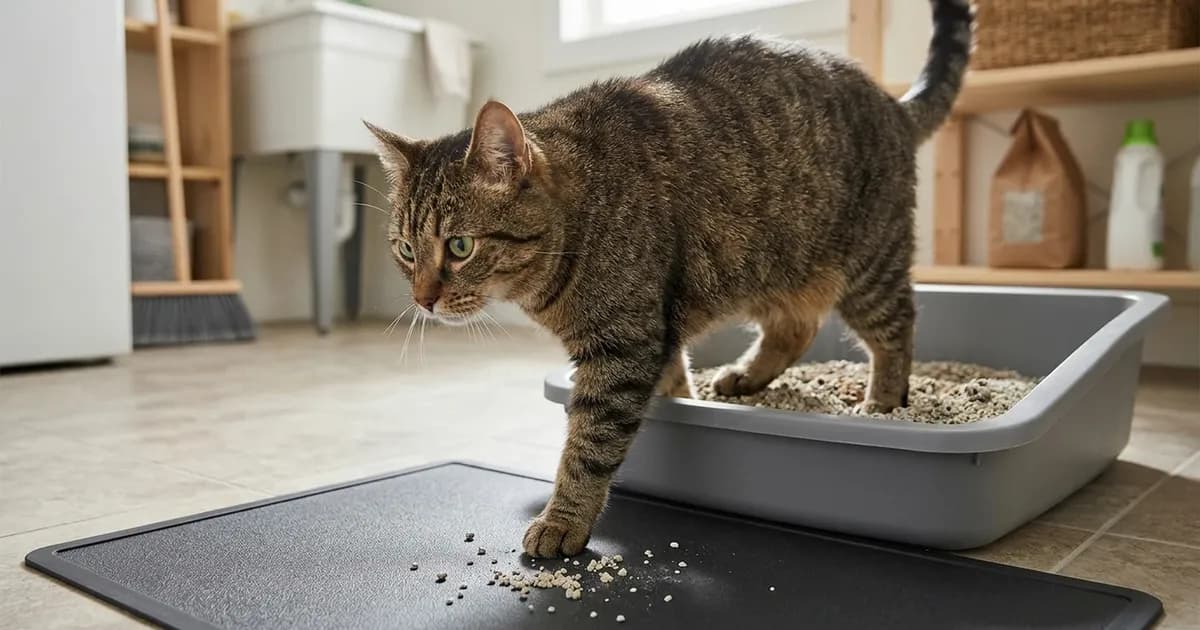
Yet tracking isn't solely a litter property. It can also reflect the shape and entry height of the box, the distance between the box and the litter mat, the mat's ability to catch particles, and static. A litter that performs acceptably in one room may create a much larger trail beside a different box or on a smooth floor.
That makes “low tracking” claims difficult to compare unless the test conditions are clear. Look for details such as particle size, the type of mat used, and whether the result measures visible granules outside the box or simply a reviewer's impression.
For practical testing, keep the setup consistent. Use the same box, mat, litter depth, and location for each candidate. Count or collect the litter outside the box after a fixed period rather than judging the floor after one unusually tidy day.
Dust needs a consistent test
Dust is most noticeable during pouring, scooping, and vigorous digging. Particle size and material influence it, but the way a product is handled also matters. A claim such as “99% dust-free” is difficult to interpret without knowing what was measured, when it was measured, and under what conditions.
The supplied comparison material describes tests that weigh dust during pouring and examine particles in the air. That is more informative than a label alone, but results still depend on the test design. A pour test may not represent dust produced when a cat digs, when clumps are sifted, or when old litter is emptied.
A useful home comparison records dust at several moments:
- Pouring fresh litter into the box
- Scooping and shaking the scoop
- Emptying and replacing the litter
- Dust settling on the floor or nearby surfaces
Fine particles may offer a texture some cats prefer, so low dust should not automatically outweigh acceptance. The best choice is the one that balances the cat's willingness to use the box with the household's tolerance for airborne and settled dust.
Cleanup depends on clump strength and residue
Cleanup is where several product features meet. Absorption speed affects how quickly liquid is captured. Clumping behavior determines whether the wet area can be removed cleanly. Particle size and litter depth affect how much clean material is disturbed during scooping.
A strong clump is not useful if it forms too slowly and sticks to the bottom of the box. A fast-forming clump is not useful if it breaks apart as soon as it reaches the scoop. The practical question is whether the scoop can remove the waste in one piece while leaving reasonably clean litter behind.
Track residue as well as clump strength. Note whether wet granules stick to the scoop or box, whether feces smear across the surface, and how much clean litter is discarded with each removal. These details help explain why one litter lasts longer in daily life even when the bags appear similarly priced.
The cat gets a vote
Performance includes whether the cat actually uses the box. Texture, particle size, hardness, and fragrance may affect acceptance. Fine, soft-feeling particles may appeal to some cats, while strong fragrance or an unfamiliar texture may discourage use.
A product that controls odor beautifully but leads to avoidance is not performing well for that household. Introduce changes gradually when possible, and watch for a meaningful change in box use rather than assuming the newest product will be accepted.
Owner discussions can suggest possibilities—such as some cats rejecting paper, pine, walnut, or corn products—but those reports are individual experiences, not controlled evidence. They are useful for generating questions, not for predicting every cat's preference.
Compare the trade-offs, not just the materials
Material categories can be a helpful starting point, but they don't settle the comparison by themselves.
Clay may offer rapid absorption, firm clumping, and a familiar sand-like texture, while also raising dust and tracking concerns in the supplied sources. Tofu is described as producing less dust than bentonite in one source. Wood, paper, crystal, and other materials may differ in particle shape, clumping behavior, and odor-control approach. Those differences should be tested in the features that matter in your home rather than treated as automatic advantages.
The same product can also score differently depending on the priority. A non-clumping crystal litter may perform well for urine odor in one comparison while offering a different cleanup routine from a clumping litter. A litter with low tracking may still be a poor match if its texture is rejected. There is no meaningful “best” result without defining the job.
For a broader framework, this guide to comparing cat litter types without wasting money can help put material choices beside everyday use rather than price alone.
How to compare value beyond the bag price
Price per bag is an incomplete measure because products differ in density, usable life, replacement frequency, cleanup effort, and how much clean litter gets discarded with waste. The supplied material does not provide a standardized cost-per-use calculation, so any exact savings claim would be premature.
A practical comparison tracks cost per usable period instead. Record:
- Purchase price and bag weight or volume
- How often the box needs a full replacement
- How much litter is discarded during ordinary scooping
- Whether broken clumps increase waste
- How much cleanup time the product requires
- Whether mats, liners, or extra cleaning are needed
You can then compare the approximate cost of keeping the box usable for the same number of days. That is more meaningful than comparing two bags that contain different amounts of material or behave differently under the scoop.
The supplied research includes reported market claims about owner priorities and category share, but those figures were not independently documented in the provided material. They should not be treated as established facts when making a purchasing decision.
A simple home scorecard
Choose one litter and use it consistently for a defined trial period, keeping the box, mat, litter depth, and cleaning routine as similar as possible. Then rate each factor separately rather than collapsing everything into one vague impression:
- Odor: How noticeable is the box before and after scooping?
- Clumping: Do clumps form quickly and survive removal?
- Residue: How much wet or dirty material sticks to the box or scoop?
- Dust: What happens during pouring, scooping, and changing?
- Tracking: How much material appears on the mat and surrounding floor?
- Acceptance: Does the cat use the box normally?
- Value: How many days of usable service come from the amount purchased?
Use the same scorecard for the next product. A litter that costs more may still be the better value if it reduces discarded clean litter, lasts longer, or saves repeated cleanup. Conversely, a premium label does not guarantee better performance.
For a closer look at balancing these competing priorities, see how to compare cat litter when price, odor, dust, and tracking all matter. The useful comparison is not the bag with the most impressive claim. It's the product that gives your cat an acceptable texture and gives your household a manageable box, floor, and cleaning routine.
FAQ
Sources
- Best Cat Litter : r/CatAdvice - Reddit — owner discussion