Why Is My Dog Panting So Much When Nothing Seems Wrong?
Panting is normal for dogs, but only when it fits the moment: heat, exercise, excitement, stress, or brief recovery. The real question is whether the panting matches the situation—or looks out of proportion, which can point to pain, illness, or an emergency.
In this guide
A dog can pant hard and still be perfectly fine. The important thing is whether the panting makes sense in context: warm weather, after a run, during a car ride, at the vet, or right after a thunderclap all fit the pattern of a dog using panting to cool down or respond to stress. Panting that doesn’t fit the moment is the kind that deserves a closer look.
Dogs don’t sweat the way people do, so panting is one of the main ways they release heat. They cool themselves by moving moisture through the nose and lungs, which helps bring body temperature down. That’s why a dog coming in from the yard on a hot day, or one who just finished zooming around the living room, may breathe fast with the mouth open and tongue out.
Panting isn’t only about heat, though. Dogs also pant when they’re excited, nervous, anxious, or uncomfortable. A nervous dog at the vet, a stressed dog in the car, or a dog reacting to fireworks may pant even if the room isn’t warm and the exercise was minimal. That matters because it means panting is a signal, not a diagnosis. The same behavior can mean “I’m overheated,” “I’m wound up,” or “something hurts.”
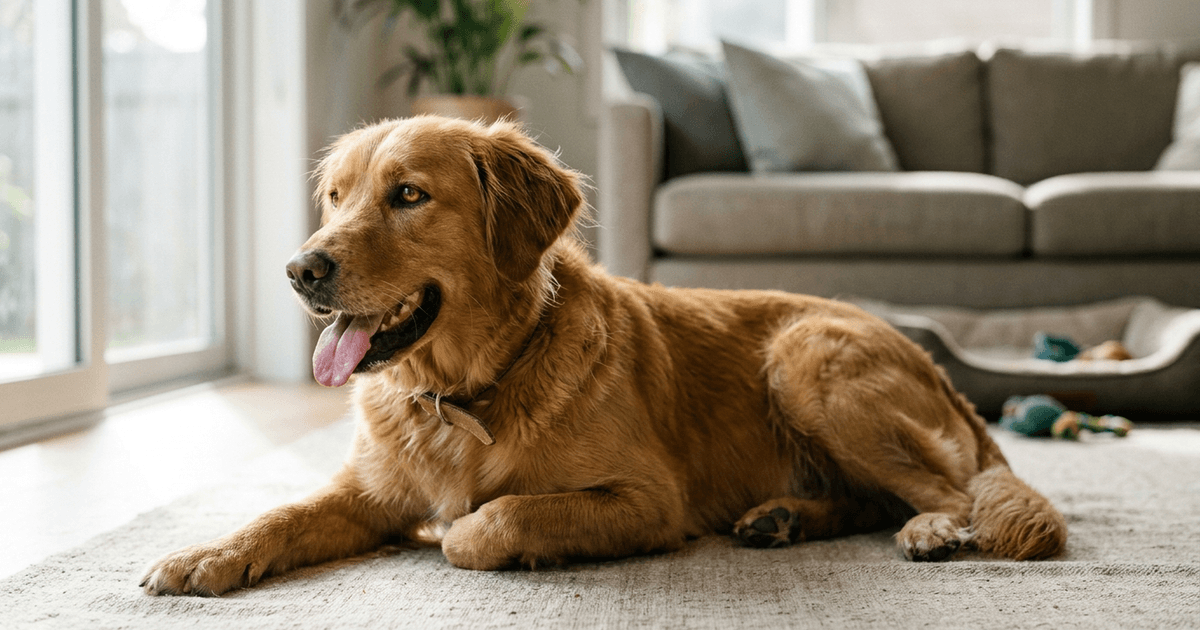
The best way to judge panting is to ask a simple question: does it match the situation? A dog who has just come inside after playing in the sun is giving a normal response. A dog who’s lying quietly on the rug, in a cool room, and still panting heavily for no obvious reason is less easy to dismiss. Panting that seems out of proportion to the temperature, activity level, or emotional moment is the version owners should take seriously.
Common reasons panting is harmless
Some panting is part of ordinary dog life. Heat is the obvious one, but not the only one. Excitement can do it too, especially in dogs that rev up quickly when they see a leash, a favorite person, or the sound of a car door. Stress and anxiety can have the same effect. Many owners notice panting during vet visits, car rides, thunderstorms, or fireworks, even when the dog hasn’t been running around at all.
A brief burst of panting after play, a warm walk, or a big emotional event usually settles once the dog cools down and calms down. That “settles down” part is important. Normal panting should ebb as the situation changes. A dog that keeps panting long after the trigger is gone is no longer behaving in the most reassuring way.
When panting looks mismatched
This is the part that tends to worry people at home. Maybe the dog is not obviously hot. Maybe there was no exercise worth mentioning. Maybe the panting started while the dog was resting, or even while sleeping. Those details matter because they tell you the panting isn’t simply a response to exertion.
A dog can pant during sleep if it’s overheated or dreaming intensely, but ongoing panting at rest is a different story. Picture a dog that has been lying on a cool tile floor for twenty minutes and still breathes fast with no clear reason. That doesn’t prove something is wrong, but it does suggest the panting may not be situational. When panting doesn’t fit the context, veterinarians start thinking about discomfort, illness, or medication effects.
Medical causes veterinarians look for
Several health problems can show up as heavy or unusual panting. Heatstroke and overheating are among the most urgent, because they can become life-threatening quickly. Heart disease can also cause more panting, often along with coughing, tiredness, or a dog that gets winded more easily than before. Respiratory disease, including conditions like bronchitis or pneumonia, can make breathing harder and may bring coughing, wheezing, or obvious labored breathing.
Pain is another common reason. A dog with arthritis, an injury, or another painful condition may pant more simply because discomfort raises stress in the body. That’s one reason panting can be easy to misread. The dog may look “fine” at a glance, but the panting can be the only outward sign that something hurts.
Some dogs also pant with Cushing’s disease, which may come with extra thirst, more urination, and a pot-bellied appearance. Medications can play a role too. Steroids such as prednisone are known to cause panting as a side effect.
The point isn’t to diagnose from the sofa. It’s to notice pattern and change. New panting, worsening panting, or panting that comes with other symptoms is more meaningful than a familiar burst after a hot walk.
The warning signs that make panting urgent
A dog who is panting hard and also has pale, blue, gray, or dark red gums needs prompt veterinary attention. So does a dog that collapses, cannot stand, has a seizure, or shows labored breathing. Vomiting, diarrhea, weakness, and sudden behavior changes also raise the stakes.
A dog whose panting will not slow down is another red flag, especially if the breathing looks effortful rather than simply fast. Emergency vets also treat overheating, heart problems, pain, and respiratory distress as major concerns when panting is abnormal. Those are not “watch and wait” situations.
The safest rule is simple: if the panting is heavy and the dog looks unwell, don’t wait for it to sort itself out.
What owners often notice first
In real life, people usually don’t start with a dramatic symptom. They notice a dog panting quietly at home, panting at night, panting after getting up from a nap, or panting more than usual without an obvious reason. That low-level uncertainty is exactly why the context matters. A dog that pants once because the room is warm is one thing. A dog that keeps doing it for no clear reason is another.
A practical way to think about it is this: normal panting should have a story you can explain. He chased a ball. The house is hot. He got scared by fireworks. He just came back from a walk. If you can’t connect the panting to heat, activity, emotion, or a brief recovery period, the panting deserves a call to your vet.
A dog doesn’t have to look dramatic to be uncomfortable. Sometimes the earliest clue is simply that the panting feels off.