Why Does My Cat Act Extra Clingy at Certain Moments, Then Pull Away?
A cat that swings between closeness and distance isn’t necessarily being contradictory. Mixed behavior often points to stress, illness, attachment style, or a change in the environment that’s making your cat seek comfort one moment and space the next.
On this page
A cat that alternates between wanting to be glued to your side and then disappearing to the far end of the couch is usually not being mysterious for the sake of it. That pattern often means the same underlying trigger is pulling in two directions at once: your cat wants comfort, but also needs control, quiet, or space.
A clingy cat actively seeks close physical proximity and may become distressed when separated. Clinginess can signal anxiety, boredom, a medical issue, or an unmet need rather than simple affection. Cats may also become more distant or withdrawn when they’re stressed, ill, or insecure, and some sick cats hide while others get clingier instead.
What clingy-then-distant behavior can mean
The clearest way to read this pattern is to stop treating it like one fixed personality trait. A cat can be affectionate and still feel unsettled. A cat can also be independent and still need reassurance at certain moments. The shift between the two often tells you more than either behavior alone.
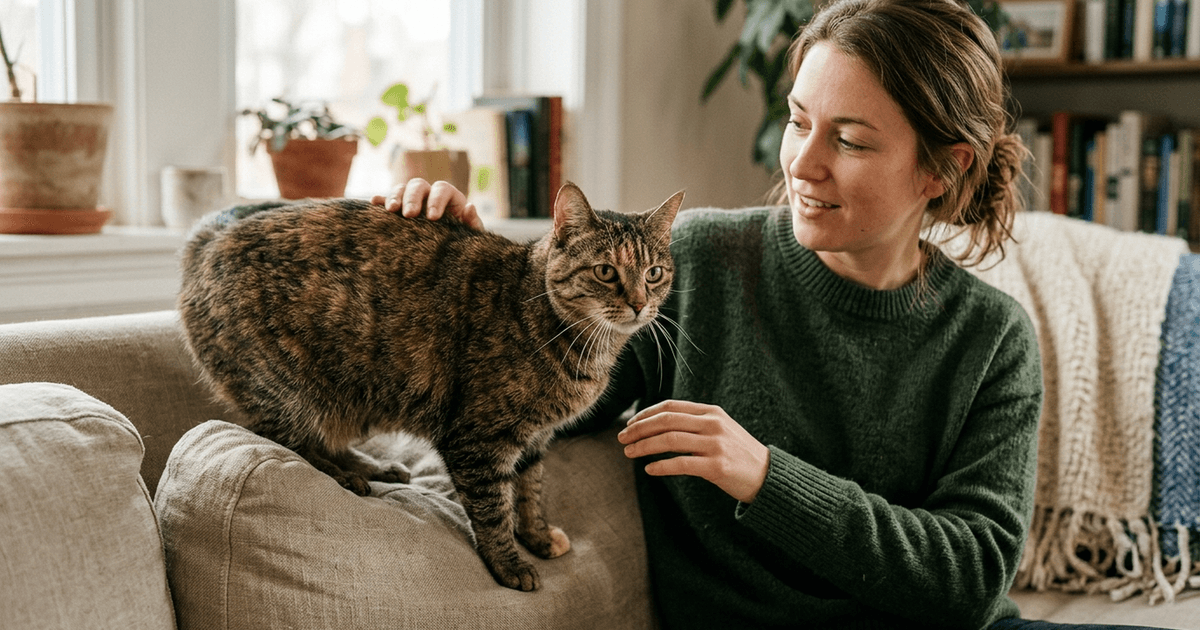
A cat that suddenly wants extra contact may be looking for comfort because something has changed in the household, routine, or emotional climate. The same cat may pull away once the immediate need passes, or once the contact itself starts to feel like too much. That doesn’t make the behavior fake or manipulative. It usually means your cat is trying to regulate how safe, settled, or stimulated they feel.
A sudden increase in clinginess is worth paying attention to, especially if it’s new for your cat. In cats, a behavior change often matters more than the behavior itself.
Normal affection vs. stress-driven clinginess
Some cats are naturally people-oriented. One source describes certain cats and breed-leaning examples, including Siamese, Burmese, Ragdoll, and Sphynx, as especially attached to their people. For those cats, following you room to room or settling against you may simply be part of how they connect.
The difference is in the degree and in the emotional cost. Normal affection tends to look relaxed. Stress-driven clinginess can look more urgent: constant following, repeated attempts to regain your attention, vocalizing, or distress when separated. Reddit discussions about “velcro” cats echo that everyday reality, but they’re best treated as owner experience, not proof of cause.
A cat that loves company is not necessarily a cat in distress. But a cat that seems unable to settle without you may be asking for more than affection.
Common triggers behind mixed behavior
Several things can push a cat toward this back-and-forth pattern:
- A change in environment, routine, health, or emotional state can make a cat seek comfort and reassurance.
- Household changes such as a new person, a new pet, a move, or even rearranged furniture can also shift how secure a cat feels.
- Early weaning before 8 weeks is associated in one source with later attachment issues and substitute-mother behavior.
- Early socialization, genetics, and personality may all shape whether a cat leans more secure, more insecure, or somewhere in between.
That last point matters because it explains why two cats can react so differently to the same event. One cat may shadow you through the house. Another may react to the same stressor by going quiet and distant. A third may do both, depending on the hour.
When distance suggests illness or discomfort
Distance doesn’t always mean disinterest. Sick cats usually become withdrawn and may hide, though the exact response depends on the individual cat. Some cats become clingier or demand more attention, while others get cranky or keep to themselves.
That’s why a cat that suddenly flips from affectionate to avoidant can’t be read as “just moodiness.” If the change is new, especially if it comes with other signs of illness, the behavior may be part of discomfort.
Look for patterns such as:
- Hiding more than usual
- Crankiness when touched
- Less interest in interaction than before
- A sudden, obvious change in how they seek you out
A cat who wants comfort one moment and then pulls away may be saying, in effect, “I need help, but I also don’t feel good enough to stay engaged.”
How attachment style and early socialization may shape the pattern
Attachment style may help explain why some cats seem to oscillate between closeness and distance. Some sources describe cats as showing secure or insecure attachment, and insecure attachment may show up as proximity-seeking and distress during separation.
A cat’s attachment style may be influenced by genetics, early socialization, and personality traits. That doesn’t mean the label explains everything. It does, however, give a useful lens for understanding why one cat greets every leave-taking like a crisis while another seems to vanish when the house gets busy.
For owners, this matters because the fix is rarely “give more attention” or “ignore it and it’ll stop.” A cat with mixed attachment signals may need predictability, quieter routines, more control over approach, or a vet visit if the change is sudden.
What to observe before calling the vet
If your cat has started acting extra clingy and then distant, watch the pattern rather than any single moment. The goal is to figure out whether this is a personality quirk, a stress response, or a health issue.
A useful check is to ask:
- Did the behavior start suddenly?
- Has anything changed at home?
- Is your cat eating, drinking, using the litter box, grooming, and moving normally?
- Does your cat seek you out for reassurance and then retreat after contact?
- Does touching them seem to make them tense or irritated?
A sudden clingy phase can be linked to stress, and it can also be a sign that something is wrong. If the pattern is new, escalating, or paired with hiding, crankiness, or other illness signs, a veterinary exam is the safest next step.
The bigger lesson is that mixed behavior is often information, not contradiction. A cat who alternates between clingy and distant may be showing you that they’re trying to stay close while also coping with something that feels off. Paying attention to the rhythm of that change gives you a better read on what they need.
Related reading
FAQ
Sources
- VCA Animal Hospitals — Recognizing the Signs of Illness in Cats
- r/blackcats on Reddit: How do you all deal with clingy cats? I love Babs, I do, but the velcro behavior has gotten to be constant and I simply can't always have her ON me. If I refuse she screams and circles around to try again and again. — owner discussion