How Can You Tell Whether Your Cat Drinking More Water Is a Habit or a Red Flag?
A cat that’s drinking more isn’t automatically sick, but the pattern matters. Compare the new amount to your cat’s usual baseline, then look at the litter box, appetite, weight, and energy level before deciding it’s just a habit change.
On this page
A cat drinking more water isn’t automatically a crisis, but it also isn’t something to ignore. The quickest way to judge it is simple: compare your cat’s current drinking to their normal baseline, then look for the clues that usually travel with medical problems — especially changes in the litter box, appetite, weight, and energy.
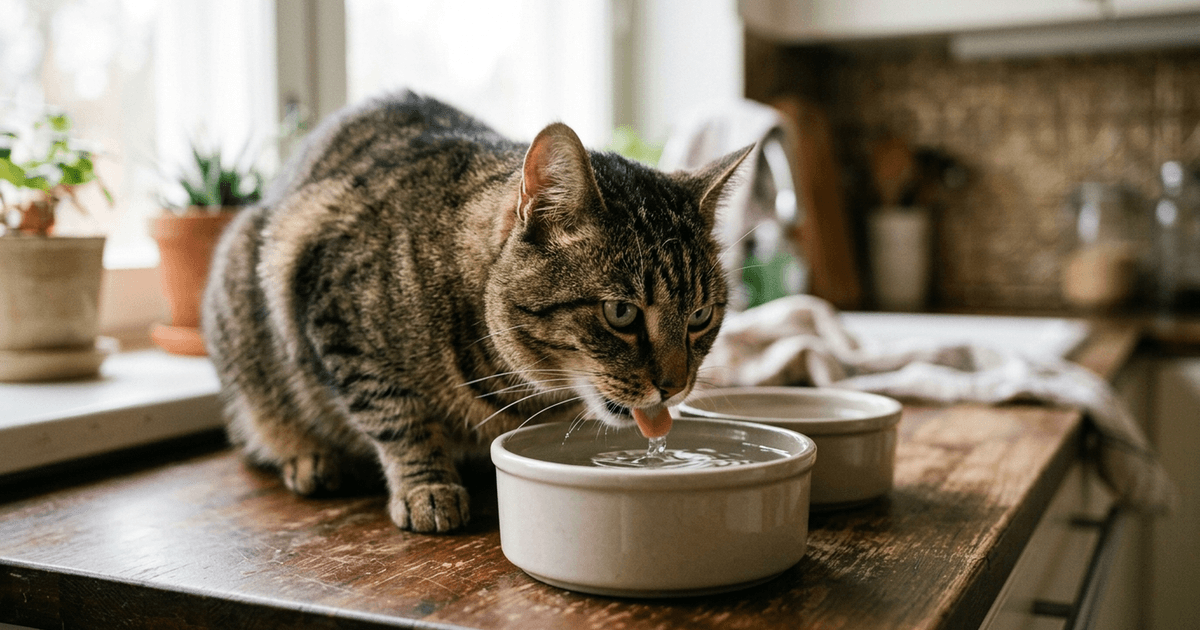
Cats generally need about 4 ounces of water per 5 pounds of lean body weight per day. That number is only a rough guide, though, because food type, weather, and recent illness can all move the needle. A cat on dry food will usually drink more than one eating wet food, and hot weather can increase water intake too.
What matters most is the change.
If your cat has always been a fairly thirsty drinker, or if the weather has turned hot, or you recently switched from wet food to dry, the new water pattern may have a straightforward explanation. Cats may also drink more while recovering from dehydration after vomiting or diarrhea, and some medications can increase thirst as well.
But a sudden or sustained increase deserves more attention when it comes with other changes. Increased drinking often goes along with increased urination, which you may notice as larger clumps in the litter box or a wetter box overall. That pairing is a classic reason to call the vet, especially in older cats, where kidney disease is a common cause of increased thirst and urination.
A practical way to think about it is this:
- More water, but everything else is normal: often a habit or environment change, especially after a diet switch, warm weather, or recovery from fluid loss.
- More water plus more urine: much more concerning, because kidney disease, diabetes, urinary tract infections, and other illness become more likely.
- More water plus weight loss, extra hunger, vomiting, diarrhea, or lethargy: this is a stronger red flag and needs veterinary attention.
That last combination is the one owners tend to miss if they focus only on the water bowl. A cat with diabetes may drink and urinate more and may also act hungrier than usual. Cats with kidney disease may drink and urinate more, and they may vomit or eat less. Hyperthyroidism can also make a cat hungrier and thirstier than usual.
There’s another wrinkle: not every cat who drinks more is obviously sick at first. Some owners describe a cat that still plays, eats, and naps in all the usual places, which can make the change feel harmless. The problem is that some illnesses start quietly. That’s why persistence matters. A one-off change after a hot day is different from a new pattern that keeps showing up for several days.
A good home check starts with the litter box. Look for bigger urine clumps, more frequent trips, accidents outside the box, or a box that seems wetter than usual. Then notice appetite and body condition. Is your cat eating more, eating less, or losing weight despite seeming hungry? Those details help separate a simple habit shift from a body that’s trying to compensate for disease.
Stress can also play a part. Cats may drink differently when their routine changes, and a dirty litter box can be stressful enough to affect behavior. That doesn’t mean stress explains everything, but it’s one reason to look at the whole environment before assuming the worst.
When increased drinking is more likely a habit change
A water increase is more likely to be harmless when:
- It started around a food change, especially a switch to dry food.
- The weather has been hot.
- Your cat recently had vomiting or diarrhea and seems to be rehydrating.
- Your cat otherwise seems normal, with steady appetite, weight, energy, and litter box habits.
Even then, it’s worth watching for persistence. A cat that keeps drinking more day after day deserves a closer look, even if the cat still seems bright and active.
When it’s a red flag
Call your veterinarian if the increased drinking is paired with any of these:
- Increased urination or noticeably larger urine clumps.
- Weight loss.
- Increased hunger.
- Eating less.
- Lethargy or lower activity.
- Vomiting or diarrhea.
Those patterns can fit kidney disease, diabetes, hyperthyroidism, urinary tract disease, or other illness. Cats with urinary problems may also drink more than usual and eat less because of pain or infection.
If you can, jot down what you’re seeing for a day or two: how often the water bowl needs refilling, whether the litter box is producing larger clumps, and whether appetite or energy has changed. That kind of plain observation is often more useful than trying to guess the cause from thirst alone.
The one thing not to do is restrict water. If a cat is thirsty, taking water away doesn’t solve the reason behind it, and it can make dehydration worse. The safer move is to keep fresh water available and get veterinary advice if the pattern is new, persistent, or joined by other symptoms.
A cat drinking more water is best treated as a clue, not a diagnosis. Alone, it may just reflect weather, diet, or recovery. Put it next to the litter box, appetite, weight, and energy, though, and the picture becomes much clearer.