What Happens If a Cat Eats Dog Food Now and Then?
A cat sneaking a bite of dog food now and then usually isn’t an emergency. The real issue is repeated access, because dog food isn’t made to cover a cat’s nutritional needs over time.
In this guide
A cat sneaking a bite of dog food now and then usually isn’t a big deal. The main concern isn’t a single nibble; it’s what happens if dog food becomes a habit, because dog food isn’t formulated to meet a cat’s nutritional requirements and shouldn’t replace cat food.
Is dog food dangerous if a cat eats it once?
For most healthy cats, an occasional taste of dog food is more of a nutrition issue than a poisoning emergency. PetMD says a cat can eat a small amount of dog food without toxic or lasting effects, and Chewy notes that a one-off nibble usually doesn’t create immediate risk.
That said, a tiny snack and a full bowl are not the same thing. If the dog food was a large amount, if your cat has stomach sensitivity, or if your cat starts vomiting or acting off, it’s worth checking in with a vet.
Why dog food is not a long-term cat diet
This is where the real problem starts. Dog food is not made to meet cats’ nutritional needs, and cats need nutrients in their food that dog food may not provide in adequate amounts. Taurine comes up often because it’s an essential nutrient for cats, and dog food may not supply enough of it.
A cat that keeps eating dog food can end up with nutritional imbalance over time. Some sources also warn that frequent dog-food eating can create problems from excess or imbalance of certain minerals, not just missing cat-specific nutrients.
Here’s the simplest way to think about it:
Situation | What it usually means |
|---|---|
A single bite or small stolen snack | Usually not an emergency if the cat seems normal |
Repeated access to the dog bowl | The bigger concern, because nutrition can drift off course |
Dog food replacing cat food | Not appropriate for the long term |
If you want a broader look at how cat foods differ from dog foods, the dog food comparisons section may help when you’re sorting through labels and ingredients.
Signs the behavior is becoming a problem
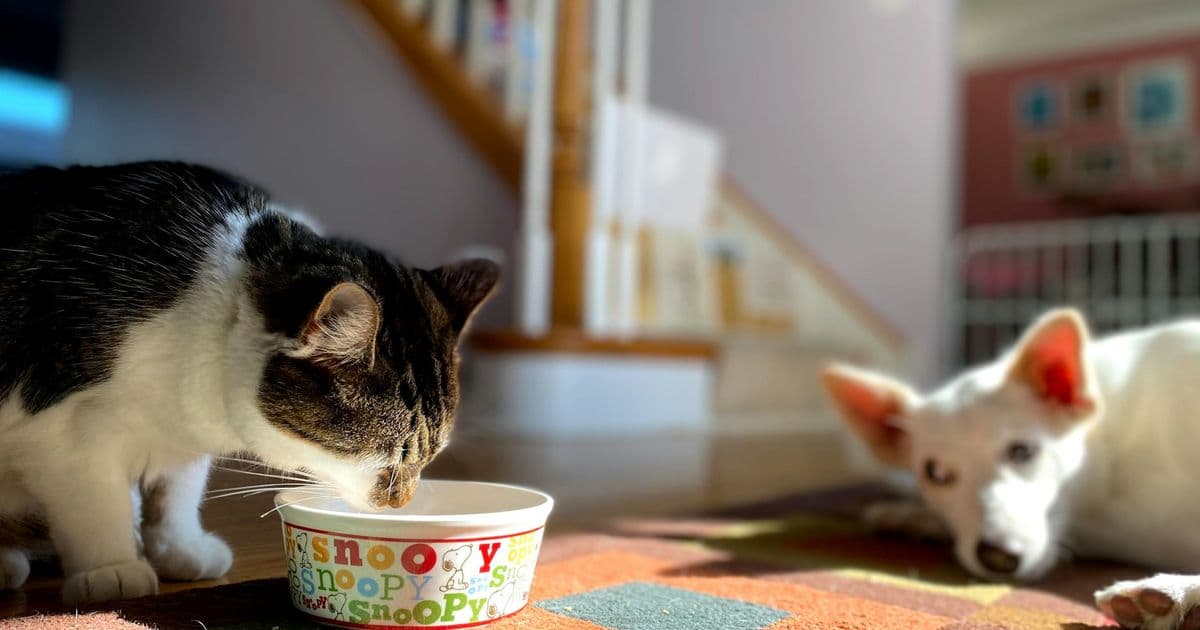
Cats stealing dog food is common enough that pet-care articles routinely include prevention advice, which tells you this is a real household management issue, not just a rare oddity.
Watch for:
- Your cat repeatedly going to the dog bowl at mealtime
- Your cat ignoring its own food and seeking out the dog’s food instead
- Loose stool, vomiting, or other signs of stomach upset after eating dog food
- The behavior happening often enough that your cat is missing normal cat meals
If the pattern is frequent, the problem is no longer the single snack. It’s the steady replacement of cat food with the wrong diet.
What owners can do to stop it
The best fix is usually boring, simple, and effective: make dog food harder to reach.
Practical steps:
- Feed the pets in separate areas
- Pick up bowls after meals instead of leaving food out
- Use barriers or other setup changes that let the dog access its food but keep the cat out
- Keep feeding times consistent so the cat isn’t wandering over to the dog bowl out of habit
- Watch the household routine closely if a kitten or particularly bold cat is involved
The goal isn’t to punish curiosity. It’s to remove the easy opportunity. In many homes, a small change in feeding setup solves the problem faster than trying to “train” the cat not to notice the dog’s dinner.
If you’re comparing feeding setups more broadly, dog breed guides can also be useful if you’re dealing with a large dog, a small dog, or a breed with a more intense food drive.
When to call a vet
Call your vet if your cat shows vomiting, diarrhea, or any other sign of illness after eating dog food. It’s also smart to ask for advice if the dog food has unfamiliar ingredients, if your cat has known food sensitivities, or if the behavior is happening regularly.
A vet call is especially sensible if:
- Your cat is a kitten
- Your cat is older or has a medical condition
- Dog food is being eaten often instead of cat food
- Your cat seems off after eating it
The most useful takeaway is simple: one accidental bite usually isn’t the story, but repeated access is. If your cat keeps raiding the dog bowl, fix the feeding setup sooner rather than later so the habit doesn’t turn into a nutrition problem.