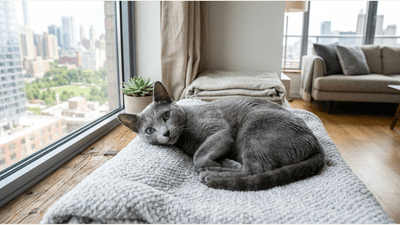
How Do You Choose a Cat Breed That Stays Small Without Missing Out on Personality?
Choosing a small cat breed is really a two-step decision: start with size, then match the cat’s energy and social style to your home. The best fit is usually a cat that stays compact and also fits the way you actually live.
In this guide
If you want a cat that stays small, don’t stop at body size. The better question is: which compact breed will actually fit your home, your routine, and the amount of attention you can give? Small cat breeds can be playful, affectionate, social, and loyal — so the right choice is usually about personality as much as pounds.
What counts as a small cat breed
Small cat breeds are cats that stay relatively little when fully grown, and they’re often chosen by people who want a smaller companion or have limited space. Purina’s small-cat collection includes the Abyssinian, American Curl, Cornish Rex, Devon Rex, Oriental, Peterbald, Russian Blue, and Singapura.
One thing to watch for: words like “miniature” and “teacup” are marketing labels, not official breed designations. If a breeder or seller leads with size alone, that’s a reason to slow down and ask more questions. A healthy cat should matter more than a catchy label.
At a glance: size first, then personality
- Singapura: very small, active, affectionate, and friendly with families and other pets.
- Burmese: smaller than average, outgoing, patient with children, and smart enough to enjoy puzzle toys and tricks.
- Devon Rex: small-bodied, highly social, and described as having an impish personality.
- Cornish Rex: small, playful, sleek, and downy-coated.
- Other small-breed names often grouped together in breed guides include the Abyssinian, American Curl, Oriental, Peterbald, and Russian Blue.
Best-known small breeds and their personality traits
The easiest way to choose is to match the cat’s style to your home, not just its size.
The Singapura is one of the most recognizable tiny breeds. Daily Paws describes it as about half the size of the average cat, and also active and affectionate. It’s a strong fit for people who want a cat that stays involved in family life, because it doesn’t want to be left alone.
The Burmese is another good example of why “small” doesn’t mean “shy.” Daily Paws describes Burmese cats as smaller than average with compact bodies, outgoing personalities, and patience with children. It also notes that they’re smart and tend to enjoy puzzle toys and learning tricks.
The Devon Rex is small-bodied and highly social, with an impish personality that often appeals to people who want a cat with a lot of presence in a compact frame. Daily Paws also notes its short, wavy coat and low shedding.
The Cornish Rex is small and playful, with a sleek frame and downy fur. If you like a cat that looks delicate but still brings energy to the room, this breed often lands in that lane.
Purina’s small-cat collection groups several other breeds with these same broad personality themes: affectionate, active, social, vocal, athletic, and loyal. That matters because a tiny cat can still be very demanding in the best possible way.
Mistakes to avoid when choosing a tiny cat
The biggest mistake is assuming a small cat will automatically suit a quiet apartment or low-key routine. The sources consistently describe many small breeds as active, athletic, or highly social. A compact cat can still need a lot of interaction, play, and mental stimulation.
Another mistake is treating size as a personality shortcut. The available sources describe breed traits in broad terms, but they do not establish a scientific rule that smaller cats are more mellow or easier to live with. A small cat may be cuddly, energetic, vocal, or all three.
It’s also worth being careful with the word “tiny.” If the appeal is mainly a marketing promise, that’s not the same thing as a stable, healthy breed choice. Daily Paws recommends looking for a responsible breeder who prioritizes health over size and appearance.
How to match breed energy to your home
A good match usually comes down to three questions:
- How much daily interaction can the cat expect?
- Does the home feel calm, busy, or somewhere in between?
- Is the household looking for a lap cat, a playful companion, or a cat that’s content to do its own thing?
If your home is lively and people are often around, a social breed like the Singapura, Burmese, or Devon Rex may make sense. If you want a cat that’s small but still spirited, breeds such as the Cornish Rex or Abyssinian may be worth exploring through breed guides like our breed guides.
If your life is quieter, don’t assume you need the tiniest breed available. It can be more helpful to choose a cat whose energy level matches your routine. Forum discussions from cat owners often circle back to this same point: apartment fit and companionship matter just as much as breed label, and some people even prefer bonded pairs so the cats have company.
Before you decide
- Ask how the cat behaves around people, other pets, and routine household noise.
- Ask whether the cat is active, vocal, or happiest when someone is nearby.
- Ask what kind of play and enrichment the cat will need each day.
- Ask whether the breeder or shelter is focused on health and temperament, not just small size.
- Ask whether one cat is enough, or whether a bonded pair would be a better fit for the home.
Questions to ask a breeder or shelter before adopting
A short conversation can tell you a lot. Good questions include:
- What is this cat like when it’s bored?
- Does it like being handled, or does it prefer to choose when it wants attention?
- How does it act around children or other pets?
- Is it more independent or more people-oriented?
- What kind of environment has it been living in so far?
Those questions help you look past breed names and get to the part that really affects daily life: behavior. That’s the difference between buying a small cat and choosing a cat that actually fits your home.
If you’re still comparing options, it can help to review the broader breed picture first, then narrow down by temperament through a cat care guide or a breed-specific resource like dog breed guides if you’re also comparing pets across species.
The best small cat isn’t just tiny. It’s the one whose size, energy, and social needs fit your life so well that the cat feels made for the home, not just selected for a number on a chart.
Frequently Asked Questions
Sources & Further Reading
- Good family cat breeds with small children? - Reddit — owner discussion