Why Do Low-Shedding Dogs Often Need More Grooming Than Heavy Shedders?
A low-shedding dog may leave less hair on your furniture while demanding more attention from your brush, comb, clippers, and groomer. The difference comes down to where the loose coat goes—and how easily the remaining hair tangles.
On this page
A dog that barely sheds can seem like the obvious low-maintenance choice. There’s less hair on the sofa, fewer tumbleweeds rolling across the floor, and perhaps less time spent vacuuming. Yet many low-shedding dogs need more deliberate coat care than dogs whose hair seems to be everywhere.
The reason is simple: shedding and grooming are not opposite ends of the same scale. They’re different ways a dog’s coat gets managed. Heavy shedders release much of their loose hair into the home. Low-shedding dogs may keep more of that hair on their bodies, where owners have to remove it through brushing, combing, bathing, trimming, or professional grooming.
Less hair around the house can mean more hair on the dog
Many low-shedding coats include hair that stays in an active growth phase for an extended period rather than following a shorter growth-and-shed cycle. That can make the coat look tidy between grooming appointments, but the hair still needs somewhere to go. Regular brushing helps remove loose material before it becomes part of a tangle, while trimming keeps continuously growing coats at a manageable length.
A heavy-shedding dog often gives you a very visible form of maintenance: loose hair on clothing, floors, bedding, and furniture. It may be frustrating, but the coat is releasing dead or loose hair on its own. With a low-shedding dog, the house may look cleaner while the coat quietly accumulates hair, skin flakes, natural oils, and particles picked up from the environment.
That’s the trade-off. Low shedding reduces visible household hair; it doesn’t eliminate coat maintenance.
Why texture matters so much
Coat texture changes the way dirt, moisture, and loose hair behave. Straight, short hair tends to lie close to the body and can be relatively quick to brush. Curly or wiry hair has more shape and structure, so it can hold onto debris and allow strands to catch on one another.
Poodles, Bichon Frisés, Schnauzers, and Portuguese Water Dogs are commonly discussed as low-shedding examples, but they don’t all have identical coats or identical grooming schedules. Even within a breed, coat length, texture, haircut, lifestyle, and the dog’s tolerance for brushing can change the amount of work involved.
A curly coat that looks soft and fluffy may be difficult to comb all the way to the skin. Brushing only the visible surface can leave compacted hair underneath, where a small tangle gradually becomes a mat. Veterinary guidance recommends regular brushing for long, silky, or curly coats, particularly around the ears, armpits, and backs of the legs—places where hair rubs, folds, and collects moisture.
How mats develop
Mats form when retained hair tangles and tightens instead of being removed. Friction makes the problem worse. A dog’s collar or harness may rub at the neck and chest; movement can twist hair behind the front legs; damp fur can cling together after rain, swimming, or a bath.
The coat may still look acceptable from a distance. A mat can hide beneath the top layer, especially in a dense or curly coat. As it grows, it can conceal the skin and make it harder to notice changes such as redness or irritation. Severe matting can also be uncomfortable, so grooming is not merely about keeping a dog photogenic.
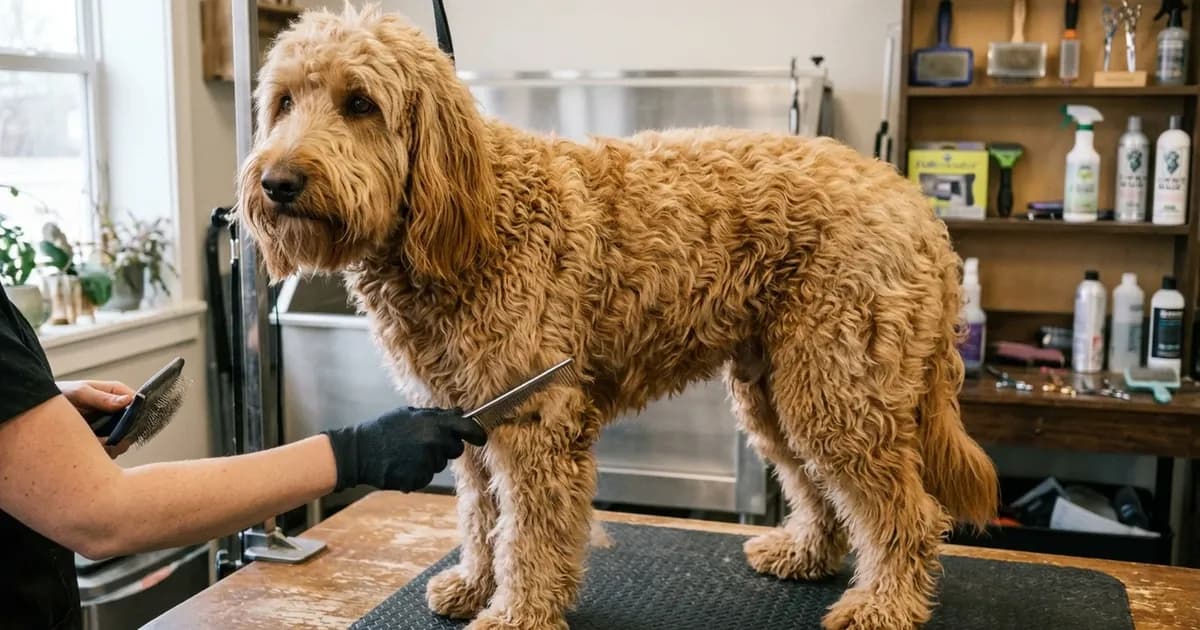
For that reason, a useful brushing session is not just a quick pass over the back. The goal is to reach through the coat gently and check areas that are easy to miss: behind the ears, beneath the collar, under the legs, across the belly, and around the tail.
If tangles are extensive, professional help is safer than forcing a brush through them. Mats should not be cut out with household scissors because dog skin can be caught in the clump; veterinary and grooming guidance recommends appropriate clippers or professional care instead.
What routine care may involve
The right schedule depends on the individual coat, but low-shedding dogs commonly need a combination of:
- Regular brushing and combing to remove loose hair and prevent tangles.
- Coat checks in friction- and moisture-prone areas.
- Bathing when the coat is dirty, while avoiding bathing over mats or severe tangles.
- Trimming or haircuts for coats that continue growing.
- Professional grooming when the coat length, texture, or matting is difficult to manage at home.
Brushing before bathing matters. Water can tighten existing tangles and make them harder to remove afterward. A dog that arrives at the tub already matted may need a different grooming plan from a dog whose coat is clean and combable.
The routine also works best when it is introduced as ordinary care rather than saved for emergencies. Short, gentle sessions can help a dog become comfortable with handling around the ears, feet, legs, and face. The precise tools and frequency should match the coat; a groomer can help identify whether a dog needs occasional brushing, several sessions each week, or more frequent professional appointments.
Why a heavy shedder can seem easier
A short-haired shedding dog may leave more hair behind but require less hands-on coat work. Some owners find that loose hair can be removed with a quick brush, while the dog’s coat itself does not form mats as readily. That doesn’t make heavy shedders maintenance-free: they still need brushing, bathing as appropriate, and attention to skin and coat condition. It simply makes the work more visible and, in some cases, faster.
This is why household cleanliness and grooming workload should be considered separately. A Labrador Retriever-type coat may create a constant vacuuming problem, while a low-shedding curly coat may create a combing and appointment problem. One dog distributes more hair through the home; the other may require owners to remove more of the coat deliberately.
If shedding is a major concern, Golden Retriever shedding and coat management offers a useful comparison. And before choosing a breed, it helps to consider grooming alongside temperament, exercise needs, and the rhythm of your household; the broader dog breed guide can help frame that decision.
Low-shedding does not mean hypoallergenic
“Low-shedding” describes what happens to the coat, not a guarantee about allergies. Dogs can produce allergens in dander, saliva, and other sources, and no dog is completely hypoallergenic. Some low-shedding breeds may spread less loose hair and dander around a home, but individual reactions vary.
Regular grooming and household cleaning may help reduce what accumulates, but they cannot promise an allergy-free dog. Anyone choosing a dog partly for allergy reasons should spend time with the specific dog when possible and discuss symptoms with a medical professional.
Questions worth asking before choosing a low-shedding breed
A breed described as low-shedding may still be a demanding grooming companion. Ask:
- How often does this coat need brushing to stay free of mats?
- Does the hair keep growing and require regular trimming?
- Which areas tangle first?
- Can the coat be maintained at home, or will it need professional grooming?
- How will grooming appointments fit into the household budget and schedule?
- Is the coat genuinely suited to the amount of hands-on care the household can provide?
Grooming costs are only one part of dog ownership, but they’re easy to underestimate when the coat leaves little hair behind. This guide to the yearly cost of owning a dog can help put recurring care expenses into the wider picture.
A low-shedding dog may be a wonderful fit for someone who prefers regular brushing and scheduled grooming to daily vacuuming. For another household, a short-haired shedder may be easier to live with despite the loose hair. Neither coat is automatically simpler. They simply ask owners to do different kinds of work.
FAQ
Sources
- American Kennel Club — Best Dog Breeds for People With Allergies
- American Kennel Club — Do Hypoallergenic Dogs Exist?
- Merck Veterinary Manual — Routine Health Care of Dogs
- VCA Animal Hospitals — Coat and Skin Appearance in the Healthy Dog
- VCA Animal Hospitals — Grooming and Coat Care for Your Dog
- Dog breeds with easiest coat maintenance : r/dogs - Reddit — owner discussion