Are There Medium-Sized Dogs That Barely Shed, or Is That Expectation Unrealistic?
Yes, some medium-sized dogs leave remarkably little loose hair around the house. The realistic trade-off is that low shedding usually means more brushing, clipping, and coat care—not a completely hair-free or allergy-free dog.
On this page
Yes—some medium-sized dogs shed so little that you may notice far less hair on the sofa, clothes, and floors. But “barely sheds” is a more useful promise than “doesn’t shed.” No dog should be treated as completely non-shedding or guaranteed hypoallergenic, and the coats that hold on to loose hair often need regular brushing, clipping, and professional grooming.
That trade-off shapes almost every good choice in this category. A low-shedding dog may make housekeeping easier while making the grooming schedule more demanding.
What low-shedding really means
A shedding dog releases loose hair readily, so you see it collecting on furniture or drifting across the floor. Many low-shedding dogs have curly, woolly, or continuously growing coats that hold loose hairs in the coat instead of dropping them around the home. That can reduce visible cleanup, but it doesn't make the hair disappear.
The practical difference is easy to picture. A Portuguese Water Dog or Lagotto Romagnolo may leave less loose hair behind than a heavily shedding breed, yet the coat can still tangle and mat if it's neglected. Brushing removes hair before it becomes part of a knot—and gives you a chance to notice dirt, burrs, or skin changes.
Size also deserves a little caution. There is no single universal definition of “medium-sized” in the supplied breed lists, and Poodles demonstrate why the label can be slippery: Toy, Miniature, and Standard varieties are quite different in scale. A Miniature Poodle may fit a medium-dog household in spirit but not in physical size, while a Standard Poodle is more clearly a medium-to-large companion.
Low-shedding is not the same as hypoallergenic
Less hair in the house may be welcome, but it doesn't guarantee fewer allergy symptoms. Dog allergies are associated with proteins found in dander, saliva, and urine, and all dogs produce some dander. Visible shedding also isn't a reliable measure of how one particular person will react.
For a household where allergies are the main concern, spend time with the actual dog before making a commitment. Pay attention to the rooms where the dog spends time, not only to a quick meeting outdoors. A low-shedding coat may reduce loose hair and make cleaning easier, but it cannot promise an allergy-free home.
Regular cleaning and grooming can still help manage what accumulates in the home. Those steps are useful housekeeping, not a guarantee that symptoms will disappear.
Medium-sized breeds worth considering
Several breeds repeatedly appear on low-shedding and medium-sized breed lists. They aren't interchangeable: coat texture, exercise needs, trainability, and grooming demands vary considerably.
Portuguese Water Dog. This is a strong candidate for an active household that wants less loose hair and is prepared for coat care. Its dense, curly or wavy coat is commonly described as low-shedding, but regular brushing and trimming are part of ownership. The breed's athletic nature matters just as much as its coat; a dog that needs substantial activity may not suit a quiet home simply because it sheds little.
Soft-Coated Wheaten Terrier. The Wheaten is often included among medium low-shedding options. Its soft coat can look wonderfully manageable until tangles begin to form, so routine brushing and attention to mat prevention are essential. Terrier energy and personality should be considered alongside the grooming commitment.
Lagotto Romagnolo. This compact, curly-coated breed is another frequently mentioned choice. Its coat can retain loose hair, which helps explain the low-shedding reputation, but curls need regular care. A Lagotto may appeal to someone looking for a medium-sized companion with a substantial coat and an active, engaged lifestyle.
Kerry Blue Terrier. The Kerry Blue appears on medium low-shedding lists and brings the grooming trade-off into sharp focus: less loose hair does not mean less coat work. Its terrier character and exercise needs deserve as much attention as its shedding level.
Irish Water Spaniel and Spanish Water Dog. Both are also associated with low-shedding medium-sized choices. Their coats and activity requirements make them better suited to owners who can combine regular grooming with an appropriately active routine.
Schnauzers and Poodles. Miniature Schnauzers are commonly included among medium-sized allergy-friendly options, although the individual dog and household fit still matter. Poodles are especially versatile because they come in three sizes and rarely shed, but their dense curly coats require regular maintenance. Keeping the coat short can simplify daily care, but it doesn't remove the need for grooming.
You can browse more breed profiles through the dogacat.com dog breed guides when comparing temperament and lifestyle fit rather than coat alone.
The grooming bill for less hair
Low-shedding coats often shift work from the vacuum cleaner to the brush and grooming table. Depending on the breed and haircut, an owner may need to manage:
- Brushing several times a week, or daily for some dense or easily tangled coats
- Regular clipping or trimming
- Professional grooming appointments
- Careful mat prevention around the ears, legs, collar, and armpits
- Extra coat checks after walks through grass, brush, or muddy areas
Bichon Frises illustrate the pattern clearly even though they're smaller than the breeds under discussion: their shedding is described as negligible, while their coats require daily brushing. The same principle applies broadly—hair that stays in the coat still has to be removed somehow.
Before choosing a breed, ask whether you prefer frequent brushing at home, scheduled grooming appointments, or both. A dog that barely sheds can be an excellent fit for someone who dislikes fur on clothing but a poor fit for someone who wants a nearly maintenance-free coat.
A quiet household may also need to think beyond shedding. The guide to choosing a breed for a quiet, low-key household can help put coat care beside energy level, noise, and daily routine.
Why doodle shedding isn't guaranteed
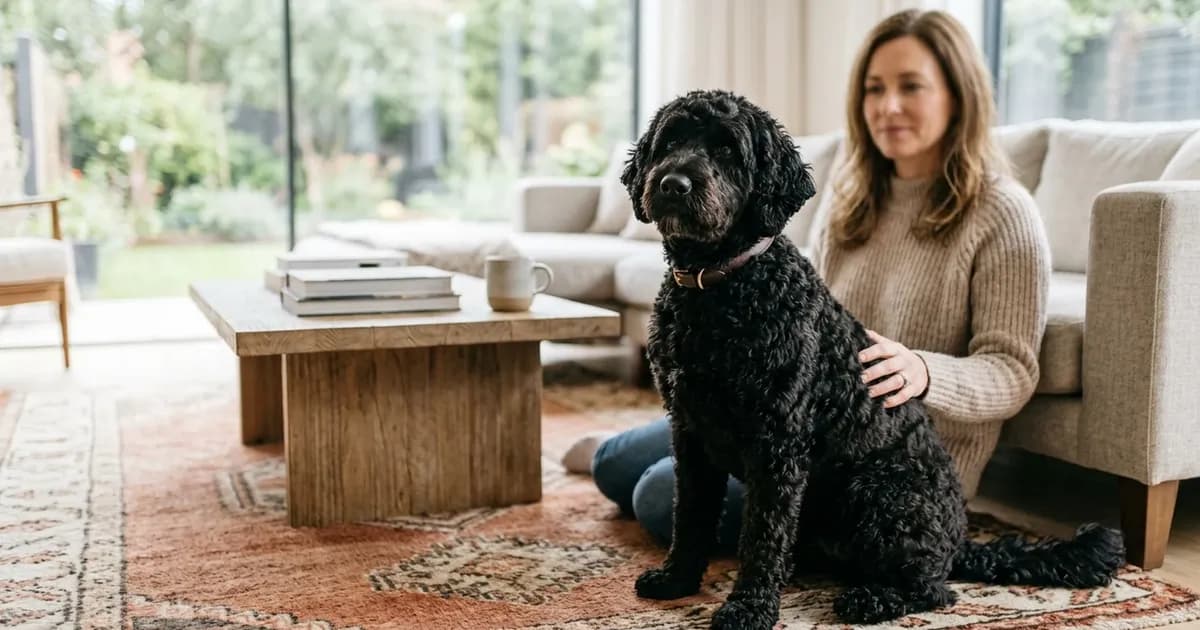
Poodle crosses such as Labradoodles, Whoodles, and Aussiedoodles are often presented as low-shedding possibilities. Some individual dogs may shed very little, but a mixed-breed label cannot guarantee the same coat or shedding pattern in every dog.
That uncertainty matters when allergies, cleaning limits, or grooming expectations are central to the decision. Meet the specific dog, examine the adult coat if possible, and treat claims of guaranteed low shedding with caution. “Poodle mix” describes ancestry; it does not promise one predictable coat outcome.
A sensible way to choose
Start by writing down the amount of loose hair you can realistically tolerate. Then consider the work you're willing to do in exchange.
- Decide whether your priority is less visible hair, fewer allergy triggers, or both. These are not the same goal.
- Compare the adult size of the specific variety, especially with Poodles and Schnauzers.
- Check the coat-care routine: brushing frequency, clipping, mat prevention, and professional grooming.
- Match exercise and mental stimulation needs to your ordinary week, not an ideal holiday schedule.
- Spend time with the individual dog if allergies are involved.
- Ask a groomer or experienced breed specialist to describe the coat honestly before committing.
For comparison, a shedding breed may require more vacuuming but less coat maintenance. Our guide to Golden Retriever shedding and management offers useful context for that opposite end of the trade-off.
The most realistic expectation is simple: aim for manageable shedding, not a completely hair-free dog. Portuguese Water Dogs, Wheaten Terriers, Lagotto Romagnoli, Kerry Blue Terriers, Irish and Spanish Water Dogs, some Schnauzers, and suitable Poodle varieties can all be worth investigating. Their low-shedding reputations may make life tidier, but their coats still need care—and no breed can promise zero allergens.
FAQ
Sources
- Reddit — Low-shedding, medium energy, kid-friendly dog — owner discussion